The highly anticipated fall migration is fully underway along the New Jersey coast, making this a prime operational window for both shore-bound and boat anglers. Current seasonal conditions in the Great Egg Harbor Inlet and surrounding back bays are highly favorable and stabilizing into classic autumn patterns. We are experiencing crisp morning air temperatures that warm to comfortable afternoon highs, which is rapidly dropping the water temperatures down into the optimal feeding zones for our premier target species. The recent lunar phases continue to influence stronger tidal currents, creating excellent flush conditions that pull vast quantities of baitfish out of the marsh systems and into the main channels.
However, extreme caution is advised due to the accelerated tidal flows during the ebb tide. Boat anglers should be particularly mindful of standing waves and treacherous rips forming at the mouth of the inlet, especially when the outgoing tide meets a stiff onshore breeze. These conditions can create steep, tightly packed waves that challenge even experienced captains. Shore-bound anglers traversing the sod banks must carefully watch their footing. The higher-than-average spring tides can quickly flood low-lying marsh areas, turning the muddy banks into extremely slippery hazards. Always plan your exit route before the tide peaks, and never turn your back on the inlet during a heavy swell.
From the editor
Tired of fishing with strangers you can’t trust?
Nautrek is the first social network for serious anglers — verified partners, real trips, cost splitting and intel sharing without burning your spots. Private beta now open.
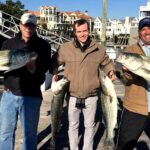
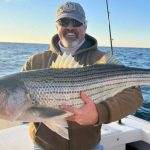
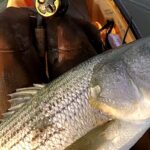
Striped bass are undeniably the most active and abundant target right now. Resident schoolies and the vanguard of slot-sized migratory fish have shifted into highly aggressive fall feeding patterns. They are staging at key structural ambush points to intercept the massive volumes of bait flushing out of the tidal estuaries. These bass are hyper-focused on the upper and middle water column, feeding with incredible urgency to pack on weight before the dead of winter sets in. You will find them actively hunting along current seams and staging in the eddies formed by hard structure.
Sleeper Pick: Tautog (Blackfish)
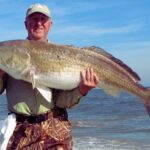
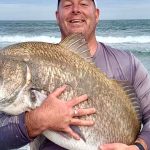
While the vast majority of local anglers are laser-focused on chasing topwater striper blitzes or scanning the horizon for diving birds, world-class tautog fishing is going largely ignored. Right now, blackfish are heavily stacked along hard structure, inlet jetties, and bridge pilings. They are feeding aggressively on hard-shelled prey to build their winter fat reserves. The beauty of targeting tautog during the fall transition is that you can find them in relatively shallow water before they migrate to deeper offshore wrecks later in the winter. They provide incredibly hard-fighting sport on light tackle and are arguably the best-eating fish currently available in our inshore waters.
Baitfish Report
The local estuaries are absolutely brimming with forage, which is the primary engine driving this phenomenal fall bite. Dense pods of peanut bunker (juvenile menhaden) are being pinned against the sod banks by aggressive predators, creating nervous water that is easy to spot if you know what to look for. Additionally, schools of finger mullet are migrating tightly toward the inlets, frequently erupting in visible surface frenzies when intercepted by bass and bluefish. Matching this hatch with three-to-four-inch profile lures is absolutely critical for success on the water right now.
TACTICAL STRATEGY
Where to Target
Focus your efforts on the Great Egg Harbor Inlet, specifically the heavy structure surrounding Longport Point and the adjacent Ocean Drive bridge pilings. Do not waste precious tide windows blind-casting in the shallow, featureless bays. Instead, target the 10-to-15-foot drop-offs where the shallow sandbars abruptly meet the deeper, faster water of the main inlet channel. Striped bass will stage directly behind submerged rocks and structural eddies to ambush bait swept by the current. For tautog, you need to be tight to the structure—if you aren't occasionally getting snagged, you aren't fishing close enough. Drop straight down into the crevices of the jetty rocks or alongside the concrete bridge abutments in 8 to 12 feet of water.
Lure and Bait Selection
For striped bass, a 3/4-ounce to 1-ounce bucktail jig tipped with a 4-inch soft plastic curly tail grub or a Berkley Gulp swimming mullet is highly effective and versatile. If fish are actively pushing bait to the surface, immediately switch to a 1-ounce pencil popper or a walk-the-dog style topwater plug to draw explosive surface strikes. Stick to bone white or chartreuse colors during bright daylight to mimic mullet and silversides. In low light or murky water conditions, switch to a blurple (black and purple) pattern to provide a stark, easily trackable silhouette against the surface glare.
For tautog, ditch the traditional heavy, cumbersome rigs that often get hung up in the rocks. Utilize a 1/2-ounce to 3/4-ounce bottom sweeper style jig tipped with a halved green crab or fresh sand fleas. This lighter presentation allows you to feel the subtle taps of a feeding blackfish before they can steal your bait, and it dramatically reduces your snag rate.
Timing the Bite
The outgoing tide is the absolute critical variable right now. Plan your trip around the final two hours of the ebb tide and the first hour of the incoming. The dropping water physically pulls the baitfish out of the safety of the back bays, dumping them right into the waiting mouths of predators in the inlet rips. Low-light periods at dawn and dusk will consistently yield the most aggressive topwater strikes, especially before the ambient boat traffic pushes the fish down into the water column.
Pro Tip: When working paddle tails or bucktails along the sod banks, do not simply cast and reel at a steady, monotonous pace. Use a distinct sweep-and-pause retrieve to mimic a wounded baitfish falling out of the current. Most strikes will occur on the exact moment of the pause as the lure flutters downward.
Pro Tip: Tautog are notorious, expert bait stealers with incredibly tough mouths. Keep your rod tip slightly elevated and maintain a tight line at all times. Do not set the hook on the first series of small, rapid taps; wait for the heavy, solid pull before driving the hook home with authority.
Pro Tip: When fishing the sod banks at night, turn off your headlamp and listen carefully to the current. If you hear the distinct "smack" or "pop" of stripers feeding on peanut bunker near the surface, cast a bone-colored floating spook and retrieve it incredibly slowly across the current to trigger explosive nighttime strikes.
REGULATIONS SNAPSHOT
Compliance is crucial for maintaining our world-class fisheries, and marine enforcement is highly active during the fall run. Remember that all anglers 16 and older must possess a valid, free New Jersey Saltwater Recreational Registry Program (NJSRRP) registration before wetting a line.
Striped Bass: The daily bag limit is exactly one fish per angler. New Jersey enforces a strict slot limit: you may only harvest a striped bass that is between 28 inches and 31 inches in total length. Any fish under 28 inches or over 31 inches must be released immediately with minimal handling. If you are fishing with natural bait (such as clams, chunked bunker, or live eels), you are legally required to use non-offset circle hooks to reduce release mortality.
Tautog (Blackfish): The current fall limit is one fish per angler per day, with a strict 15-inch minimum size requirement. (Note that the bag limit will increase to five fish later in the season for late-fall wreck fishing, but strict limits apply now).
Bluefish: Shore-based and private boat anglers may keep up to five fish per day, with no minimum size limit, making them an excellent option for the cooler.
REGIONAL ALTERNATIVE
Corson's Inlet State Park
If the Great Egg Harbor Inlet is blown out by heavy onshore winds, plagued by excessive weed drift, or the boat traffic becomes unmanageable, make the short drive south to Corson's Inlet. This area offers excellent, slightly more protected shore-based access along the bay side of the state park. Target the deep channel edges where the tidal current sweeps past the sod banks and creates distinct rips.
A 4-inch pearl white swim shad or a 1/2-ounce lead head bucktail worked slowly along the 6-to-12-foot drop-offs will reliably produce schoolie stripers and aggressive bluefish that have been pushed out of the main inlet. The wading here can be exceptional on a dropping tide, but always respect the current, shuffle your feet to avoid stingrays, and avoid wading past your knees during the outgoing tide, as the bottom contours can drop off sharply and unexpectedly.
Tight lines!
Editor's Choice: Must-Have Gear
FISHINGSIR Next-Gen Waterproof Chest Waders
★★★★★4.4 (7,370+ reviews)
2-Ply Tech: Upgraded nylon with 2.5x higher density than standard fabrics.
100% Waterproof: Lab-approved intrusion resistance with taped visible seams.
Ultra-Lightweight: Designed for all-day comfort while hunting or fishing.
As an Amazon Associate I earn from qualifying purchases. #ad
Loading forecast...
Live Fishing Conditions: Tides, Weather & Waves
Get real‑time tides, marine weather, swell and solunar activity for each spot so you know exactly when conditions line up for your best chance at a bite.
🎣
NJ Saltwater
Loading coordinates...
🌤️
WEATHER CONDITIONS
--°F
--°C
Loading...
🌡️
Feels Like--°F--°C
💧
Humidity--%
💨
Wind-- mph-- km/h
🧭
Direction--
📊
Pressure-- inHg-- hPa
☀️
UV Index--
🌊
MARINE CONDITIONS
🌊Wave Height
-- ft
-- m
Loading...
🧭Wave Direction
--°
Loading...
⏱️Wave Period
-- s
Loading...
📈Tide Status
-- ft
-- m
Loading...
🌙
LUNAR & SOLUNAR
🌕
Loading...
Illumination: --%
Major Period--:-- - --:----:-- - --:--
Minor Period--:-- - --:----:-- - --:--
🌅Sunrise--:--
🌇Sunset--:--
📅
24-HOUR FORECAST
Loading fishing conditions...
Fishing Spots Map
🎣
Book a Fishing Charter near NJ Saltwater Fishing Report Today 🎣
Local guides & charters. Verified captains, instant booking, best price guaranteed.
There was an error loading the map. Please try refreshing the page.
Info
Local Access & Facilities
The coastal and estuarine waters surrounding Margate City, New Jersey offer a complex, highly productive environment for serious saltwater anglers. This region seamlessly transitions from manicured urban access points to the rugged, protected wetlands of the Pinelands National Reserve. Seasoned skippers know that mastering this zone requires understanding the delicate balance between the back-bay tidal movements and the open Atlantic swells.
Whether you are gearing up for heavy tackle offshore pursuits or navigating the intricate 129-mile system of the Great Egg Harbor River, the logistical realities here demand meticulous planning. The local infrastructure supports everything from family-friendly shore casting to heavy-duty sportfishing operations. Navigating the patchwork of municipal parking, tidal ramps, and strictly enforced wildlife refuges separates the weekend warriors from the pros.
This area is steeped in maritime history, serving as a tactical hideout for privateers during the American Revolution. Today, the pristine backwaters and barrier islands provide world-class sanctuary for both migratory birds and serious anglers. Success in these waters requires adapting your launch strategies to the shifting tides, strict municipal parking hours, and complex seasonal access rules.
Access & Getting There
Getting to the best water means navigating a mix of coastal highways and local avenues. For those targeting the pristine backwaters, access via Route 50 near Mays Landing puts you directly into the Great Egg Harbor River system. If you are launching closer to the salt, Seaview Dock sits just 2.9 miles from the Margate City center. Navigating a heavy boat trailer through the morning coastal traffic requires patience, especially during peak summer migrations.
When the ocean swells make the outside inlets treacherous, the vast Mullica River-Great Bay ecosystem provides vital sheltered backwaters. This area allows vessels to find protected water even when the coastal winds howl. The Jacques Cousteau National Estuarine Research Reserve expands its boundaries seaward to the Atlantic Ocean, offering numerous protected coves. Always check your weather routing and utilize these estuarine bailouts when the Atlantic turns hostile.
Parking strategy is arguably the most critical logistical hurdle for the dawn patrol angler. Park Place Parking in Atlantic City is a premium asset, offering 24-hour access just 5.2 miles from the Margate epicenter. Conversely, the municipal lots in Ocean City, including the Delta, Beta, and Echo Lots, enforce strict hours from 7:00 AM to 7:00 PM. Utilizing the P3 Parking Lot on Absegami Road is another option, though it sits 13 miles inland.
💡 Captain's Tip: Dawn Patrol Parking
If your charter or personal launch requires a pre-dawn arrival, completely avoid the Ocean City municipal lots. Rely on Park Place Parking for 24-hour access or secure street parking near your marina to avoid being locked behind a gate until 7:00 AM.
For shore anglers looking for diverse terrain, the Edwin B. Forsythe National Wildlife Refuge offers multiple specialized access points. The deCamp Wildlife Trail can be reached via the Garden State Parkway to Mantoloking Road in Brick Township. Further south, the Barnegat Observation Platform off Bay Shore Drive provides excellent scouting vantage points. Always plan your route based on real-time highway congestion along the Garden State Parkway.
NJ Saltwater Pre-Trip Checklist
Facilities & Amenities
The caliber of local tackle shops reflects the serious nature of the local fishing fleet. Fin-atics Marine Supply in Ocean City is the undisputed hub for specialized heavy tackle inventory. For those needing last-minute gear closer to Margate, Ship Shop Bait & Tackle is conveniently located 2.4 miles away in Ventnor City. However, skippers must note that Ship Shop does not open until 8:00 AM, making it unsuitable for early departures.
If your strategy requires fresh bait before the sun comes up, logistics become slightly more complicated. Boulevard Bait & Tackle in Ocean View opens at 6:30 AM, offering a slight edge for early departures, though it requires a 15.4-mile drive. Knowing these operating hours is critical to prevent wasting precious morning tide movements waiting for a shop door to unlock.
The local charter fleet is heavily stacked with top-tier operators accustomed to both back-bay and offshore runs. Flat out fishin Charters is located mere feet from the Margate center, providing ultimate convenience with 24-hour operations. For those looking for specialized sportfishing, Euphoria Sportfishing operates out of nearby Longport, just 1.4 miles down the boulevard. Further south, Badfish Fishing Charters runs out of Somers Point.
Facility Name
Type
Distance
Early Access Notes
Fin-atics Marine Supply
Heavy Tackle
4.9 miles
Opens 9:00 AM
Boulevard Bait & Tackle
Bait Shop
15.4 miles
Opens 6:30 AM
Flat out fishin Charters
Charter
1156 feet
24 Hour Operation
Euphoria Sportfishing
Charter
1.4 miles
24 Hour Operation
For multi-day excursions, lodging options range from upscale to utilitarian. Marriott's Fairway Villas offers premium accommodations 8.9 miles inland. Hardcore anglers hauling their own rigs often prefer the Ocean Isle Campground or Little Oaks Campground for easier trailer maneuvering. Belhaven Lake RV Resort is another excellent option for larger setups, located 20.9 miles from the primary saltwater access points.
💡 Captain's Tip: Bait Logistics
Do not rely on securing live bait near the Margate ramps before sunrise. Purchase your bait the afternoon prior, or plan the 15-mile detour to Boulevard Bait & Tackle to ensure you are fully armed for the morning bite.
Permits, Regulations & Fees
Operating in these waters requires strict adherence to environmental regulations managed by the State Fishing Agency. The crown jewel of local conservation is the Edwin B. Forsythe National Wildlife Refuge, encompassing over 48,000 acres of tidal wetlands and salt marshes. Originally established as the distinct Brigantine and Barnegat refuges, they were combined in 1984 to protect vital migratory water birds along the Atlantic Flyway.
Specific zones within the refuge demand specialized knowledge of seasonal closures and permit requirements. The Holgate Wilderness Area is a prime example of this seasonal shift. It is only open to walking and surf fishing vehicles from September 1 to March 31. Accessing this 3.5-mile stretch of beach requires a specific buggy permit obtained directly from Long Beach Township.
Beyond legal compliance, operating here requires deep cultural respect. The refuge and surrounding estuaries lie on the indigenous homelands of the Lenni Lenape people, recognized as the original stewards of this seafood-rich environment. Anglers are expected to treat the barrier islands, shallow coves, and delicate salt marshes with the highest degree of stewardship.
The Jacques Cousteau National Estuarine Research Reserve is heavily protected, with little more than one percent of the reserve subjected to human development. Exploring areas like Graveling Point or Scott's Landing requires staying strictly on designated paths. Driving off-road in non-permitted wetland zones will result in severe federal fines and damage to the very ecosystem that supports the local fishery.
💡 Captain's Tip: Holgate Surf Permits
Do not attempt to drive the Holgate Wilderness Area without prior authorization. You must contact Long Beach Township at 609-361-1200 well in advance to secure your seasonal beach buggy permit for winter surf fishing.
Events & Seasonal Information
The rhythms of this fishery are entirely dictated by the seasonal migrations of both game species and waterfowl. During the warmer months, the coastal margins and barrier islands are bustling with recreational boaters. As the season transitions into winter, areas like the Holgate Wilderness Area open up for isolated, rugged surf fishing opportunities.
The Jacques Cousteau National Estuarine Research Reserve remains one of the least disturbed estuaries in the densely populated Northeast corridor. Seasonal weather patterns significantly alter water clarity and tidal flows across its vast 115,000-acre footprint. Seasoned skippers know to time their back-bay trips with the incoming tide to maximize clean ocean water pushing into the river systems.
For anglers looking to expand their local knowledge during blown-out days, the Life on the Edge Interpretive Center in Tuckerton is open daily from 10:00 AM to 5:00 PM. Located inside the Tuckerton Seaport Baymans Museum, it offers deep insights into the estuarine environment. Additionally, visitors can get their Passport Stamp Books stamped at the Fox Nature Center near the Great Egg Harbor River.
Contact Information & Resources
Multiple federal and state agencies oversee this complex network of waterways. The National Park Service administers the Great Egg Harbor River system, while the US Fish & Wildlife Service manages the sprawling Forsythe Refuge. Knowing which jurisdiction you are navigating is critical for maintaining compliance and ensuring rapid response during an emergency.
Self-reliance is paramount when navigating the shifting sandbars of the New Jersey coast. Always check real-time weather and ocean conditions before leaving the dock, as the inlets can become incredibly dangerous during an outgoing tide against a strong onshore wind. Ensure you wear appropriate footwear for slippery ramps and utilize heavy sun protection for long days on the water.
For precise locations, facility hours, and real-time conditions, consult the live dashboard and maps below.
Our spot reports combine data-driven forecasts with curated local information. The forecast is generated by our proprietary Fishing Score algorithm (0–100%), which analyzes real-time data from Open-Meteo API, validated against NOAA CO-OPS tide gauges and USGS water-monitoring stations. The model weights tide dynamics (35%), wave energy (25%), wind patterns (20%) and time of day (20%)—factors shown to influence fish feeding behavior through marine-biology research and decades of charter log data.
Access, facilities and services information for each fishing spot is sourced from official datasets such as Recreation.gov (RIDB), state park & wildlife agencies, and geospatial providers like Google Maps. These sections undergo scheduled re-validation every 3–6 months to ensure that boat ramps, park access, contact details and local services remain accurate.
Narrative sections (catches, seasonal behavior, local tips) are synthesized from these data sources and refined following the Fishing Reports Today editorial guidelines, combining bibliographic research from ichthyology and oceanography with expert angler experience. Our team reviews reports on a regular basis, while the forecast model itself updates every 6 hours for real-time accuracy.
⚠️ Important: Always verify current local regulations, access restrictions and weather conditions before fishing. These reports are intended as a planning aid, not a guarantee of catches or safety. When in doubt, contact local authorities or park managers listed on the page.
To provide the best experiences, we use technologies like cookies to store and/or access device information. Consenting to these technologies will allow us to process data such as browsing behavior or unique IDs on this site. Not consenting or withdrawing consent, may adversely affect certain features and functions.
Functional Always active
The technical storage or access is strictly necessary for the legitimate purpose of enabling the use of a specific service explicitly requested by the subscriber or user, or for the sole purpose of carrying out the transmission of a communication over an electronic communications network.
Preferences
The technical storage or access is necessary for the legitimate purpose of storing preferences that are not requested by the subscriber or user.
Statistics
The technical storage or access that is used exclusively for statistical purposes.The technical storage or access that is used exclusively for anonymous statistical purposes. Without a subpoena, voluntary compliance on the part of your Internet Service Provider, or additional records from a third party, information stored or retrieved for this purpose alone cannot usually be used to identify you.
Marketing & Affiliates
The technical storage or access is required to create user profiles to send advertising, or to track the user on a website or across several websites for similar marketing purposes, including affiliate tracking for products recommended in our reports.


Leave a Reply