Atlantic City Fishing Report: Fall Transition and the Mullet Run
The autumnal shift has arrived in South Jersey, bringing cooler water temperatures and igniting the legendary fall bait migrations. The mullet run is officially in full swing along the Atlantic City surf and inlets, creating a feeding frenzy for predatory species. If you have been waiting for the explosive fall action to kick off, now is the time to hit the jetties and back bays.
1. GO/NO-GO STATUS
Verdict: GO
Conditions are highly favorable for both shore-based and boat anglers. The crisp air and dropping water temperatures have triggered heavy bait movement out of the back bays and into the ocean. Weather patterns are typical for early fall, with moderate breezes that can occasionally kick up the surf. Exercise standard caution when navigating the mouth of Absecon Inlet during outgoing tides against an east wind, as standing waves can form quickly. For jetty hoppers, wear studded footwear, as the rocks are notoriously slick this time of year with fresh algae growth.
From the editor
Tired of fishing with strangers you can’t trust?
Nautrek is the first social network for serious anglers — verified partners, real trips, cost splitting and intel sharing without burning your spots. Private beta now open.
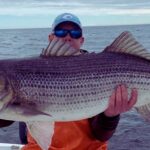
The heavy flush of bait has put striped bass and bluefish into aggressive feeding patterns. Stripers up to 30 inches are actively ambushing bait, while cocktail and tailor-sized bluefish (1 to 3 pounds) are tearing through schools in the daylight hours.
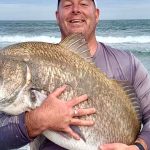
While the glamour species get the headlines, the local rockpiles are holding excellent numbers of Tautog. Anglers are reporting constant action, though you will need to weed through shorts to find your keeper. Additionally, beautiful weakfish up to 22 inches are showing up under the cover of darkness—a fantastic bonus catch for night-shift anglers.
Baitfish Report:
The water is thick with forage. Finger mullet are pouring out of the inlets, accompanied by tight schools of peanut bunker (juvenile menhaden). Match your presentations to these 3-to-5-inch bait profiles for the highest strike rates.
3. TACTICAL STRATEGY
Striped Bass and Weakfish (Night Shift)
Where: Focus your efforts on the Absecon Inlet rock walls, the famed T-Jetty, and the immediate beachfronts where the inlet current sweeps bait along the sand.
Lure: 5-inch soft plastic jerkbaits on 1/2 oz to 3/4 oz lead heads, or hard swimming plugs like the Daiwa SP Minnow (floating model).
Color: Bubblegum pink soft plastics are currently crushing both stripers and weakfish. For hard baits, bone or blurple (black/purple) is ideal for night fishing.
Timing: The outgoing tide under the cover of darkness is producing the most consistent bites as bait gets sucked out of the bay.
Tautog and Bottom Fish (Daylight Hours)
Where: Deep crevices and vertical drops right against the Atlantic City jetty rocks.
Bait: Green crabs (cut in half) or whole live sand fleas.
Rigging: A simple single-hook snafu or bottom rig with a 1.5 to 2 oz bank sinker. Keep it tight to the structure.
Pro Tip:When togging, do not set the hook on the first series of rapid taps. Wait for the heavy, solid pull as the blackfish crushes the bait in its crushers before lifting your rod tip sharply.
Bluefish and Mixed Bag
Where: Open inlet waters and beach cuts.
Lure/Bait: 1 oz to 2 oz silver metal spoons (like Kastmasters) for blues. For panfish (spot, croakers, kingfish), use Fishbites or real bloodworms on a high-low rig.
Pro Tip:If you see birds diving but the fish are staying just out of casting range, tie a 2-foot fluorocarbon leader to a heavy metal casting spoon. The density of the lure will give you the distance needed to reach the blitzing bluefish.
4. REGULATIONS SNAPSHOT
Always verify current New Jersey Marine regulations before harvesting, but here is the quick reference for the current fall season:
Species
Minimum Size
Bag Limit
Special Notes
Striped Bass
28" to under 31" (Slot)
1 per angler
Inline circle hooks mandatory when using natural bait.
Tautog (Blackfish)
15 inches
1 per angler
Limit increases to 5 fish starting November 16.
Bluefish
No minimum
5 per angler
Applies to private and shore-based anglers.
Weakfish
13 inches
1 per angler
Handle with care; very fragile mouths.
5. REGIONAL ALTERNATIVE
If the Atlantic City surf is too churned up from heavy easterly winds, head south to the protected back bays of Somers Point or Ocean City. Corson's Inlet State Park offers excellent wading opportunities inside the bay where the water remains cleaner during a blow. Switch to light tackle and target the massive schools of spot and croakers using clam chum and bloodworms. The back bay creeks are also holding holdover flounder and schoolie stripers that will readily take a 1/4 oz bucktail tipped with a Gulp! swimming mullet.
Pro Tip:When fishing the back bay sod banks, cast your lures parallel to the bank rather than straight out. Predators use the undercut banks as ambush points to trap baitfish moving with the tidal flow.
Tight lines!
Editor's Choice: Must-Have Gear
FISHINGSIR Next-Gen Waterproof Chest Waders
★★★★★4.4 (7,370+ reviews)
2-Ply Tech: Upgraded nylon with 2.5x higher density than standard fabrics.
100% Waterproof: Lab-approved intrusion resistance with taped visible seams.
Ultra-Lightweight: Designed for all-day comfort while hunting or fishing.
As an Amazon Associate I earn from qualifying purchases. #ad
Loading forecast...
Live Fishing Conditions: Tides, Weather & Waves
Get real‑time tides, marine weather, swell and solunar activity for each spot so you know exactly when conditions line up for your best chance at a bite.
🎣
Atlantic City
Loading coordinates...
🌤️
WEATHER CONDITIONS
--°F
--°C
Loading...
🌡️
Feels Like--°F--°C
💧
Humidity--%
💨
Wind-- mph-- km/h
🧭
Direction--
📊
Pressure-- inHg-- hPa
☀️
UV Index--
🌊
MARINE CONDITIONS
🌊Wave Height
-- ft
-- m
Loading...
🧭Wave Direction
--°
Loading...
⏱️Wave Period
-- s
Loading...
📈Tide Status
-- ft
-- m
Loading...
🌙
LUNAR & SOLUNAR
🌕
Loading...
Illumination: --%
Major Period--:-- - --:----:-- - --:--
Minor Period--:-- - --:----:-- - --:--
🌅Sunrise--:--
🌇Sunset--:--
📅
24-HOUR FORECAST
Loading fishing conditions...
Fishing Spots Map
🎣
Book a Fishing Charter near Atlantic City Fishing Report Today 🎣
Local guides & charters. Verified captains, instant booking, best price guaranteed.
There was an error loading the map. Please try refreshing the page.
Info
Local Access & Facilities
Atlantic City Pre-Trip Checklist
Local Access & Facilities
Atlantic City offers a fishing environment that stands as a stark, fascinating contradiction. While the skyline is defined by high-rise casinos and the bustle of the boardwalk, the surrounding waters comprise some of the most pristine and productive estuarine systems in the Northeast. Seasoned anglers know that just beyond the urban corridor lies a complex network of back bays, tidal wetlands, and the open Atlantic, offering diverse targets ranging from doormat fluke to migrating stripers.
The fishery here is defined by its proximity to massive protected zones, specifically the Edwin B. Forsythe National Wildlife Refuge and the Great Egg Harbor National Wild and Scenic River. Unlike typical urban harbors, the water quality and habitat here are supported by over 48,000 acres of protected coastal wetlands. This creates a unique dynamic where you can launch within sight of the city lights but fish in shallow coves and salt marshes that feel completely removed from civilization. The bottom topography varies wildly, from the deep channels of the Absecon Inlet to the treacherous, shifting shoals of the Great Bay.
For the serious captain, this area requires a shift in mindset. You aren't just navigating a harbor; you are threading the needle between a "densely populated urban corridor" and the Jacques Cousteau National Estuarine Research Reserve, regarded as one of the least disturbed estuaries in the region. Success here depends on understanding the interplay between the heavy boat traffic of the main channels and the quiet, tide-dependent flats where the game fish hunt.
Access & Getting There
Reaching the prime fishing grounds around Atlantic City generally involves navigating the Garden State Parkway or the Atlantic City Expressway. For anglers towing trailers, the approach requires strategic timing. The summer shore traffic can be brutal, particularly on weekends. Most access to the northern wetlands and the Mullica River/Great Bay area is via Garden State Parkway Exit 58 (Route 539) or Exit 48 (Route 9). If you are targeting the southern backwaters or the Great Egg Harbor River, you will likely utilize routes near Somers Point or Mays Landing off Route 50.
5th Street Boat Ramp serves as a primary launch point for getting into the immediate area, located approximately 5 miles from the city center. However, captains should be aware that the launch infrastructure varies significantly across the region. While the main ramps are serviceable, accessing the quieter zones often means utilizing smaller, tide-dependent points. The Great Egg Harbor River access, located about 11 miles out near Estell Manor, offers a gateway to the wilder, scenic sections of the river system, but requires a drive inland.
💡 Captain's Tip: Watch the Gate Clock
If you are fishing the Edwin B. Forsythe National Wildlife Refuge areas via land or launching small craft from within the refuge boundaries, strict hours apply. The gates on Great Creek Road open at sunrise and close promptly at sunset. Do not get locked in after a late bite.
Parking logistics vary heavily by your specific launch site. In Atlantic City proper, Park Place Parking on Dr. Martin Luther King Blvd offers 24-hour access, which is crucial for surf casters or those hitting the dawn patrol hard. For those trailering further inland or north, spots like the Absecon Station Parking Lot provide alternatives, though they are further from the water. When accessing the remote Holgate Wilderness Area during the open season, a beach buggy permit is mandatory, and vehicle access is strictly regulated to protect the barrier island ecosystem.
Weather contingencies are critical in this region. The shallow bays behind the barrier islands, particularly around Great Bay and Little Egg Harbor, can whip into a dangerous chop quickly when the wind opposes the tide. If the Atlantic is blown out, the protected waters of the Mullica River offer a viable "Plan B," but navigational caution is required due to shifting sandbars and mudflats.
Facilities & Amenities
The local infrastructure supports a serious fishing culture, but amenities are spread out across the barrier islands and the mainland. You won't find a single centralized "fishing center," but rather a network of specialized shops serving specific zones. For anglers in Atlantic City or Ventnor, Ship Shop Bait & Tackle is the closest reliable outfitter, located just 2.5 miles away. They are well-positioned for those fishing the Absecon Inlet or the immediate surf.
If your expedition takes you south towards the Great Egg Harbor Inlet, Tight Lines Bait and Tackle in Somers Point is the strategic stop. They open at 6:00 AM most days, catering to the early risers heading out to the drag. Conversely, if you are fishing the northern pristine waters near the Jacques Cousteau Reserve, Bogin's Bait and Tackle in Tuckerton or Scott's Bait & Tackle in Little Egg Harbor are your best bets for fresh bait and local intelligence on the Mullica River bite.
💡 Captain's Tip: Fuel Logistics
While bait is plentiful, on-water fuel can be scarce in the backwater tributaries. If you are running the Great Egg Harbor River or the upper Mullica, top off your tanks on the highway. There are long stretches of marshland with absolutely no commercial services.
The charter fleet here is diverse, reflecting the varied fishery. Get Hooked Fishing Charters operates out of Brigantine, perfect for quick access to the inlet and nearshore wrecks. For those looking to explore the southern bays, Shore Thing Charters and Moover Fishing Adventures in Ocean City have solid reputations. The accommodation scene is split between high-end casino hotels and mainland campgrounds. Trailer boaters often prefer spots like Ocean Isle Campground or Belhaven Lake RV Resort, which offer more space for rigs than the cramped city garages.
Facility Name
Type
Distance
Special Notes
Ship Shop Bait & Tackle
Bait & Tackle
2.5 miles
Closest to AC; opens 7 AM.
Tight Lines Bait and Tackle
Bait & Tackle
9.1 miles
Somers Point hub; opens 6 AM.
Get Hooked Fishing Charters
Charter
4.9 miles
Brigantine based; near inlet.
Park Place Parking
Parking
0.6 miles
Open 24 Hours; Rating: 5/5.
Marriott's Fairway Villas
Lodging
6.5 miles
Galloway; upscale option.
Permits, Regulations & Fees
Navigating the regulations in this region requires attention to detail because you are often crossing between state waters and federal protected lands. The Edwin B. Forsythe National Wildlife Refuge and the Jacques Cousteau National Estuarine Research Reserve have specific mandates designed to protect migratory birds and the estuarine environment. While general fishing is managed by the State Fishing Agency, access to specific spots within the refuges may be restricted seasonally.
For example, the Holgate Wilderness Area is closed to all public access (including pedestrians and vehicles) during the nesting season, typically from April 1 through August 31. It reopens on September 1, at which point beach buggy permits from Long Beach Township are required for vehicle access. This is a strict conservation measure; respect for these boundaries is essential to maintaining angler access to these pristine strips of coast.
In the Great Egg Harbor National Wild and Scenic River, local jurisdictions administer the lands, but the National Park Service oversees the designation. This means while you are fishing state waters, you are in a zone of high ecological sensitivity. "Kapu" or respect for the land is not just a Hawaiian concept; here, it translates to respecting the "True People" (Lenni Lenape) heritage of the land and the fragile salt marsh ecosystem. Tread lightly, especially in the shallow back bays where prop scars can damage the habitat for decades.
Events & Seasonal Information
The fishing calendar in Atlantic City is dictated by migration patterns. The area is a critical stop on the Atlantic Flyway, and the movement of birds often mirrors the movement of baitfish. The spring and fall runs are the high points of the year. During the fall, as water temperatures drop, stripers move out of the back bays and down the beach, creating world-class surf fishing opportunities along the barrier islands.
Summer brings the tourist crowds and heavy boat traffic, particularly around the inlets and the Intracoastal Waterway. The "summer calm" can be deceptive; afternoon sea breezes often kick up a significant chop in the open bays by 10:00 AM. Experienced locals know to fish the "dawn patrol" window to avoid both the wind and the jet skis. The Jacques Cousteau Reserve area is particularly sensitive to seasonal changes, serving as a nursery for many species. Winter fishing is quieter, focused on resident species, but access to remote areas like Holgate becomes a prime draw for hardy surf casters after September 1st.
💡 Captain's Tip: Tides Matter More Here
In the shallow estuaries of the Great Bay and behind Brigantine, the tide swing is significant. Low tide can turn a navigable shortcut into a mudflat instantly. Always consult a local tide chart specifically for the back bays, not just the ocean inlet, as the lag time can be over an hour.
Contact Information & Resources
For the most current information on access and conditions, direct contact with the managing agencies is recommended. The Edwin B. Forsythe National Wildlife Refuge headquarters can be reached at 609-652-1665 or via email at forsythe@fws.gov. For questions regarding the Jacques Cousteau National Estuarine Research Reserve, contact their office at 609-812-0649 x 206. Matters concerning the Great Egg Harbor River are often best directed to the local county contacts or the NPS regional office.
Safety is paramount. This is a mixed-use waterway with commercial traffic, recreational fleets, and shallow hazards. There is no single harbor master for the entire region, so self-reliance is key. Ensure your VHF radio is functional and you have a solid float plan before heading into the vast marshlands where cell service can be spotty.
For precise locations, real-time wind conditions, and detailed maps of the boat ramps and tackle shops mentioned above, consult the live dashboard and interactive widgets below.
🎣
Atlantic City
Atlantic City • New Jersey • 39.3609, -74.4388
🅿️
Parking
5
Park Place Parking
⭐ 5.00.6 mi
📍148 S Dr Martin Luther King Blvd, Atlantic City, NJ 08401, USA
Our spot reports combine data-driven forecasts with curated local information. The forecast is generated by our proprietary Fishing Score algorithm (0–100%), which analyzes real-time data from Open-Meteo API, validated against NOAA CO-OPS tide gauges and USGS water-monitoring stations. The model weights tide dynamics (35%), wave energy (25%), wind patterns (20%) and time of day (20%)—factors shown to influence fish feeding behavior through marine-biology research and decades of charter log data.
Access, facilities and services information for each fishing spot is sourced from official datasets such as Recreation.gov (RIDB), state park & wildlife agencies, and geospatial providers like Google Maps. These sections undergo scheduled re-validation every 3–6 months to ensure that boat ramps, park access, contact details and local services remain accurate.
Narrative sections (catches, seasonal behavior, local tips) are synthesized from these data sources and refined following the Fishing Reports Today editorial guidelines, combining bibliographic research from ichthyology and oceanography with expert angler experience. Our team reviews reports on a regular basis, while the forecast model itself updates every 6 hours for real-time accuracy.
⚠️ Important: Always verify current local regulations, access restrictions and weather conditions before fishing. These reports are intended as a planning aid, not a guarantee of catches or safety. When in doubt, contact local authorities or park managers listed on the page.
To provide the best experiences, we use technologies like cookies to store and/or access device information. Consenting to these technologies will allow us to process data such as browsing behavior or unique IDs on this site. Not consenting or withdrawing consent, may adversely affect certain features and functions.
Functional Always active
The technical storage or access is strictly necessary for the legitimate purpose of enabling the use of a specific service explicitly requested by the subscriber or user, or for the sole purpose of carrying out the transmission of a communication over an electronic communications network.
Preferences
The technical storage or access is necessary for the legitimate purpose of storing preferences that are not requested by the subscriber or user.
Statistics
The technical storage or access that is used exclusively for statistical purposes.The technical storage or access that is used exclusively for anonymous statistical purposes. Without a subpoena, voluntary compliance on the part of your Internet Service Provider, or additional records from a third party, information stored or retrieved for this purpose alone cannot usually be used to identify you.
Marketing & Affiliates
The technical storage or access is required to create user profiles to send advertising, or to track the user on a website or across several websites for similar marketing purposes, including affiliate tracking for products recommended in our reports.


Leave a Reply