The highly anticipated fall transition is officially underway across the Little Egg Harbor and Great Bay estuary systems, making current conditions highly favorable for anglers. Dropping water temperatures have pushed both resident and migratory species into their optimal feeding zones, triggering the aggressive autumn feed. Wind conditions are generally manageable inside the protected waters of the bay, providing smooth drifts along the sod banks and navigable conditions in the main channels.
Safety Advisory: Boaters heading toward the mouth of Little Egg Inlet must exercise extreme caution. The outgoing tide is currently colliding with incoming eastern ocean swells, which can stack up steep, hazardous waves across the shoals. If you are in a smaller vessel, stay inside the inlet or meticulously time your transit during the slack tide. Weather and water clarity remain prime for an aggressive bite, but situational awareness near the inlet is paramount. As the water temperatures continue to drop, wearing proper foul-weather gear and having your safety equipment easily accessible is a non-negotiable standard.
🎣Nautrek
Private Beta
J
M
R
100+ anglers on the waitlist
The fishing network where your reputation matters.
Find trusted captains, join real trips with cost splitting, and build your Angler Rank. Your spots stay private — you decide who sees your intel.
Primary Target: Striped Bass and Tautog (Blackfish)
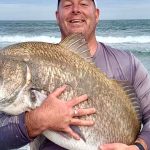
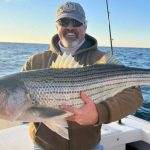
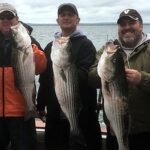
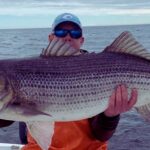
Resident striped bass have shifted into highly aggressive fall feeding patterns, staging to ambush baitfish along the sod banks, creek mouths, and bridge pilings. As the migration continues, we are seeing a healthy mix of schoolies and slot-sized fish pushing through the estuary. Simultaneously, tautog are feeding heavily on hard structure as they prepare for the colder months ahead, providing excellent bottom-fishing opportunities for those who know how to read the structure.
Sleeper Pick: Weakfish
Often overlooked by anglers hyper-focused on the striped bass run, beautiful tide-runner weakfish are currently holding in the deeper holes of the bay. These fish are feeding heavily on small forage and grass shrimp, providing excellent light-tackle action for those willing to scale down their presentations and fish with finesse. Look for them in areas with a muddy bottom adjacent to steep drop-offs.
Baitfish Report
The estuary is absolutely brimming with forage right now, which is the driving force behind this phenomenal bite. Finger mullet are schooling tightly and migrating toward the inlet, creating visible surface frenzies when intercepted by predators. Additionally, dense pods of peanut bunker (juvenile menhaden) are getting pinned against the sod banks by aggressive bluefish and stripers. Matching the hatch with 3-to-4-inch profile lures is critical for success on the water right now.
3. TACTICAL STRATEGY
Striped Bass on the Sod Banks
Where: Target the sod banks near Graveling Point and the marsh edges surrounding Mystic Islands. Focus your efforts on the 4-to-8-foot drop-offs where the shallow flats drain into the main channels. Positioning your boat parallel to the bank and casting up-current will yield the best results.
Lure: Throw a 1/2oz leadhead paired with a 4-inch paddle tail swimbait, or switch to a bone-colored Rapala Skitter Walk for explosive topwater strikes during low-light conditions.
Color: White, bone, or pearl to closely mimic the peanut bunker and mullet currently flushing through the system.
Bait: Live peanut bunker rigged on a 6/0 inline circle hook, free-lined along the sod banks. If throwing cut bait, fresh clam remains a highly productive option when fished on the bottom with a fish-finder rig.
Timing: The falling (outgoing) tide is currently the most productive window. As water drains from the shallow flats and marsh creeks, it pulls the peanut bunker and mullet directly into the deeper channels where predators are waiting in ambush. Dawn and dusk remain the absolute best times to target striped bass on the flats before boat traffic increases.
Pro Tip:When working paddle tails along the sod banks, do not simply cast and reel at a steady pace. Use a sweep-and-pause retrieve to mimic a wounded baitfish falling out of the current. Most strikes will occur on the pause as the lure flutters downward.
Tautog on Hard Structure
Where: Focus on the bridge pilings along the Route 72 causeway or any submerged concrete and rock piles near the inlet. Look for depths of 10 to 15 feet with moderate current. Precision boat positioning is everything here; you must be anchored directly over the structure to stay in the strike zone.
Lure/Rig: A 3/4oz to 1oz Tog jig (depending on current speed) or a standard single-hook snafu rig tied with 40lb fluorocarbon leader to resist abrasion against the rocks.
Color: Green, brown, or orange jig heads to blend in with the natural crab forage.
Bait: Halved green crabs or Asian shore crabs. Ensure the hook point is exposed through a leg socket for optimal hookup ratios.
Pro Tip:Tautog are notorious bait stealers. Keep your line tight and feel for the subtle scratching before the harder thump. Do not set the hook on the first tap; wait for the weight of the fish to load the rod tip before driving the hook home with authority.
4. REGULATIONS SNAPSHOT
Compliance is critical to maintaining our world-class fisheries. Below is a snapshot of current fall regulations for our primary targets. Ensure you are registered with the free NJ Saltwater Recreational Registry before hitting the water, and always handle released fish with care to ensure their survival.
Species
Minimum Size
Bag Limit
Season Notes
Striped Bass
28 to 31 inches (Slot)
1 per angler
Strict slot limit. Non-offset circle hooks are mandatory when fishing with bait.
Tautog (Blackfish)
15 inches
1 per angler
Limit increases to 5 fish starting November 16 for late-season wreck fishing.
Black Sea Bass
12.5 inches
10 per angler
Current fall limit valid through October 31.
Weakfish
13 inches
1 per angler
No closed season. Handle with care due to their delicate mouths.
5. REGIONAL ALTERNATIVE
If strong southerly or easterly winds make the open waters of Little Egg Harbor and the inlet unsafe or unfishable, head north to the sheltered waters behind Island Beach State Park in Barnegat Bay. Launching near South Seaside Park allows you to tuck behind the barrier island, which effectively blocks heavy ocean winds and provides a calm, fishable lee.
The shallow sedge islands in this region offer fantastic protection and hold excellent numbers of schoolie striped bass and aggressive bluefish during the fall run. Scale down your tackle to medium-light spinning gear with 3/8oz or 1/2oz jigheads paired with soft plastics, and methodically work the 4-to-6-foot weed-line edges. The water here is generally much calmer, allowing for highly controlled drifts, precise casting, and consistent rod-bending action until the coastal weather subsides enough to return to the
inlet and open bay.
6. WEATHER & TIDE OUTLOOK
The upcoming weekend features a new moon phase, which will usher in stronger tidal currents and higher-than-average water levels during the flood tide. These "spring tides" are excellent for flushing bait out of the backwater marshes, setting up prime ambush scenarios for striped bass on the outgoing water. Expect morning air temperatures in the crisp mid-40s, warming to the low 60s by mid-afternoon. Water temperatures are currently hovering around 58 degrees and dropping steadily. Wind forecasts indicate a moderate northwest breeze at 10-15 knots, which will help flatten the bay waters but may add a chill to the air, so dress in layers.
7. GEAR PREP & MAINTENANCE
With the aggressive nature of fall fishing and the presence of toothy bluefish mixed in with the stripers, checking your leaders is more important than ever. Inspect your fluorocarbon for nicks and abrasions after every fish or snag. If you are fishing heavy structure for tautog, re-tie your rigs frequently, as the sharp barnacles and concrete will quickly compromise even the toughest 40lb leader. Make sure your drag is set smoothly to handle the sudden, powerful runs of slot-sized stripers near the sod banks.
Tight lines!
Editor's Choice: Must-Have Gear
FISHINGSIR Next-Gen Waterproof Chest Waders
★★★★★4.4 (7,370+ reviews)
2-Ply Tech: Upgraded nylon with 2.5x higher density than standard fabrics.
100% Waterproof: Lab-approved intrusion resistance with taped visible seams.
Ultra-Lightweight: Designed for all-day comfort while hunting or fishing.
As an Amazon Associate I earn from qualifying purchases. #ad
Loading forecast...
Live Fishing Conditions: Tides, Weather & Waves
Get real‑time tides, marine weather, swell and solunar activity for each spot so you know exactly when conditions line up for your best chance at a bite.
🎣
Little Egg Harbor, NJ
Loading coordinates...
🌤️
WEATHER CONDITIONS
--°F
--°C
Loading...
🌡️
Feels Like--°F--°C
💧
Humidity--%
💨
Wind-- mph-- km/h
🧭
Direction--
📊
Pressure-- inHg-- hPa
☀️
UV Index--
🌊
MARINE CONDITIONS
🌊Wave Height
-- ft
-- m
Loading...
🧭Wave Direction
--°
Loading...
⏱️Wave Period
-- s
Loading...
📈Tide Status
-- ft
-- m
Loading...
🌙
LUNAR & SOLUNAR
🌕
Loading...
Illumination: --%
Major Period--:-- - --:----:-- - --:--
Minor Period--:-- - --:----:-- - --:--
🌅Sunrise--:--
🌇Sunset--:--
📅
24-HOUR FORECAST
Loading fishing conditions...
Fishing Spots Map
🎣
Book a Fishing Charter near Little Egg Harbor, NJ Fishing Report Today 🎣
Local guides & charters. Verified captains, instant booking, best price guaranteed.
There was an error loading the map. Please try refreshing the page.
Info
Local Access & Facilities
Little Egg Harbor represents one of the most pristine and ecologically significant fisheries on the Eastern Seaboard. Situated at the convergence of the Mullica River and Great Bay, this area is defined by its status as part of the Jacques Cousteau National Estuarine Research Reserve. Unlike the manicured marinas found further north, this fishery is a rugged patchwork of salt marshes, shallow coves, and pine barrens. The bottom topography here is dominated by shifting sandbars and nutrient-rich mudflats that fuel a massive food web.
The atmosphere is deceptively quiet, contrasting sharply with the neon glow of Atlantic City located just 17 miles to the south. Seasoned anglers know that the lack of development along the shoreline—less than 1% of the Reserve is developed—translates to exceptional water quality and undisturbed habitat. This is not a location for casual cruising; it is a tactical fishery where understanding tidal movements through the sedge banks is paramount.
The primary draw for experts here involves the seasonal migrations that push through the Atlantic Flyway. The same nutrient density that supports thousands of migratory birds attracts game fish into the shallow thoroughfares. Whether you are poling a skiff through the backwaters or setting up for a drift in the main channels of Great Bay, the ecosystem here supports a diverse array of target species that thrive in the brackish mix of fresh river water and Atlantic salt.
Access & Getting There
Reaching the prime waters of Little Egg Harbor usually involves navigating the Garden State Parkway. For direct access to the Jacques Cousteau Coastal Education Center and the northern reaches of the harbor, seasoned drivers utilize Exit 58 (Route 539) toward Tuckerton. Traffic on the Parkway can be heavy during summer weekends, so planning your transit to avoid mid-morning congestion is essential. Once off the highway, the route transforms into local roads like Great Bay Blvd, which leads directly into the heart of the marshlands.
Launching a vessel here requires attention to the tides. While there are several access points, the ramps can become slick and shallow during dead low tide. The Great Egg Harbor River access, located at Estell Manor Park roughly 24 miles from the harbor center, offers a reliable launch for those targeting the river system specifically. For those focusing on the bay, local street-end launches and smaller ramps near Tuckerton are often preferred, though parking capacity is strictly limited. It is common for trailer parking to reach capacity before 6:00 AM during the peak fall run.
💡 Captain's Tip: Watch the Wind
The shallow nature of Great Bay means that wind creates chop instantly. If the forecast calls for winds exceeding 15 knots, particularly against the tide, the open bay becomes treacherous. Stick to the leeward side of the sod banks or the protected waters of the Mullica River.
Weather contingencies are a critical part of the logistics plan in this region. The Edwin B. Forsythe National Wildlife Refuge offers miles of shoreline access, but it is highly exposed to the elements. During strong northeasters, the "Wildlife Drive" and exposed points like Graveling Point can become unfishable or even inaccessible due to flooding. Always have a backup plan that involves protected waters further inland along the river systems if the bay is blown out.
Parking requires a defensive strategy. At popular spots like Scott's Landing or the end of Radio Road at Graveling Point, space is at a premium. Ensure your vehicle is parked well clear of the high tide line, as tidal flooding is a frequent occurrence on these low-lying access roads. Security is generally good, but leaving valuables in plain sight at remote marsh access points is never advisable.
Little Egg Harbor, NJ Pre-Trip Checklist
Facilities & Amenities
The infrastructure around Little Egg Harbor is geared towards the serious sportsman rather than the tourist. Bogin's Bait and Tackle, located just 1.7 miles from the center of the action in Tuckerton, is the primary logistical hub. This shop opens at 6:00 AM on weekdays and 5:00 AM on weekends, perfectly timing the needs of the dawn patrol crowd. For those approaching from the north, Creekside Outfitters in Waretown offers an alternative stop for fresh bait and terminal tackle.
The local charter fleet is robust, with a focus on light tackle inshore fishing and heavy offshore runs. Operators like LBI Fishing Charters and Capt. Jack's operate out of the nearby Beach Haven area, roughly 6 miles away. These captains specialize in navigating the shifting shoals of the inlet and the bay. It is worth noting that while fuel is available at major marinas, many of the smaller, rustic launches in the refuge areas have absolutely no amenities—no fuel, no ice, and no water. You must be fully self-sufficient before leaving the pavement.
💡 Captain's Tip: Fuel Management
There are no fuel docks within the National Wildlife Refuge or the primitive launch sites. Top off your tanks at highway stations before turning onto the access roads like Great Bay Blvd.
Lodging options vary from rustic to resort-style. For the hardcore angler, Pilgrim Lake Campgrounds is located only 5 miles away in New Gretna, allowing for maximum time on the water. For those requiring more comfort or traveling with family, the Marriott's Fairway Villas in Galloway provide high-end amenities about 11 miles from the fishing grounds. Belhaven Lake RV Resort is another solid option for those towing campers.
Facility Name
Type
Distance
Key Notes
Bogin's Bait and Tackle
Bait Shop
1.7 miles
Opens 5 AM weekends; located in Tuckerton.
LBI Fishing Charters
Charter
6.7 miles
Based in Beach Haven; 24-hour availability listed.
Pilgrim Lake Campgrounds
Lodging
5.0 miles
Closest camping option; open seasonally.
Park Place Parking
Parking
16.4 miles
Located in Atlantic City; open 24 hours.
Permits, Regulations & Fees
Fishing in Little Egg Harbor places you within a complex overlap of state and federal jurisdictions. The area is managed primarily by the State Fishing Agency, but the specific rules of the Jacques Cousteau National Estuarine Research Reserve and the Edwin B. Forsythe National Wildlife Refuge must be respected. These regulations exist to protect the fragile salt marsh ecosystem that serves as a nursery for the very game fish anglers pursue.
Access to the Holgate Wilderness Area is strictly regulated. This zone is open to the public only from September 1 through March 31 to protect nesting shorebirds. During the open season, surf fishing vehicles are permitted, but a specific beach buggy permit must be obtained from Long Beach Township. Failure to secure this permit or driving in closed nesting areas can result in significant federal fines.
Cultural respect is also paramount. The refuge lies on the indigenous homelands of the Lenni Lenape people, who were the first to harvest seafood from these waters. Anglers are expected to practice "leave no trace" ethics. Additionally, private property lines along the creeks can be ambiguous; always look for purple paint or signage indicating private land, and stick to designated public access points like Scott's Landing and Graveling Point.
Events & Seasonal Information
The rhythm of this fishery is dictated by the seasons. The spring and fall migrations are the high points, aligning with the movements of striped bass and bluefish entering the estuary. The summer months bring a slower pace, with warm water species dominating the shallow flats. The Holgate Wilderness Area closure in spring and summer (April through August) is a major calendar event that dictates where surf anglers can operate.
Timing your day is critical. The gates to the Edwin B. Forsythe National Wildlife Refuge at Great Creek Road open strictly at sunrise and close at sunset. Getting locked in is a real possibility for anglers pushing the evening bite too late. In terms of daily timing, the trade winds often pick up by late morning. Experienced skippers aim to be on their spot at first light to capitalize on the calm surface conditions before the bay chop builds.
💡 Captain's Tip: Gate Awareness
The main gate at the Wildlife Refuge is automated or strictly managed. If you are parked inside the gate at sunset, you may be locked in until the following morning. Always check the posted closing times at the entrance.
Contact Information & Resources
For the most current information on access and conditions, direct contact with the managing agencies is recommended. The Jacques Cousteau National Estuarine Research Reserve can be reached at 609-812-0649. For inquiries regarding the Edwin B. Forsythe National Wildlife Refuge, including trail closures and pass information, call 609-652-1665 or email forsythe@fws.gov.
Safety in this remote marsh environment is the responsibility of the angler. Cell phone reception can be spotty in the low-lying areas of the reserve. Always file a float plan with a reliable contact before heading out into the bay or the river systems. For precise locations and real-time conditions, consult the live dashboard and maps below.
🎣
Little Egg Harbor, NJ
Little Egg Harbor Township • New Jersey • 39.5887, -74.3655
🅿️
Parking
5
Park Place Parking
⭐ 5.016.4 mi
📍148 S Dr Martin Luther King Blvd, Atlantic City, NJ 08401, USA
Our spot reports combine data-driven forecasts with curated local information. The forecast is generated by our proprietary Fishing Score algorithm (0–100%), which analyzes real-time data from Open-Meteo API, validated against NOAA CO-OPS tide gauges and USGS water-monitoring stations. The model weights tide dynamics (35%), wave energy (25%), wind patterns (20%) and time of day (20%)—factors shown to influence fish feeding behavior through marine-biology research and decades of charter log data.
Access, facilities and services information for each fishing spot is sourced from official datasets such as Recreation.gov (RIDB), state park & wildlife agencies, and geospatial providers like Google Maps. These sections undergo scheduled re-validation every 3–6 months to ensure that boat ramps, park access, contact details and local services remain accurate.
Narrative sections (catches, seasonal behavior, local tips) are synthesized from these data sources and refined following the Fishing Reports Today editorial guidelines, combining bibliographic research from ichthyology and oceanography with expert angler experience. Our team reviews reports on a regular basis, while the forecast model itself updates every 6 hours for real-time accuracy.
⚠️ Important: Always verify current local regulations, access restrictions and weather conditions before fishing. These reports are intended as a planning aid, not a guarantee of catches or safety. When in doubt, contact local authorities or park managers listed on the page.
To provide the best experiences, we use technologies like cookies to store and/or access device information. Consenting to these technologies will allow us to process data such as browsing behavior or unique IDs on this site. Not consenting or withdrawing consent, may adversely affect certain features and functions.
Functional Always active
The technical storage or access is strictly necessary for the legitimate purpose of enabling the use of a specific service explicitly requested by the subscriber or user, or for the sole purpose of carrying out the transmission of a communication over an electronic communications network.
Preferences
The technical storage or access is necessary for the legitimate purpose of storing preferences that are not requested by the subscriber or user.
Statistics
The technical storage or access that is used exclusively for statistical purposes.The technical storage or access that is used exclusively for anonymous statistical purposes. Without a subpoena, voluntary compliance on the part of your Internet Service Provider, or additional records from a third party, information stored or retrieved for this purpose alone cannot usually be used to identify you.
Marketing & Affiliates
The technical storage or access is required to create user profiles to send advertising, or to track the user on a website or across several websites for similar marketing purposes, including affiliate tracking for products recommended in our reports.


Leave a Reply