Current seasonal conditions in the Mid-Coast region are aligning perfectly for early autumn estuarine fishing. Weather forecasts indicate comfortable daytime highs around 24°C to 26°C with mild overnight lows. Expect partly cloudy skies with occasional passing showers, so packing a lightweight, breathable rain shell is highly recommended. The moon is currently in its Waxing Crescent phase, moving toward the First Quarter. This places the region in a period of moderate tidal coefficients—meaning you will not have to battle roaring spring tides. The manageable water flow is ideal for picking apart structural holding zones in the local estuaries without your bait or lure getting swept away instantly. Water temperatures are gradually cooling, which acts as a biological trigger for resident species to feed aggressively before winter sets in.
SPECIES INTEL
Based on the latest biological sampling and verified catch data from the Forster and wider Mid-Coast region, here is your target hierarchy:
🎣Nautrek
Private Beta
J
M
R
100+ anglers on the waitlist
The fishing network where your reputation matters.
Find trusted captains, join real trips with cost splitting, and build your Angler Rank. Your spots stay private — you decide who sees your intel.
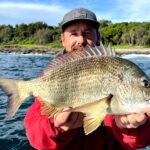
Primary Target: Yellowfin Bream. The transition into autumn is prime time for bream as they begin schooling and aggressively feeding to put on condition. Verified observations pinpoint heavy activity around the Mid-Coast Council waterways and the Harrington area. They boast a silver to olive-green body with distinct yellowish pectoral, ventral, and anal fins.
Secondary Target: Sea Mullet. The legendary autumn mullet run is officially underway. Massive concentrations have been confirmed in the Coolongolook River and around Bungwahl. While often netted commercially, they can be targeted recreationally using specialized dough baits or small pieces of bread under a light float.
Sleeper Pick: Australian Long-finned Eel. Often overlooked by sport anglers, these eels have been highly active around Bungwahl. They offer a surprisingly powerful fight on light tackle and are exceptional table fare when hot-smoked.
Baitfish Report: The estuaries are currently choked with micro-forage. Verified citizen science data shows heavy concentrations of Eastern Mosquitofish around Coomba Park, alongside Port Jackson Glassfish and Gobies in the Bungwahl area. Predatory fish are completely dialed into this 1-to-2-inch forage base.
Pest Warning: Banded and Common Toadfish are currently swarming the shallows around Old Bar and Pacific Palms. These aggressive bait-stealers possess sharp, beak-like teeth and will make short work of expensive soft plastics.
TACTICAL STRATEGY
Where to Deploy
Bypass the featureless sand flats and focus your efforts on the Wallis Lake oyster leases and the Forster Breakwall. For Yellowfin Bream, navigate to the leases just south of the bridge. Do not fish the middle of the channels; instead, position your vessel up-current of the racks and cast directly into the 8-to-12-foot drop-offs bordering the structure. If you are targeting the breakwall, the first 50 meters from the mouth on the run-out tide is the primary holding zone for ambush predators, offering excellent opportunities for tailor, bream, flathead, and the occasional mulloway (jewfish).
Gear and Tackle Requirements
To maximize your strike rate in these clear estuarine waters, finesse is the name of the game. Leave the heavy offshore gear at home. A 7-foot to 7-foot-6-inch fast-action spinning rod paired with a 1000 or 2000 size reel is the perfect weapon for Wallis Lake. Spool up with a high-quality 6lb braided mainline. The most critical component of your setup is the leader. Because the water is remarkably clear during this early autumn window, fish are highly visually oriented. Tie on a rod-length of 4lb to 6lb fluorocarbon leader. If you are fishing deep into the oyster racks and keep getting busted off, you can upsize to an 8lb leader, but be aware that your strike rate will noticeably decrease.
Lure Selection
Because the biological data confirms a massive presence of glassfish, gobies, and mosquitofish, you must match the hatch. Put away the oversized baits and tie on a 2-inch to 2.5-inch paddle tail soft plastic. Rig it on a 1/16oz to 1/8oz jighead with a size 2 hook. Utilize a "twitch-twitch-pause" retrieve, allowing the lure to dart erratically like a fleeing goby before settling on the sandy bottom.
Pro Tip: Because toadfish are highly active in the area right now, they will relentlessly bite the paddle tails off your soft plastics. If you start getting "tail-nipped," immediately switch to a small suspending hardbody minnow (like a 60mm shallow diver) to avoid burning through your tackle.
Color Patterns
Water clarity in Wallis Lake is currently high. Stick to translucent, "ghost," or silver/olive patterns that accurately mimic the resident glassfish and mullet fry. Opaque or aggressively bright colors will spook wary bream in these clear autumn conditions.
Bait Fishing
If you prefer soaking bait, fresh is non-negotiable. Floating fresh mullet strips, live pink nippers (yabbies), or peeled prawns as close to the oyster leases as possible is a proven tactic for large bream. Use a lightly weighted or completely unweighted rig. Cast up-current and let the bait drift naturally down the face of the oyster racks.
Timing the Bite
The golden hours of dawn and dusk remain the most productive windows. Time your session so that the first two hours of the run-out tide coincide with low light conditions. This is when baitfish are flushed from the safety of the shallow seagrass beds directly into the deeper channels where the bream and flathead are waiting.
REGULATIONS SNAPSHOT
Always verify local rules, but here are the current critical regulations for the primary targets in New South Wales:
Species
Minimum Legal Length
Bag & Possession Limits
Yellowfin Bream
25 cm
10 per day (Bag), 20 in possession
Sea Mullet
30 cm
20 per day (Bag)
Australian Long-finned Eel
30 cm
10 per day (Bag)
Pro Tip: In NSW, the possession limit for bream is twice the daily bag limit (20 fish total if you are on a multi-day trip). Ensure you have your NSW Recreational Fishing Fee receipt paid and physically (or digitally) on your person before casting a line.
REGIONAL ALTERNATIVE
If coastal winds pick up and render the Forster Breakwall or main lake unfishable, pack
up your gear and head inland to the heavily timbered stretches of the Coolongolook or Wallingat Rivers.
These winding tributaries offer fantastic natural protection from coastal blows. Here, you can target Estuary Perch and ambush-ready Dusky Flathead by casting weedless soft plastics or small surface walkers tight against the submerged snags, fallen laydowns, and mangrove-lined banks. The water in these upper reaches is often tannin-stained, which provides better cover for the fish and makes them significantly less leader-shy than their main-lake counterparts.
SAFETY & HAZARDS
While the estuaries are generally forgiving, navigating the Wallis Lake system requires vigilance. The sandbanks frequently shift after seasonal rains or large tides, so rely on visual navigation rather than blindly trusting your GPS tracks from last year. If you are wading the flats or fishing land-based around the oyster leases, thick-soled wading boots are absolutely mandatory to protect against razor-sharp oyster shells and the occasional resting stingray. Additionally, be respectful of the local commercial oyster farmers—never tie off directly to their racks, and keep your vessel's wake to an absolute minimum when navigating through lease areas.
FINAL THOUGHTS
The Mid-Coast is currently serving up some of its most reliable estuarine action of the year. The transition into autumn means the resident species are feeding with purpose, and the heavy summer holiday crowds have largely dissipated, leaving the waterways peaceful. Focus your efforts on the structure, strictly manage your leader size, and perfectly match that tiny baitfish profile to capitalize on the active bite windows. Take only what you need for a fresh feed, and consider releasing the larger breeding stock to ensure the continued health of this world-class fishery.
Tight lines!
Editor's Choice: Must-Have Gear
FISHINGSIR Next-Gen Waterproof Chest Waders
★★★★★4.4 (7,370+ reviews)
2-Ply Tech: Upgraded nylon with 2.5x higher density than standard fabrics.
100% Waterproof: Lab-approved intrusion resistance with taped visible seams.
Ultra-Lightweight: Designed for all-day comfort while hunting or fishing.
As an Amazon Associate I earn from qualifying purchases. #ad
Loading forecast...
Live Fishing Conditions: Tides, Weather & Waves
Get real‑time tides, marine weather, swell and solunar activity for each spot so you know exactly when conditions line up for your best chance at a bite.
🎣
Forster
Loading coordinates...
🌤️
WEATHER CONDITIONS
--°F
--°C
Loading...
🌡️
Feels Like--°F--°C
💧
Humidity--%
💨
Wind-- mph-- km/h
🧭
Direction--
📊
Pressure-- inHg-- hPa
☀️
UV Index--
🌊
MARINE CONDITIONS
🌊Wave Height
-- ft
-- m
Loading...
🧭Wave Direction
--°
Loading...
⏱️Wave Period
-- s
Loading...
📈Tide Status
-- ft
-- m
Loading...
🌙
LUNAR & SOLUNAR
🌕
Loading...
Illumination: --%
Major Period--:-- - --:----:-- - --:--
Minor Period--:-- - --:----:-- - --:--
🌅Sunrise--:--
🌇Sunset--:--
📅
24-HOUR FORECAST
Loading fishing conditions...
Fishing Spots Map
My location
Loading map...
Unable to load map
There was an error loading the map. Please try refreshing the page.
Info
Local Access & Facilities
Forster and its twin town Tuncurry represent one of the most dynamic convergences of estuarine complexity and offshore potential on the New South Wales coast. Situated where the massive Wallis Lake system forces its way into the Tasman Sea, this location offers a distinct dual fishery that challenges even the most seasoned skippers. The defining characteristic here is the aggressive tidal exchange through the channel; the water moves with purpose, scouring deep holes near the bridge and flushing nutrient-rich baitfish out to the waiting pelagics. It is not merely a harbor but a high-velocity food funnel that dictates the feeding windows of every predator in the system.
The atmosphere in Forster is a blend of holiday relaxation and serious maritime industry. Unlike the remote, rugged ledges found further south, this is a manicured coast where concrete infrastructure meets wild currents. The backdrop is dominated by the bridge connecting the two towns, a structure that serves as both a logistical artery and a prime structure for holding fish. For the expert angler, the vibe is one of calculated timing; the crystal-clear waters of the incoming tide offer exceptional sight fishing over the flats, while the dark, churning outflow signals the time to target jewfish and sharks patrolling the channel drop-offs.
Primary targets here shift rapidly with the salinity and depth. Inside the breakwall, the focus is on technical finesse fishing for bream and flathead across the vast lease systems and sand flats. However, just beyond the bar, the continental shelf creates opportunities for marlin, yellowfin tuna, and kingfish. The proximity of the deep water to the ramp means that dawn patrols can effectively target trophy billfish and be back at the dock by lunch, a luxury that few other ports can offer. This accessibility, combined with the intricate challenge of the lake's tidal movements, makes Forster a premier destination for anglers who demand variety.
Access & Getting There
Reaching Forster requires navigating the Pacific Highway and committing to the coastal detour, but the logistical planning begins long before you see the water. The primary access route funnels traffic across the bridge connecting Tuncurry to Forster. Seasoned captains know that this bridge is a significant chokepoint, particularly during school holidays or summer weekends. If you are towing a large vessel, navigating the roundabouts and tight turns in the town center requires patience. The traffic flow is generally manageable in the pre-dawn hours, but afternoon returns can see you idling in line, so planning your extraction time is just as critical as your launch time.
💡 Captain's Tip: Bridge Logistics
The bridge between Forster and Tuncurry is the only artery connecting the two sides of the inlet. If you are launching on the Tuncurry side but staying in Forster, allow an extra 20 minutes for transit during mid-day peak hours. The current rips hard under this bridge, making it a fishing hotspot, but it also distracts drivers—keep your eyes on the road when towing.
Launch realities in this area are dictated by the facilities on either side of the channel. The Tuncurry Slipway, located approximately 2,700 feet from the channel mouth, is a primary asset for those with larger offshore hulls. The ramps here are generally well-maintained, but the tidal influence is undeniable. At low tide, the ramps can become slick with algae, and the drop-off at the end of the concrete can be severe on extreme moon tides. It is imperative to check the tide charts before reversing down; losing a trailer axle over the lip of the ramp is a known hazard here. The current running past the ramp can also be swift, requiring a confident hand at the throttle to load the boat without drifting sideways into the pilings.
Weather contingencies are a critical component of accessing the open ocean from Forster. The bar crossing at the entrance to Wallis Lake is notorious for standing up when the swell opposes the outgoing tide. When the tide is dropping and the swell is pushing in from the southeast, the waves stand up vertically, creating a dangerous washing machine effect. Expert skippers will often wait for the incoming tide to flatten the face of the waves before attempting a crossing. If the wind is howling from the northeast—the prevailing summer trade wind—the channel becomes choppy, but the leeward side of the breakwall offers some protection for launching and retrieval.
Parking strategies differ significantly depending on your target species and vessel. For boaters, the trailer parking at the main ramps is adequate but fills rapidly during the summer pelagic run. Arriving by 5:00 AM is standard procedure to secure a spot that doesn't require a difficult jackknife maneuver. For land-based anglers, the options are more spread out. The Boomerang Beach North Carpark and Boomerang Beach South Carpark, located roughly 11 miles south, are open 24 hours a day. This is vital intelligence for surf casters chasing mulloway at night; you won't get locked in or ticketed for an overnight session. However, closer to town, parking restrictions are strictly enforced, so always verify signage before walking away from your vehicle.
Forster Pre-Trip Checklist
Facilities & Amenities
The infrastructure in Forster caters to a sophisticated fishing fleet, but understanding the specialization of local vendors can save you valuable fishing time. Great Lakes Tackle, located just 3,000 feet from the center of the action in Tuncurry, is a cornerstone for local intelligence. They specialize in the estuary systems and are the go-to source for fresh bait suitable for the lake. On the Forster side, Tackle World sits about 1.9 miles away and offers a robust selection of heavy game gear. If you realize your crimps are too small for 80-pound leader or you need a specific skirted lure for marlin, this is your logistical hub. However, note that most shops here operate on standard retail hours, often opening around 8:00 AM or 9:00 AM. This means if you need bait for a dawn launch, you must purchase it the afternoon prior.
💡 Captain's Tip: The Dawn Patrol Gap
Local tackle shops like Tackle World and Blue Peter Boatshed generally open between 8:00 AM and 9:00 AM. There is effectively zero support for anglers launching at 4:30 AM. Buy your ice, block pilchards, and spare terminal tackle the day before. The only thing open at 5:00 AM is the ocean.
The charter fleet in Forster is well-regarded and diverse. Forster/Manning River Fishing Charters operates directly out of the lake, specializing in navigating the complex sandbars and oyster leases of the estuary. Their knowledge of the "inside" fishery is unmatched. For those looking for a more immersive experience, Minimbah Fishing Lodge is located about 9.2 miles inland. This facility offers a different pace, catering to anglers who want to escape the coastal bustle and focus on the upper reaches of the river systems. The presence of these high-caliber operations confirms the area's status as a serious fishery; they wouldn't survive if the fish weren't there.
A critical piece of "negative knowledge" for visiting captains concerns fuel and ice availability. While there are marinas, transient fuel docks are not always reliably open for early recreational traffic. It is highly recommended to fuel your vessel on the trailer at a highway service station before launching. Additionally, high-quality saltwater ice can be scarce during peak tournament seasons. If you are targeting tuna and need to pack a large kill bag, bring your ice from a bulk supplier in town rather than relying on the limited freezers at the boat ramp kiosks. The Blue Peter Boatshed on Little Street is a fantastic resource for boat hire and basic needs, but it is not a heavy-industrial marina facility.
Lodging logistics in Forster are surprisingly angler-friendly, with several options located within walking distance of the water. Sails Apartments is situated a mere 1,064 feet from the central fishing spots, offering the kind of proximity that allows you to watch the water conditions from your balcony. For those towing caravans or looking for a more communal atmosphere, the NRMA Forster Tuncurry Holiday Park is located 1.1 miles away on the Tuncurry side. This park is accustomed to boat trailers and early risers, making it a strategic base camp. Forster Holiday Village, less than half a mile away, provides another solid option for keeping travel time between bed and boat ramp to an absolute minimum.
Permits, Regulations & Fees
Navigating the regulatory landscape in Forster is essential not just for legal compliance, but for the sustainability of the fishery. The waters here are managed by the State Fishing Agency, and a recreational fishing license is mandatory for all anglers, whether fishing from a boat, the shore, or a kayak. These fees contribute directly to the maintenance of the ramps and the management of the fish stocks. Authorities patrol the ramps and the water frequently, particularly near the bridge and the oyster leases. The "Why" behind these strict rules is evident in the health of the estuary; the biomass of bream and flathead is maintained through rigorous bag and size limits.
Anglers must be acutely aware of the protected zones and commercial infrastructure within Wallis Lake. The lake is one of the most productive oyster-growing regions in the country. The oyster racks are private property and working farms. While they are excellent structures for holding fish, tying off to them is strictly prohibited and culturally disrespectful to the local farmers. Casting lures deep into the racks is a high-risk, high-reward game, but damaging the infrastructure is a surefire way to cause conflict. Furthermore, specific zones within the estuary may be designated as sanctuary zones or habitat protection zones. It is your responsibility to consult the latest marine park maps to ensure you are not drifting into a no-take area.
💡 Captain's Tip: Respect the Racks
The oyster leases in Wallis Lake are private agricultural assets. Never tie your boat to the poles or racks. Drifting and casting parallel to the leases is the accepted technique. If you snag a rack, break off your line rather than climbing onto the infrastructure to retrieve a lure.
Cultural respect extends beyond the oyster leases to the land itself. The area holds significance for the local Indigenous people, and many headlands and coastal features are culturally sensitive. "Kapu" or sacred restrictions may not always be marked with modern signage, but the general rule of thumb is to treat the land with reverence. Leave no trace, pack out all trash, and avoid trampling vegetation on the dunes at access points like Boomerang Beach. Accessing the water is a privilege, and maintaining good relations with the local community ensures that these access points remain open for future seasons.
Events & Seasonal Information
The fishing calendar in Forster is driven by distinct seasonal rhythms that dictate both the target species and the sea conditions. Summer (December through February) is the prime season for the warm currents that bring pelagic species within range of the trailer boat fleet. This is when the water temperature pushes past 75°F, bringing marlin and mahi-mahi close to the shelf. However, this season also brings the strongest northeasterly trade winds. These winds typically kick up around 10:00 AM, meaning the window for comfortable offshore fishing is often limited to the early morning hours. By noon, the sea state can become steep and uncomfortable, forcing smaller boats back into the safety of the lake.
Winter changes the game entirely. As the water cools and the winds shift to the west and southwest, the ocean flattens out, allowing for easier access to the deep reefs. This is the time for bottom bouncing for snapper and pearl perch. Inside the estuary, the colder water triggers the spawning runs of luderick and massive bream. The "Forster Tuncurry Mud Crab" is also a winter target for those running pots. The transition months of autumn are often considered the golden period, offering the best of both worlds: lingering warm water species and the onset of stable weather patterns.
Tournament culture is alive and well in Forster, with several high-profile events taking place throughout the year. The local game fishing clubs host billfish tournaments that attract heavy hitters from up and down the coast. During these weeks, the town transforms; boat ramps become congested, and accommodation is booked months in advance. Conversely, the estuary hosts bream and flathead tournaments that showcase the technical skill required to pull fish from the clear, shallow waters. If you prefer solitude, it is wise to check the local club calendars and avoid these peak competition weekends, as the pressure on the fish and the facilities increases exponentially.
Contact Information & Resources
For any issues regarding maritime safety or infrastructure, the local Roads and Maritime Services and the Marine Rescue NSW base are the primary points of contact. Marine Rescue Forster Tuncurry maintains a radio watch and offers a log-on service for boats heading offshore. This is a critical safety net; logging your trip via radio ensures that someone is watching the clock if you fail to return. The bar crossing conditions are often broadcast or can be checked by calling the local base. Self-reliance is key, but having these numbers programmed into your phone or radio is a non-negotiable safety step.
In terms of immediate logistical support, the local tackle shops—Great Lakes Tackle and Tackle World—serve as unofficial information bureaus. They are the best source for real-time reports on bait availability, water clarity, and recent bar conditions. They can also provide contacts for local mechanics or trailer repair services should you encounter mechanical failure. Trust the local intel; if the shop staff says the bar is too rough, stay in the lake.
For precise locations, real-time facility status, and detailed navigation aids, consult the live dashboard and interactive maps located below.
Our spot reports combine data-driven forecasts with curated local information. The forecast is generated by our proprietary Fishing Score algorithm (0–100%), which analyzes real-time data from Open-Meteo API, validated against NOAA CO-OPS tide gauges and USGS water-monitoring stations. The model weights tide dynamics (35%), wave energy (25%), wind patterns (20%) and time of day (20%)—factors shown to influence fish feeding behavior through marine-biology research and decades of charter log data.
Access, facilities and services information for each fishing spot is sourced from official datasets such as Recreation.gov (RIDB), state park & wildlife agencies, and geospatial providers like Google Maps. These sections undergo scheduled re-validation every 3–6 months to ensure that boat ramps, park access, contact details and local services remain accurate.
Narrative sections (catches, seasonal behavior, local tips) are synthesized from these data sources and refined following the Fishing Reports Today editorial guidelines, combining bibliographic research from ichthyology and oceanography with expert angler experience. Our team reviews reports on a regular basis, while the forecast model itself updates every 6 hours for real-time accuracy.
⚠️ Important: Always verify current local regulations, access restrictions and weather conditions before fishing. These reports are intended as a planning aid, not a guarantee of catches or safety. When in doubt, contact local authorities or park managers listed on the page.
To provide the best experiences, we use technologies like cookies to store and/or access device information. Consenting to these technologies will allow us to process data such as browsing behavior or unique IDs on this site. Not consenting or withdrawing consent, may adversely affect certain features and functions.
Functional Always active
The technical storage or access is strictly necessary for the legitimate purpose of enabling the use of a specific service explicitly requested by the subscriber or user, or for the sole purpose of carrying out the transmission of a communication over an electronic communications network.
Preferences
The technical storage or access is necessary for the legitimate purpose of storing preferences that are not requested by the subscriber or user.
Statistics
The technical storage or access that is used exclusively for statistical purposes.The technical storage or access that is used exclusively for anonymous statistical purposes. Without a subpoena, voluntary compliance on the part of your Internet Service Provider, or additional records from a third party, information stored or retrieved for this purpose alone cannot usually be used to identify you.
Marketing
The technical storage or access is required to create user profiles to send advertising, or to track the user on a website or across several websites for similar marketing purposes.
Leave a Reply