Cape May Fall Fishing Report: Transition Season Heats Up
1. GO/NO-GO STATUS
Verdict: GO
Current seasonal conditions in Cape May are highly favorable as we transition into the early fall patterns. The intense summer heat has broken, allowing water temperatures to slowly drop, which is triggering aggressive feeding behavior across multiple species. The weather impact is currently minimal, with stable barometric pressure and manageable winds making both back-bay and nearshore trips highly productive. Safety advisories are clear, but always keep an eye on the marine forecast for sudden autumnal squalls or shifting winds out of the northeast, which can quickly churn up the Delaware Bay and offshore grounds.
2. SPECIES INTEL
Primary Target: Summer Flounder (Fluke)
🎣Nautrek
Private Beta
J
M
R
100+ anglers on the waitlist
The fishing network where your reputation matters.
Find trusted captains, join real trips with cost splitting, and build your Angler Rank. Your spots stay private — you decide who sees your intel.
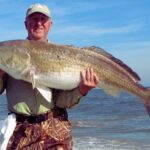
Fluke remain the most abundant and active target right now, with the late-season bite producing some of the heaviest "doormats" of the year. As the fish prepare to migrate offshore for the winter, they are feeding heavily in the channels and nearshore reefs.
Sleeper Pick: Sheepshead
Often overlooked by anglers focused on the striped bass and fluke bite, sheepshead are currently holding tight to structure around the Cape May area. These hard-fighting fish offer an incredible light-tackle challenge and fantastic table fare for those willing to put in the time around the pilings and rocks.
Baitfish Report
The waters are teeming with peanut bunker (juvenile menhaden), mullet, and silversides. The mullet run is beginning to gain momentum, which is drawing the attention of bluefish, Spanish mackerel, and the vanguard of the fall striped bass migration. Match your presentations to these 3-to-5-inch bait profiles.
3. TACTICAL STRATEGY
Where: For the best fluke action, focus your efforts on the Cape May Reef or the deep channels near the Middle Thorofare Bridge. Look for the 15-to-25-foot drop-offs where the current sweeps baitfish off the flats. If you are targeting sheepshead or tautog, position your vessel near the Cape May Inlet jetties or the Cape May Ferry Terminal pilings, fishing tight to the structure.
Lure: For fluke, a 3/4 oz to 1.5 oz bucktail jig (depending on current speed) paired with a teaser hook 18 inches above is deadly. When chasing breaking bluefish or Spanish mackerel near the inlet, cast a 3/4 oz Hogy Epoxy Jig or a classic Deadly Dick metal lure.
Color: Water clarity has been generally good, but in the slightly stained waters of the Delaware Bay, high-visibility colors excel. Use Chartreuse or "Nuclear Chicken" for your bucktails and soft plastics. For the metal casting jigs, stick to silver/green or silver/blue to perfectly mimic the local silversides and mullet.
Bait: Tip your fluke bucktails with 4-inch Berkley Gulp! Swimming Mullet or long strips of fresh bluefish belly. For sheepshead and tautog, live fiddler crabs or sand fleas (mole crabs) hooked on a 1/0 or 2/0 octopus hook via a simple bottom rig will get immediate attention.
Timing: The most productive bites are occurring during the last two hours of the outgoing tide and the first hour of the incoming. This moving water flushes bait out of the back bays, creating feeding frenzies at the inlet mouths. Dawn and dusk remain the prime windows for topwater striped bass and bluefish action.
Pro Tip: When targeting late-season fluke on the nearshore reefs, vertical presentation is critical. If the wind and tide are working against each other and causing your line to scope out, bump up your jig weight immediately. You must maintain contact with the bottom to get strikes from the larger, lazier fish.
Pro Tip: For sheepshead, the bite is notoriously subtle—often feeling like a slight scratch or heaviness rather than a sharp tap. Keep your line tight and use a braided mainline with a fluorocarbon leader to maximize sensitivity. Set the hook the moment you feel unusual pressure.
4. REGULATIONS SNAPSHOT
Always verify with the New Jersey Division of Fish & Wildlife, but here are the critical regulations for the current season:
Summer Flounder (Fluke): The season closes on September 25. In the Delaware Bay, the minimum size is 17 inches with a bag limit of 3 fish per person. In all other marine waters (ocean side), the minimum size is 18 inches with a bag limit of 3 fish per person.
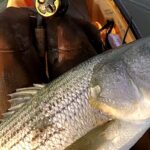
Striped Bass: The slot limit is strictly 28 to less than 31 inches, with a bag limit of 1 fish per angler per day. Crucial Note: Non-offset (inline) circle hooks are legally required when fishing for striped bass with bait to reduce release mortality.
Black Sea Bass: Regulations fluctuate frequently based on federal and state quotas during the fall season; consult the latest state marine digest before harvesting.
5. REGIONAL ALTERNATIVE
If stiff winds out of the south or east render the Cape May Inlet and Delaware Bay unfishable, head north to the sheltered waters of the Great Egg Harbor Bay near Ocean City. Access the water via the public ramps in Somers Point. The deep holes and sod banks in this expansive back-bay system offer excellent protection from heavy swells. Target resident schoolie striped bass and weakfish by drifting live peanut bunker or casting soft plastic paddletails along the sod bank drop-offs during the moving tide.
Tight lines!
Editor's Choice: Must-Have Gear
FISHINGSIR Next-Gen Waterproof Chest Waders
★★★★★4.4 (7,370+ reviews)
2-Ply Tech: Upgraded nylon with 2.5x higher density than standard fabrics.
100% Waterproof: Lab-approved intrusion resistance with taped visible seams.
Ultra-Lightweight: Designed for all-day comfort while hunting or fishing.
As an Amazon Associate I earn from qualifying purchases. #ad
Loading forecast...
Live Fishing Conditions: Tides, Weather & Waves
Get real‑time tides, marine weather, swell and solunar activity for each spot so you know exactly when conditions line up for your best chance at a bite.
🎣
Cape May
Loading coordinates...
🌤️
WEATHER CONDITIONS
--°F
--°C
Loading...
🌡️
Feels Like--°F--°C
💧
Humidity--%
💨
Wind-- mph-- km/h
🧭
Direction--
📊
Pressure-- inHg-- hPa
☀️
UV Index--
🌊
MARINE CONDITIONS
🌊Wave Height
-- ft
-- m
Loading...
🧭Wave Direction
--°
Loading...
⏱️Wave Period
-- s
Loading...
📈Tide Status
-- ft
-- m
Loading...
🌙
LUNAR & SOLUNAR
🌕
Loading...
Illumination: --%
Major Period--:-- - --:----:-- - --:--
Minor Period--:-- - --:----:-- - --:--
🌅Sunrise--:--
🌇Sunset--:--
📅
24-HOUR FORECAST
Loading fishing conditions...
Fishing Spots Map
🎣
Book a Fishing Charter near Cape May Fishing Report Today 🎣
Local guides & charters. Verified captains, instant booking, best price guaranteed.
There was an error loading the map. Please try refreshing the page.
Info
Local Access & Facilities
The Geographic Funnel: A Strategic Overview
Cape May represents more than just the southern termination of the Garden State Parkway; for the serious angler, it is a biological funnel of immense strategic importance. Situated where the Atlantic Ocean meets the Delaware Bay, this region creates a unique choke point for migratory species. The topography here is defined by the Cape May National Wildlife Refuge, a critical habitat that supports a vast array of wildlife, including numerous fish and shellfish populations. The dynamic between the open ocean swells and the estuarine waters of the bay creates a diverse fishery that demands respect and navigational competence.
The atmosphere in Dennis Township and the surrounding Cape May area shifts dramatically depending on your specific location. To the east, you have the "glitzy" history of the Jersey Shore, exemplified by the Doo Wop architecture of the Wildwoods. However, the fishing grounds themselves are often bordered by quiet, protected salt marshes and the rugged coastlines of the Delaware Bay. This is not merely a manicured harbor environment; it is a complex ecosystem where the Cape May Peninsula's unique configuration concentrates life, forcing migratory species to linger and feed before crossing the 12-mile stretch of the Delaware Bay.
For the expert angler, this location offers access to both back-bay quiet water and open ocean conditions. The area is heavily influenced by the seasonal migrations that funnel south to Cape May Point. Understanding the interplay between the protected refuge lands and the accessible waterways is key to unlocking the potential of this fishery.
Access & Getting There
Reaching the prime fishing grounds in Cape May and Dennis Township requires navigating the primary artery of the Jersey Shore: the Garden State Parkway. For those towing vessels, the standard approach involves taking Exit 10 toward Cape May Court House. From there, the route follows Route 9 South to Hand Avenue and eventually connects to State Highway 47 (Delsea Drive). This route is generally trailer-friendly, though traffic can become heavy during peak summer weekends. The final approach to the Refuge access at Kimbles Beach Road involves a sharp turn, so captains with larger center consoles should be mindful of their turning radius.
💡 Captain's Tip: The Bay Crossing
The geography of the Cape May Peninsula forces a 12-mile water crossing at the Delaware Bay. Experienced skippers know that migratory species—and anglers—often linger here waiting for favorable winds. Do not attempt to cross or fish the open bay mouth when wind opposes the tide, as the conditions can deteriorate rapidly into dangerous chop.
Boat launch options in the immediate vicinity vary in quality and capacity. The 57th Street Boat Launch is a primary access point located approximately 7.4 miles from the central hub. For those looking for shore access or launching kayaks, the Cape May National Wildlife Refuge provides specific entry points, though vehicle access is strictly regulated to protect the sensitive marsh habitat. When launching, always have a backup plan; during the fall migration, the most popular ramps can reach capacity before sunrise.
Parking requires a strategic approach, particularly for those with trailers. The Stone Harbor Public Parking lot, located roughly 8.7 miles away on 2nd Avenue, is rated highly and noted for being a large lot, making it a likely candidate for accommodating boat trailers. In contrast, parking closer to the historic districts or the Caribbean Motel area on Ocean Avenue can be tight and is often geared towards passenger vehicles. Always verify trailer permitting signage, as municipal rules change frequently along the coast.
💡 Captain's Tip: Trailer Logistics
While street parking is common in the off-season, summer restrictions are fierce. The Stone Harbor Public Parking lot is your safest bet for trailer storage if you are not staying at a property with dedicated marine parking. Always scout the lot entrance on Google Maps satellite view before committing a 30-foot rig to a turn.
Cape May Pre-Trip Checklist
Facilities & Amenities
The infrastructure surrounding Cape May is a mix of high-end historic tourism and gritty, functional marine services. For bait and tackle, the landscape is decentralized. Boulevard Bait & Tackle in Ocean View is the closest dedicated shop, sitting just 3.6 miles from the core area. However, logistical planning is essential here: this shop is closed Monday through Thursday, opening at 6:30 AM on Fridays and weekends. For mid-week trips, you must travel further to Tight Lines Bait and Tackle in Somers Point (14.4 miles) or Hands Too Bait and Tackle in Cape May proper (16.1 miles).
Local Marine Service Providers
Facility Name
Distance
Specialization / Notes
Boulevard Bait & Tackle
3.6 mi
Closest option. Closed Mon-Thu. Opens 6:30 AM Fri-Sun.
Tight Lines Bait and Tackle
14.4 mi
Reliable daily hours (6:00 AM - 8:00 PM). Good for mid-week supplies.
Hands Too Bait and Tackle
16.1 mi
Located near the Cape May harbor mouth. Open daily from 6:00 AM.
Big Dave's Tackle
13.3 mi
Early riser choice. Opens at 5:00 AM daily.
The charter fleet in this region is robust, reflecting the quality of the fishery. Salty Grunt Sportfishing operates out of Cape May (Ocean Dr), roughly 16 miles south, positioning them perfectly for Delaware Bay and Atlantic sorties. For those looking to depart from further north, Moover Fishing Adventures and The Grateful Fred Charters run out of Ocean City. It is important to note that while there are "nearby" charters, the driving distance between the Refuge area in Dennis and the marinas in Cape May or Ocean City can be 20-30 minutes, so factor this into your dawn patrol commute.
Accommodations range from the rustic to the retro-chic. For anglers prioritizing proximity to the launch and a place to park a rig, Jersey Shore Haven Airstream Park and Little Oaks Campground in Cape May Court House offer the closest lodging, within 2 miles of the center. On the other end of the spectrum is the Caribbean Motel in Wildwood Crest. Listed on the National Register of Historic Places, this "Doo Wop" era motel offers a unique aesthetic experience with plastic palm trees and neon lights, though it is located 13.8 miles away on the barrier island, which may add travel time to inland launches.
💡 Captain's Tip: Fuel & Ice Gaps
Note that the immediate vicinity of the Cape May National Wildlife Refuge in Dennis Township lacks direct marina fuel docks. You are advised to fuel up your vessel and cooler on Route 9 or Route 47 (Delsea Drive) before turning onto the smaller access roads like Kimbles Beach Road.
Permits, Regulations & Fees
Fishing within the Cape May region is governed by a dual layer of regulations: state-level mandates and specific federal refuge rules. The Cape May National Wildlife Refuge allows fishing, but it is strictly controlled to ensure the conservation of the migratory bird habitat. The refuge was established specifically to protect the critical habitat that supports over 317 bird species and 42 mammal species. As such, access to shoreline fishing spots may be restricted seasonally or geographically to prevent disturbance to nesting or resting wildlife.
All anglers must adhere to the regulations set forth by the State Fishing Agency. This includes size limits, bag limits, and seasonal closures which are strictly enforced. Because this area is a "Flagship Project" of the North American Waterfowl Management Plan and a Wetland of International Importance, environmental stewardship is not just a suggestion—it is a legal requirement. Do not discard monofilament or tackle in these waters; the impact on the high concentration of wildlife is immediate and severe.
There is generally no specific federal permit required for recreational fishing entry into the Refuge, but visitors should always check the "ridb_scan" sources or local signage for the most current permit requirements, as special use permits may apply for commercial activities or specific access methods.
Events & Seasonal Information
The biological rhythm of Cape May is dictated by migration. The fall season is the undisputed peak for biological activity. As the Refuge description notes, the peninsula's configuration concentrates songbirds, raptors, and woodcock during their fall migration. For the angler, this coincides with the "mullet run" and the southward migration of striped bass and bluefish, which often trap bait against the structure of the bay and beachfront.
Weather patterns here are distinct. The area faces 12 miles of open water at the Delaware Bay. In the summer, the prevailing winds can create a calm morning followed by a choppy afternoon sea breeze. However, it is the transition seasons—spring and fall—where the weather dictates the fishing. Migrants (both avian and aquatic) will linger in the area to rest and feed until favorable winds allow them to cross the Bay. Experienced captains watch for these weather windows; a shift in wind direction can trigger a massive feed, turning a quiet day into a world-class event.
Contact Information & Resources
For the most accurate and up-to-date information regarding access to the Refuge and current conditions, direct communication with the managing agencies is recommended. Self-reliance is key when fishing the backwaters or the bay, as cell service can be spotty in the salt marshes.
Cape May National Wildlife Refuge: 609-463-0994 (Email: capemay@fws.gov)
Safety Note: Always check weather and ocean conditions before fishing. The Delaware Bay can be unforgiving. Wear appropriate footwear when accessing shore points to protect against sharp shells and debris in the marsh mud.
For precise locations of the boat ramps, bait shops, and real-time weather conditions discussed above, consult the live dashboard and interactive maps below.
Our spot reports combine data-driven forecasts with curated local information. The forecast is generated by our proprietary Fishing Score algorithm (0–100%), which analyzes real-time data from Open-Meteo API, validated against NOAA CO-OPS tide gauges and USGS water-monitoring stations. The model weights tide dynamics (35%), wave energy (25%), wind patterns (20%) and time of day (20%)—factors shown to influence fish feeding behavior through marine-biology research and decades of charter log data.
Access, facilities and services information for each fishing spot is sourced from official datasets such as Recreation.gov (RIDB), state park & wildlife agencies, and geospatial providers like Google Maps. These sections undergo scheduled re-validation every 3–6 months to ensure that boat ramps, park access, contact details and local services remain accurate.
Narrative sections (catches, seasonal behavior, local tips) are synthesized from these data sources and refined following the Fishing Reports Today editorial guidelines, combining bibliographic research from ichthyology and oceanography with expert angler experience. Our team reviews reports on a regular basis, while the forecast model itself updates every 6 hours for real-time accuracy.
⚠️ Important: Always verify current local regulations, access restrictions and weather conditions before fishing. These reports are intended as a planning aid, not a guarantee of catches or safety. When in doubt, contact local authorities or park managers listed on the page.
To provide the best experiences, we use technologies like cookies to store and/or access device information. Consenting to these technologies will allow us to process data such as browsing behavior or unique IDs on this site. Not consenting or withdrawing consent, may adversely affect certain features and functions.
Functional Always active
The technical storage or access is strictly necessary for the legitimate purpose of enabling the use of a specific service explicitly requested by the subscriber or user, or for the sole purpose of carrying out the transmission of a communication over an electronic communications network.
Preferences
The technical storage or access is necessary for the legitimate purpose of storing preferences that are not requested by the subscriber or user.
Statistics
The technical storage or access that is used exclusively for statistical purposes.The technical storage or access that is used exclusively for anonymous statistical purposes. Without a subpoena, voluntary compliance on the part of your Internet Service Provider, or additional records from a third party, information stored or retrieved for this purpose alone cannot usually be used to identify you.
Marketing & Affiliates
The technical storage or access is required to create user profiles to send advertising, or to track the user on a website or across several websites for similar marketing purposes, including affiliate tracking for products recommended in our reports.


Leave a Reply