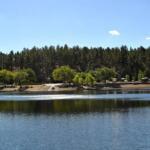
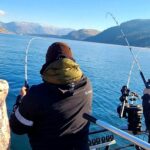
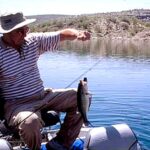
Current seasonal conditions in the Skull Valley and greater Prescott National Forest region are absolutely prime for early spring angling. As we progress through the season, the high-desert weather patterns have stabilized beautifully. Daytime highs are comfortably reaching the low to mid-70s, while overnight lows remain crisp, dipping into the upper 30s. These dramatic daily temperature swings are triggering excellent thermal turnovers in local water bodies, highly activating the metabolism of cold-water species.
Safety and Weather Advisory: There is zero ice remaining in the region, so hard-water gear can be officially stowed for the season. However, spring in the high desert notoriously brings breezy conditions. Anglers should anticipate afternoon winds gusting between 15 and 20 mph. Those operating small watercraft, kayaks, or float tubes should exercise heightened caution during the peak afternoon wind windows. Conversely, bank anglers will find these winds highly advantageous, as the surface chop pushes baitfish and drifting insects directly toward windward shorelines. Dress in layers, as the morning chill burns off rapidly by mid-morning.
From the editor
Tired of fishing with strangers you can’t trust?
Nautrek is the first social network for serious anglers — verified partners, real trips, cost splitting and intel sharing without burning your spots. Private beta now open.
Based on recent biological ground truth data, citizen science tracking, and verified regional catch reports, here is the current breakdown of biomass activity.
Primary Target:Rainbow Trout. This species is currently dominating the region as the most abundant and active target. Verified biological data confirms fresh, high-quality catches of Rainbow Trout along E Forest Service Road 61 in the Prescott area, with peak activity recorded just days ago. The Arizona Game and Fish Department (AZGFD) has been executing an aggressive spring stocking schedule in the surrounding watersheds. These fish are acclimating quickly and feeding with aggression.
Sleeper Pick:Largemouth Bass. While the majority of the angling pressure is hyper-focused on the freshly stocked trout, resident largemouth bass are quietly entering their pre-spawn behavioral patterns. As the midday sun penetrates the water and warms the shallow flats, these bass are moving up from their deep winter holding zones to ambush small baitfish and even juvenile trout.
Baitfish Report: The primary forage base right now consists of fathead minnows, aquatic midges, and early-season mayfly hatches. Because of the recent trout plants, larger predatory fish are also heavily keyed in on hatchery-pellet profiles and the distinct silhouettes of juvenile trout. Matching the hatch with small, slender profiles or pellet-imitating baits is critical for consistent hookups.
3. TACTICAL STRATEGY
To capitalize on the current Rainbow Trout bite, precision in your location, presentation, and timing is non-negotiable. Treat this fishery with a tactical mindset.
Where to Deploy
Focus your primary efforts on the access points and rugged shorelines along E Forest Service Road 61. Instead of casting blindly into the center of the water column, target the 8 to 12-foot drop-offs and submerged rocky points. The trout are utilizing these transition zones as highways to cruise for food. Pay special attention to wind-blown points; the spring breeze creates a surface chop that breaks up your silhouette, making fish less spooky, while simultaneously concentrating drifting insects and vulnerable baitfish against the bank.
Lure & Bait Selection
Lures: A 1/16 oz or 1/8 oz Kastmaster spoon is highly effective right now. The dense, aerodynamic weight of the spoon will help you punch your casts straight through the afternoon breezes. Alternatively, a Rapala Countdown (CD03 or CD05) provides an exact match for the local minnow population. Work the Rapala with a twitch-pause-twitch cadence to trigger reaction strikes.
Colors: On bright, sunny mornings, stick to metallic gold or silver/blue combinations to maximize underwater flash. If the water gets churned up and stained from the wind, switch immediately to high-visibility patterns like chartreuse, pink, or firetiger.
Bait: For passive rod setups, utilize a sliding slip-sinker rig. Thread a 1/4 oz egg weight onto your mainline, tie on a small barrel swivel, and attach an 18-inch leader of 4lb fluorocarbon. Bait a size 10 treble hook with Garlic or Hatchery Pellet flavored PowerBait. The fluorocarbon leader is practically invisible underwater and provides the finesse needed for line-shy fish.
Timing the Bite
The golden window for activity right now is the mid-morning warming trend, stretching from roughly 8:30 AM to 11:30 AM. During this period, the water shakes off the overnight chill, and aquatic insect activity reaches its daily peak. A secondary, highly productive window opens in the late afternoon, about an hour before the sun dips below the canyon ridges, triggering an evening feeding frenzy.
Pro Tip:When fishing floating dough baits on a slip rig, periodically give your rod a slow, deliberate 2-foot sweep every ten to fifteen minutes. This drags the bait slightly, causing it to kick up a small puff of silt and spin tantalizingly in the water column. This subtle movement often triggers a violent reactionary strike from trailing trout that were previously just inspecting the bait.
4. REGULATIONS SNAPSHOT
Before you wet a line, it is imperative to ensure you are fully compliant with the current Arizona Game and Fish Department regulations.
Species
Daily Bag Limit
Size Restrictions
Season Status
Rainbow Trout
4 (Any combination)
None (Statewide)
Open Year-Round
Largemouth Bass
6 (Statewide)
Varies (Check local signs)
Open Year-Round
Channel Catfish
10 (Statewide)
None
Open Year-Round
Regulatory Note: A valid Arizona fishing license is required for all resident and non-resident anglers aged 10 and older. AZGFD has recently shifted its hatchery strategy to stock fewer but significantly larger trout, meaning the average fish you pull out will be closer to the 13.5-inch mark. Always check specific water body regulations upon arrival, as designated Community Fishing waters often enforce stricter limits (such as a 2-bass limit with a 13-inch minimum).
5. REGIONAL ALTERNATIVE
If the wind howling through the higher elevations makes casting along Forest Service Road 61 impossible, or if you are simply looking for a more sheltered, highly accessible environment, Fain Lake in nearby Prescott Valley is your premium fallback option.
Fain Lake is a picturesque 3-acre community fishing water that is heavily managed and regularly stocked by AZGFD. It received a fresh plant of Rainbow Trout just recently, ensuring a high density of fish. The lake features a maximum depth of 25 feet, offering excellent deep-water refuge for fish during passing cold fronts, while the surrounding park offers historical ruins and gold panning for non-angling family members.
Tactical Approach for Fain Lake: Focus your casts on the steep drop-offs near the walking bridge and the designated fishing docks. Because this is a smaller, heavily pressured body of water, you must downsize your tackle. Drop your leader down to 2lb or 4lb fluorocarbon. Suspend a 1/32 oz marabou jig (in olive, black, or brown) about 4 feet under a small, unweighted slip bobber. Do not impart action with your rod; simply let the natural ripple of the water give the marabou feathers a breathing action. This ultra-finesse presentation will consistently out-fish heavier, more aggressive tactics in pressured community waters.
Pro Tip:Fain Lake is a day-use only park and strictly prohibits boating, meaning all your angling will be conducted from the bank. Bring a long-handled, rubber-meshed landing net to safely secure your catch from the steep shoreline without damaging the fish's slime coat or snapping your ultralight gear.
Tight lines!
Editor's Choice: Must-Have Gear
FISHINGSIR Next-Gen Waterproof Chest Waders
β β β β β 4.4 (7,370+ reviews)
2-Ply Tech: Upgraded nylon with 2.5x higher density than standard fabrics.
100% Waterproof: Lab-approved intrusion resistance with taped visible seams.
Ultra-Lightweight: Designed for all-day comfort while hunting or fishing.
As an Amazon Associate I earn from qualifying purchases. #ad
Loading forecast...
Live Fishing Conditions: Tides, Weather & Waves
Get realβtime tides, marine weather, swell and solunar activity for each spot so you know exactly when conditions line up for your best chance at a bite.
π£
Skull Valley
Loading coordinates...
π€οΈ
WEATHER CONDITIONS
--Β°F
--Β°C
Loading...
π‘οΈ
Feels Like--Β°F--Β°C
π§
Humidity--%
π¨
Wind-- mph-- km/h
π§
Direction--
π
Pressure-- inHg-- hPa
βοΈ
UV Index--
π
MARINE CONDITIONS
πWave Height
-- ft
-- m
Loading...
π§Wave Direction
--Β°
Loading...
β±οΈWave Period
-- s
Loading...
πTide Status
-- ft
-- m
Loading...
π
LUNAR & SOLUNAR
π
Loading...
Illumination: --%
Major Period--:-- - --:----:-- - --:--
Minor Period--:-- - --:----:-- - --:--
π Sunrise--:--
πSunset--:--
π
24-HOUR FORECAST
Loading fishing conditions...
Fishing Spots Map
π£
Book a Fishing Charter near Skull Valley Fishing Report Today π£
Local guides & charters. Verified captains, instant booking, best price guaranteed.
There was an error loading the map. Please try refreshing the page.
Info
Local Access & Facilities
Skull Valley represents a unique logistical hub for the serious Arizona anglerβa high-desert gateway that serves as the "back door" to the productive fisheries of the Prescott National Forest. Unlike the manicured marinas of the Colorado River, this location is defined by its rugged, ranch-land atmosphere, towering cottonwoods, and the historic railway lines that cut through the silence of the valley. It is not a fishery where you cast from your hotel balcony; it is a staging ground for expeditions into the surrounding elevations where lakes like Granite Basin and Watson Lake hold populations of largemouth bass, crappie, and rainbow trout.
The vibe here is distinctly Western and utilitarian. The air is thinner, the terrain is red dirt and scrub oak, and the pace is dictated by the sun and the ranching calendar. For the seasoned captain or kayak angler, Skull Valley offers a strategic launchpad that avoids the urban congestion of central Prescott while providing access to the western slopes of the Bradshaws. The primary targets here are cool-water species in the reservoirs and creek fishing in the riparian zones during wet years, requiring a versatility in tackle that ranges from ultra-light spinning gear for trout to heavy cover jigs for structure-oriented bass.
Anglers utilizing this area are typically mobile, trailering aluminum boats or hauling kayaks in truck beds. The topography demands respect; this is canyon country where weather shifts rapidly, and access points are often located at the end of winding forest service roads. Understanding the relationship between the valley floor's staging potential and the higher elevation water bodies is the key to unlocking the fishing potential of this region.
Access & Getting There
Reaching Skull Valley generally involves traversing Iron Springs Road, a route that is as scenic as it is demanding for those towing heavy loads. This two-lane artery winds through the mountains, connecting the heat of the lower deserts with the cool air of the uplands. Experienced drivers know that the switchbacks require vigilant brake management and a vehicle with sufficient torque. Traffic here is generally light, but during summer weekends, the flow of recreational vehicles and horse trailers can create bottlenecks, particularly on the steeper grades approaching the Iron Springs facility.
While Skull Valley itself serves as the geographic anchor, the actual water access points are dispersed through the surrounding National Forest. The data indicates boat launch facilities approximately 11 to 15 miles from the town center, placing destinations like Granite Basin Recreation Area within a tactical striking distance. The "launch realities" here are rustic; do not expect multi-lane concrete mega-ramps with wash-down stations. Instead, prepare for improved dirt or single-lane paved ramps where traction can be an issue after summer storms. For kayak anglers, the Flinn Park area and various shoreline access points offer gentler entries, though carrying gear over uneven terrain is often required.
π‘ Captain's Tip: Trailer Management
When descending into the valley via Iron Springs Road, gear down early. The winding grades can overheat trailer brakes quickly. Local pros check their hubs immediately upon arrival at the staging area to ensure bearings haven't cooked during the descent.
Weather plays a critical role in access logistics in this high-desert environment. The region is prone to the North American Monsoon season in late summer, where violent thunderstorms can materialize in early afternoon. These storms bring flash flood risks to low-lying crossings and washes. A dry creek bed in the morning can become an impassable torrent by 2:00 PM. Furthermore, high winds often sweep through the valley and over the nearby lakes; when sustained winds exceed 15-20 mph, the exposed waters of the local reservoirs can become choppy and dangerous for small craft.
Parking in this rural sector requires a strategy distinct from urban harbors. The Metate Trailhead Parking and Turley Trail Trailhead Parking offer designated spots, but they are primarily designed for hikers and equestrians. Anglers towing boats must arrive earlyβoften before sunriseβto secure a spot that allows for a pull-through or an easy back-in without blocking the flow. Skull Valley Park, located right in the heart of the location, serves as an excellent rendezvous point for convoys or for checking gear before the final push to the water.
Skull Valley Pre-Trip Checklist
Facilities & Amenities
The infrastructure in Skull Valley is minimal, catering more to the self-reliant outdoorsman than the resort tourist. This is "bring-what-you-need" country. There are no specialized big-game tackle shops or marine mechanics located directly in the hamlet. Anglers must rely on their own inventory, ensuring all terminal tackle, live bait, and spare parts are purchased in larger hubs like Prescott before descending into the valley. The US Forestry Department office listed in the area is a resource for information, not retail, so don't expect to buy a fishing license over the counter there at 5:00 AM.
Accommodations in the immediate vicinity reflect the rural character of Yavapai County. Groom Creek Horse Camp offers a rustic overnight option for those willing to camp, situated about 14 miles away. This is ideal for anglers who want to be on the water at first light without the commute from the city. For a more unique stay, the Gold Bar Cattle Ranch provides a glimpse into the local heritage, though availability should be checked well in advance. The Skull Valley Park offers local amenities closer to the pin, but it is primarily a day-use community asset rather than a campground.
π‘ Captain's Tip: Fuel Logistics
There are no marine fuel docks in this sector. Top off your boat tanks and jerry cans in Prescott or Wickenburg before entering the valley. Running out of gas on a forest service road here means a long hike with a gas can.
Below is a breakdown of the key facilities available to anglers in the Skull Valley vicinity. Note the distinction between parking areas and actual accommodation or service centers.
Facility Name
Type
Distance / Location
Angler Notes
Skull Valley Park
Day Use / Local Park
Immediate (448 ft)
Excellent staging area for gear checks; open 10am-4pm (Mon-Sat).
Metate Trailhead
Parking / Access
10.8 miles
Key access point for forest entry; limited trailer space.
Groom Creek Horse Camp
Camping
14.2 miles
High-elevation camping option; allows for early alpine starts.
Watson Lake Vista
Parking / Viewpoint
15.8 miles
Paved parking; proximity to major water body (Watson Lake).
US Forestry Dept
Agency Office
18.1 miles
Information on road closures and fire restrictions.
It is vital to note the "Negative Knowledge" regarding this location: there are no fish cleaning stations, no lighted docks for night fishing, and scarce public restrooms once you leave the main trailheads like Turley Trail. Anglers must practice "Leave No Trace" principles strictly, packing out all line, lead, and biological waste. The lack of commercial amenities is the price paid for the solitude found in this sector.
Permits, Regulations & Fees
Fishing in the Skull Valley region falls under the jurisdiction of the Arizona Game and Fish Department. A valid state fishing license is mandatory for all anglers 10 years of age and older. Because the access points often traverse the Prescott National Forest, anglers must also be cognizant of federal land use fees. Many of the developed recreation sites, such as Granite Basin or Thumb Butte, require a Tonto Pass or a specific day-use fee which must be displayed on your vehicle's dashboard. Electronic kiosks are becoming more common, but carrying small bills for self-pay iron rangers is a hallmark of the prepared local.
The regulations here are strictly enforced to protect the delicate high-desert ecosystems. Specific attention should be paid to "Kapu" or restricted areas, particularly regarding private lands. Skull Valley is a patchwork of public forest and private ranch land. Crossing a fence line to reach a creek without permission is not just illegal; it is a breach of the deep-seated cultural respect for property rights in rural Arizona. Stick to marked Forest Service roads and designated access points like Metate Trailhead to remain compliant.
π‘ Captain's Tip: Fire Safety
This is high fire danger country. During dry months (May-June), strict fire bans are often in effect. This includes smoking outside of enclosed vehicles and sometimes even the use of charcoal grills at campsites. Always check current Forest Service restrictions before towing up.
Protected zones include areas around Thumb Butte, where nesting peregrine falcons may trigger seasonal closures of cliff faces and nearby trails. While this impacts climbers more than anglers, it reflects the conservation-first management style of the area. Additionally, be aware of seasonal stocking schedules for the nearby lakes; regulations regarding daily bag limits for trout can change based on the season and the specific body of water (e.g., catch-and-release only seasons).
Events & Seasonal Information
The angling rhythm in Skull Valley is dictated by the dramatic seasonal shifts of the Arizona highlands. Spring (March-May) is often the prime window, as water temperatures in the nearby reservoirs rise, triggering the pre-spawn staging for largemouth bass. This is also when the trout stocking programs are most active, drawing anglers to the shorelines of Watson and Granite Basin. The cottonwoods in the valley leaf out, and the wind is generally manageable in the early mornings.
Summer brings the heat, pushing the bite into the nocturnal hours or the very first light of dawn. This is "Dawn Patrol" territory; seasoned skippers are launching by 4:30 AM and are off the water by 10:00 AM when the recreational boat traffic and solar intensity peak. The late summer "Monsoon Season" (July-August) introduces a wild card: afternoons are characterized by dramatic thunderheads. While the pressure drops can trigger feeding frenzies, the lightning risk is severe. Never be the tallest object on a high-desert lake during a monsoon build-up.
Winter fishing is for the hardy. Snow is possible in Skull Valley and likely at the higher elevations of the access roads. However, for those targeting trophy trout or winter crappie schools suspended in deep water, the solitude is unmatched. There are few formal tournaments held directly in Skull Valley due to the lack of water, but the nearby Prescott lakes host local bass club events and kayak fishing series, usually peaking in the spring and fall months.
Contact Information & Resources
For the most current information on road conditions and fire restrictions, the primary authority is the Prescott National Forest. Their offices can provide real-time updates on gate closures, which are common during winter snows or high fire danger periods. The Arizona Game and Fish Department is your source for stocking reports and licensing.
Emergency: 911 (Note: Cell service is spotty in canyons; satellite messengers are recommended).
Forest Management: US Forestry Department (Prescott Office).
Local Parks: Skull Valley Park Management (for local day-use inquiries).
Self-reliance is the rule here. Ensure your spare tire is inflated, your battery is charged, and you have ample water. The beauty of Skull Valley lies in its remoteness, but that same isolation demands preparation. For precise locations, trailheads, and real-time weather conditions, consult the live dashboard and interactive maps below.
Our spot reports combine data-driven forecasts with curated local information. The forecast is generated by our proprietary Fishing Score algorithm (0β100%), which analyzes real-time data from Open-Meteo API, validated against NOAA CO-OPS tide gauges and USGS water-monitoring stations. The model weights tide dynamics (35%), wave energy (25%), wind patterns (20%) and time of day (20%)βfactors shown to influence fish feeding behavior through marine-biology research and decades of charter log data.
Access, facilities and services information for each fishing spot is sourced from official datasets such as Recreation.gov (RIDB), state park & wildlife agencies, and geospatial providers like Google Maps. These sections undergo scheduled re-validation every 3β6 months to ensure that boat ramps, park access, contact details and local services remain accurate.
Narrative sections (catches, seasonal behavior, local tips) are synthesized from these data sources and refined following the Fishing Reports Today editorial guidelines, combining bibliographic research from ichthyology and oceanography with expert angler experience. Our team reviews reports on a regular basis, while the forecast model itself updates every 6 hours for real-time accuracy.
β οΈ Important: Always verify current local regulations, access restrictions and weather conditions before fishing. These reports are intended as a planning aid, not a guarantee of catches or safety. When in doubt, contact local authorities or park managers listed on the page.
To provide the best experiences, we use technologies like cookies to store and/or access device information. Consenting to these technologies will allow us to process data such as browsing behavior or unique IDs on this site. Not consenting or withdrawing consent, may adversely affect certain features and functions.
Functional Always active
The technical storage or access is strictly necessary for the legitimate purpose of enabling the use of a specific service explicitly requested by the subscriber or user, or for the sole purpose of carrying out the transmission of a communication over an electronic communications network.
Preferences
The technical storage or access is necessary for the legitimate purpose of storing preferences that are not requested by the subscriber or user.
Statistics
The technical storage or access that is used exclusively for statistical purposes.The technical storage or access that is used exclusively for anonymous statistical purposes. Without a subpoena, voluntary compliance on the part of your Internet Service Provider, or additional records from a third party, information stored or retrieved for this purpose alone cannot usually be used to identify you.
Marketing & Affiliates
The technical storage or access is required to create user profiles to send advertising, or to track the user on a website or across several websites for similar marketing purposes, including affiliate tracking for products recommended in our reports.
Leave a Reply