Verdict: GO (CAUTION - Heat and Dropping Water Levels)
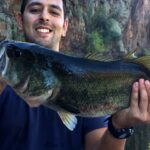
Theodore Roosevelt Lake is currently fishing incredibly well, earning a solid "GO" status for dedicated anglers. However, this recommendation comes with strict advisories regarding seasonal desert conditions. As we settle into the summer pattern, extreme heat is the primary safety concern. Daytime air temperatures are routinely soaring into the upper 90s and low 100s, making prolonged exposure dangerous. The surface water temperature is highly inviting, hovering in the upper 70s to low 80s, but the midday sun is relentless.
Additionally, the reservoir is experiencing a significant seasonal drawdown, currently sitting around 43 percent capacity due to a historically low winter runoff. This falling water level means that previously submerged deep brush is now in shallow water, and new boating hazards, such as rock piles and timber, are emerging daily. Navigate with extreme caution, especially when running on plane outside of the main river channels. To maximize safety and success, plan your trips to be on the water well before dawn and off the lake by mid-morning.
From the editor
Tired of fishing with strangers you can’t trust?
Nautrek is the first social network for serious anglers — verified partners, real trips, cost splitting and intel sharing without burning your spots. Private beta now open.
The post-spawn transition is completely finished, and Roosevelt's robust population of Florida-strain largemouth bass has settled into predictable summer offshore patterns. With the water levels slowly dropping, these bass are actively schooling and pushing deeper to find cooler, oxygen-rich water and primary ambush points. They are feeding aggressively, but the bite is highly concentrated into brief, intense low-light windows.
Sleeper Pick: Flathead Catfish
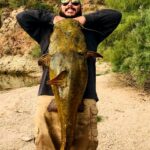
While the vast majority of recreational anglers and tournament hopefuls are agonizing over the daytime bass bite, the night shift offers an incredible, often overlooked opportunity. Roosevelt Lake is a premier destination for trophy flathead catfish, with specimens pushing the 40-pound mark caught every summer. When the sun goes down and the recreational boaters leave, these massive predators move out of the deep river channels to hunt on shallow flats and sloping points.
Baitfish Report
Understanding the forage base is critical right now. The lake is teeming with two primary food sources. First, massive schools of threadfin shad are roaming the open water and main lake points. Second, there is an absolute explosion of green sunfish and bluegill holding tight to submerged brush and rocky structure. The larger bass have keyed in heavily on these panfish. Matching your presentation to a fleeing bluegill will yield the highest quality bites.
Pro Tip: Pay close attention to your forward-facing sonar or traditional 2D sonar when scanning offshore brush in 15 to 30 feet of water. If you mark large clouds of bluegill suspended just above the structure, drop a waypoint. The biggest largemouth in the area will be staged just below them, waiting for an easy meal.
Tactical Strategy
Where to Deploy
During the first hour of light, focus your efforts on shallow flats and the backs of coves where bass push shad overnight. Key areas include the shallow flats near Connor's Ledge, as well as the backs of Salome Cove and Methodist Cove. Once the sun breaches the surrounding canyon walls and the topwater bite dies, you must abandon the shallows. Move immediately to main-lake offshore structure, submerged brush piles, and steep transition banks in the 15 to 30-foot depth range. Look for areas where dense brush intersects with a sharp drop-off into the old river channel.
Lure and Bait Selection
Topwater (Low Light): 4.5-inch Zara Spook or a Savage Gear Lily Ninja popping frog. Walk these aggressively over shallow flats and near visible timber.
Finesse Plastics (Mid-Morning): 1/4 oz tungsten cylinder drop shot rigged with a 4.5-inch Roboworm Straight Tail worm or a 3/8 oz shaky head with a 6-inch Magnum Trick Worm.
Reaction Metal (Deep Suspended Fish): 3/4 oz Nichols Ben Parker Magnum Flutter Spoon. Rip this aggressively through deep schools to trigger reaction strikes from lethargic fish.
Color Selection
For your topwater presentations, stick to Bone or translucent White to perfectly mimic fleeing threadfin shad. When transitioning to soft plastics on the bottom, lean heavily on Morning Dawn, Margarita Mutilator, or Green Pumpkin. These hues perfectly replicate the abundant bluegill and green sunfish that the bass are feeding on.
Live Bait Rigging
If you prefer live bait, freshly cast-netted live threadfin shad are unbeatable. Nose-hook them on a size #1 finesse hook or a 1/0 circle hook, and fly-line them directly over deep, submerged brush. For nighttime flathead hunters, utilize large live bluegill (where legally caught on-site) or heavy cut carp fished on a slip-sinker rig directly on the bottom near steep drop-offs.
Timing the Bite
The golden window for bass fishing is strictly from first light (approximately 5:00 AM) until 9:30 AM. Fish are feeding with reckless abandon during this early period before repositioning deep into heavy cover as sunlight intensity and recreational boating pressure peak. After 10:00 AM, the bite becomes a grueling grind. Catfish anglers should aim to set up their gear an hour before sunset and fish through the midnight hours.
Pro Tip: Because the desert water remains exceptionally clear and the fish are feeling the pressure of both anglers and falling water levels, stealth is your greatest asset. Lengthen your fluorocarbon leaders to at least 12 to 15 feet, utilize quiet trolling motor operation, and make extra-long casts to avoid spooking line-shy bass.
Regulations Snapshot
Before launching, ensure you are up to date on the latest Arizona Game and Fish Department (AZGFD) regulations for Roosevelt Lake. Always carry a valid Arizona fishing license.
Target Species
Size Limit
Daily Bag Limit
Season Status
Largemouth / Smallmouth Bass
None
6 per day (combined)
Open Year-Round
Crappie (Black and White)
None
15 per day
Open Year-Round
Channel & Flathead Catfish
None
10 per day (combined)
Open Year-Round
Sunfish / Bluegill
None
Unlimited
Open Year-Round
Regional Alternative: Apache Lake
If the falling water levels at Roosevelt make launching difficult, or if the weekend recreational boating crowd becomes overwhelming, your premier backup plan is just downstream at Apache Lake. Accessible via the scenic and winding Apache Trail (Highway 88), this stunning, narrow reservoir is currently fishing exceptionally well and offers far more stable water levels.
Target Species: Largemouth Bass and Smallmouth Bass.
Tactical Approach: Unlike the sprawling flats of Roosevelt, Apache Lake is dominated by steep, shady canyon walls, deep rocky outcrops, and submerged boulders. The bass here love to pin bait against these vertical structures. Position your boat parallel to the canyon walls and target the shade lines. Cast a drop shot rig or a weedless finesse jig right against the rock face, allowing it to free-fall down the ledges. The lake is absolutely loaded with green sunfish right now, so a 1/2 oz bladed jig (chatterbait) in a bluegill pattern burned over submerged boulders can produce a massive kicker fish.
Pro Tip: When fishing the vertical walls of Apache Lake, keep your boat positioned in deeper water and cast into the shallows. Allow your bait to stair-step down the rock ledges. Most strikes will occur on the fall just as the bait drops off a submerged shelf into deeper water.
Tight lines!
Editor's Choice: Must-Have Gear
FISHINGSIR Next-Gen Waterproof Chest Waders
β β β β β 4.4 (7,370+ reviews)
2-Ply Tech: Upgraded nylon with 2.5x higher density than standard fabrics.
100% Waterproof: Lab-approved intrusion resistance with taped visible seams.
Ultra-Lightweight: Designed for all-day comfort while hunting or fishing.
As an Amazon Associate I earn from qualifying purchases. #ad
Loading forecast...
Live Fishing Conditions: Tides, Weather & Waves
Get realβtime tides, marine weather, swell and solunar activity for each spot so you know exactly when conditions line up for your best chance at a bite.
π£
Roosevelt Lake
Loading coordinates...
π€οΈ
WEATHER CONDITIONS
--Β°F
--Β°C
Loading...
π‘οΈ
Feels Like--Β°F--Β°C
π§
Humidity--%
π¨
Wind-- mph-- km/h
π§
Direction--
π
Pressure-- inHg-- hPa
βοΈ
UV Index--
π
MARINE CONDITIONS
πWave Height
-- ft
-- m
Loading...
π§Wave Direction
--Β°
Loading...
β±οΈWave Period
-- s
Loading...
πTide Status
-- ft
-- m
Loading...
π
LUNAR & SOLUNAR
π
Loading...
Illumination: --%
Major Period--:-- - --:----:-- - --:--
Minor Period--:-- - --:----:-- - --:--
π Sunrise--:--
πSunset--:--
π
24-HOUR FORECAST
Loading fishing conditions...
Fishing Spots Map
π£
Book a Fishing Charter near Roosevelt Lake Fishing Report Today π£
Local guides & charters. Verified captains, instant booking, best price guaranteed.
There was an error loading the map. Please try refreshing the page.
Info
Local Access & Facilities
The Desert Oasis: Engineering Meets Angling
Situated in the heart of the Sonoran Desert, the fishery identified in local data as Roosevelt Lakeβaccessed primarily through the infrastructure of Lake Pleasant Regional Parkβpresents a striking contrast of arid landscapes and deep, productive waters. For the serious angler, this location in Peoria, Arizona, offers a complex hydrological environment defined by the New Waddell Dam and the massive intake of the Central Arizona Project. This is not merely a recreational pond; it is a dynamic reservoir where water levels fluctuate, creating a shifting battlefield for Largemouth Bass, Striped Bass, White Bass, and Black Crappie. The visual baseline here is rugged: 114 miles of shoreline characterized by red rock, submerged brush, and steep drop-offs that demand mastery of marine electronics.
The atmosphere is distinctly "high-desert technical." Unlike the lazy rivers of the south, this fishery combines the intensity of a major metropolitan reservoir with the solitude of the adjacent Hell's Canyon Wilderness. The water is often clear, requiring fluorocarbon leaders and finesse presentations, particularly during the high-pressure systems common to Arizona. The presence of the New Waddell Dam creates significant depth and structure, turning the lower basin into a pelagic playground for schooling Stripers. Experienced captains know that this water serves as a holding tank for the Central Arizona Project, meaning current flows and thermoclines can shift based on water delivery schedules, altering the bite window significantly.
While the surface may teem with recreational traffic on weekends, the dawn patrol crowd knows the true potential of these waters. The topography allows for diverse tactics, from spooning deep humps near the dam to flipping heavy cover in the northern coves where the river inlet feeds the main lake. The ecosystem supports a healthy population of forage, allowing gamefish to reach trophy proportions. It is a fishery that rewards the preparedβthose who understand how desert heat impacts fish metabolism and how the unique underwater architecture of a canyon reservoir dictates migration routes.
Access & Getting There
Reaching this fishery requires navigating the northern arteries of the Phoenix metro area. The primary access corridor is via Interstate 17, heading north from Phoenix to the Carefree Highway (State Route 74). This route is generally efficient, but veteran anglers know that I-17 is prone to heavy congestion on Friday afternoons (northbound) and Sunday evenings (southbound). To maximize fishing time, plan your transit to avoid these commuter and weekender swells. Once on State Route 74, the drive transitions into the open desert, with the turnoff onto Castle Hot Springs Road serving as the final leg into the main launch zones.
π‘ Captain's Tip: The Dawn Patrol Advantage
The main boat ramp at Lake Pleasant Regional Park is a massive 10-lane facility, but do not let its size lull you into complacency. With parking for only 200 vehicles adjacent to the ramp and a marina capacity of 1,000 boats, the lot fills rapidly during peak season. Professional skippers aim to have the hull wet by 5:00 AM to secure a prime parking spot and beat the recreational wakeboard traffic.
The launch infrastructure is robust, designed to handle high-volume traffic. The primary 10-lane boat ramp within Lake Pleasant Regional Park is paved and wide, accommodating everything from bass skiffs to large center consoles. However, the sheer volume of users means the ramp can become slick with algae and water traffic residue; 4-wheel drive is recommended for heavier rigs, especially when water levels are low and the ramp extends further into the basin. There are additional boat launch points noted in the local data, roughly 1.1 miles from the central hub, offering alternatives if the main staging area is gridlocked.
Weather plays a critical role in access. The region is subject to intense desert winds and sudden monsoon storms in late summer. When the winds howl down the canyon, the main basin can whip up whitecaps that make loading and unloading treacherous. The ramp's orientation offers some protection, but crosswinds can complicate trailer maneuvering. During the summer monsoon season (July-September), flash floods can impact the approach roads, particularly near the washes along Castle Hot Springs Road. Always check the forecast for high wind warnings or dust storms before hitching up.
Parking strategies must be executed with precision. The main lot at the regional park is designated for trailers, but overflow often pushes latecomers to distant lots, necessitating a long walk or a shuttle ride back to the ramp. For those strictly seeking boat storage or staging, a facility designated as BOATS PARKING is located approximately 2.6 miles from the water at VPG2+H8, Peoria, AZ. This can be a strategic asset for multi-day trips where you might want to drop the trailer securely while keeping the boat in a slip, provided you have arranged logistics.
Roosevelt Lake Pre-Trip Checklist
Facilities & Amenities
The infrastructure surrounding this fishery is well-developed, catering to both the hardcore tournament angler and the recreational boater. The centerpiece is the full-service marina within Lake Pleasant Regional Park, equipped to handle up to 1,000 vessels. This is not a primitive outpost; you can expect fuel, basic marine supplies, and slip rentals. However, for specialized fishing gear, the savvy angler looks beyond the marina store. The local "last stop" for essential provisions is Wild Horse West, located about 3.8 miles away on West Carefree Highway. Rated highly by locals, this spot serves as a catch-all for bait, tackle, and the necessary calories (burgers and beer) after a long day on the water. It opens at 9:00 AM, so it is a post-fishing resource rather than a pre-dawn supply depot.
For technical gear, particularly for bass fishing, Basstackle LLC in Phoenix (approx. 15.6 miles away) is the go-to specialist shop. They open at 8:00 AM on weekdays and carry the specific plastics and terminal tackle required for the clear-water finesse techniques often needed here. Fly fishermen targeting Stripers or Carp on the flats should head to Az Fly Shop on East Cactus Road. While it is a further drive (22.8 miles), their expertise in local entomology and streamer patterns is unmatched. Note that Anthony's Tire Shop is also listed in the vicinity; while not a tackle shop, knowing the location of a reliable tire repair service 23 miles out is invaluable when towing heavy loads across hot desert asphalt.
Facility Name
Type
Distance
Key Notes
Wild Horse West
Bait & Dining
3.8 miles
Local hub for bait, food, and drinks. Opens 9 AM.
Basstackle LLC
Specialty Tackle
15.6 miles
High-end bass gear. Closed weekends.
Roadrunner Campground
Lodging
0.4 miles
Immediate access. 4.6-star rating.
Desert Tortoise Campground
Lodging
1.9 miles
Inside park boundaries. Ideal for multi-day trips.
Lodging options favor the camper. The Roadrunner Campground and Desert Tortoise Campground are situated directly within the operational area, offering immediate access to the water. These sites range from primitive tent spots to improved pads with utility hookups. Securing a site here allows you to keep your boat rigged and ready, eliminating the daily commute from Phoenix. For those requiring hotel amenities, the JW Marriott Phoenix Desert Ridge Resort & Spa is the nearest luxury option, roughly 20 miles away, offering a stark contrast to the rugged campgrounds.
π‘ Captain's Tip: Fuel Management
While the marina offers fuel, prices on the water are historically higher than land-based pumps. Top off your tanks at stations along State Route 74 or in Peoria before entering the park. Additionally, ensure your trolling motor batteries are fully charged; the wind on the main lake can drain a 36-volt system faster than expected if you are spot-locking on deep structure.
It is crucial to note the "Negative Knowledge" regarding the surrounding wilderness areas. The Hell's Canyon Wilderness, located roughly 8.4 miles away, offers rock climbing and hiking but strictly prohibits motorized transport. Do not attempt to tow a boat or access the water through wilderness trailheads. Stick to the designated park entrances to avoid fines and dead ends.
Permits, Regulations & Fees
Fishing this water requires strict adherence to both state and local regulations. Primary jurisdiction falls under the Arizona Game and Fish Department, meaning a valid state fishing license is mandatory for all anglers. Licenses should be purchased online prior to arrival, as on-site connectivity can be spotty in the canyon areas. In addition to the state license, Maricopa County Parks & Recreation manages the access to the water. This means an entry fee is required to enter Lake Pleasant Regional Park. This fee covers the use of the boat ramps, parking lots, and day-use areas. Regular visitors should consider an annual park pass to reduce long-term costs.
Conservation is a priority here. The lake is a high-pressure fishery, and catch-and-release is strongly encouraged for Largemouth Bass to maintain the trophy potential of the reservoir. Bag limits on Striped Bass and White Bass are often more liberal to manage the population of these prolific breeders, but always consult the current season's proclamation for specific size and creel limits. The presence of the Central Arizona Project infrastructure means there are restricted zones near the dam and intake towers. These areas are marked with buoys; crossing these lines is a federal offense and a safety hazard due to powerful underwater currents.
Surrounding the lake are several recreational shooting sites managed by the Bureau of Land Management (BLM), specifically Saddleback Mountain, Church Camp Road, and Baldy Mountain. It is vital for anglers to understand that while these ranges exist, shooting firearms from a boat or along the shoreline outside designated ranges is strictly prohibited. The shooting sites have specific hours (7 AM to sunset) and are closed on Wednesdays. This knowledge is important for safety awarenessβhearing gunfire in the distance is normal here, but it should be coming from these specific coordinates, not the shoreline next to your boat.
Events & Seasonal Information
The rhythm of this fishery is dictated by the desert sun. In the summer months, the "bite" is almost exclusively nocturnal or crepuscular. The water temperatures can soar, pushing fish into deep thermoclines during the day. This is when the Striped Bass boil on the surface in the early morning and late evening, creating a frenzy that attracts anglers from across the state. During these months, the park often sees increased activity from recreational boaters, making the "first light" launch essential for serious fishing.
Winter brings a different dynamic. The crowds thin out, and the bass fishing shifts to a slower, deeper game. The water clarity often increases, and the fish relate tightly to the vertical structure of the canyon walls and submerged timber. This is the season for the patient angler using jigs and drop-shots. The Hell's Canyon Wilderness nearby becomes a popular destination for hikers and climbers during the cooler months, adding to the general activity in the area, though it rarely impacts the water traffic.
π‘ Captain's Tip: Wind & Water Levels
As a storage reservoir, water levels can fluctuate drastically. A "hot spot" found in May might be high and dry by October. Always check the current lake level reports before launching. Furthermore, afternoon trade winds are a clockwork occurrence. If you are fishing the main basin in a smaller skiff, plan to be off the open water or in a protected cove by 11:00 AM to avoid a punishing ride back to the ramp.
Contact Information & Resources
For the most current information regarding launch ramp status, water levels, and park alerts, direct communication with the managing agencies is recommended. Maricopa County Parks & Recreation operates the entry station and visitor center; they can be reached at 602-372-7460 or via email at lakepleasant@mail.maricopa.gov. The park's physical address for GPS navigation is 41835 N. Castle Hot Springs Rd., Morristown, AZ 85342.
For inquiries regarding the surrounding BLM lands and shooting ranges, the Hassayampa Field Office can be contacted at 602-867-5400. In the event of an emergency on the water or within the park, dial 911 immediately. Cell service is generally available near the main marina and ramp areas but can be intermittent in the northern coves and near the dam.
For precise locations of the boat ramps, real-time weather data, and the specific coordinates of the tackle shops and amenities mentioned above, consult the interactive maps and live dashboard widgets below.
Our spot reports combine data-driven forecasts with curated local information. The forecast is generated by our proprietary Fishing Score algorithm (0β100%), which analyzes real-time data from Open-Meteo API, validated against NOAA CO-OPS tide gauges and USGS water-monitoring stations. The model weights tide dynamics (35%), wave energy (25%), wind patterns (20%) and time of day (20%)βfactors shown to influence fish feeding behavior through marine-biology research and decades of charter log data.
Access, facilities and services information for each fishing spot is sourced from official datasets such as Recreation.gov (RIDB), state park & wildlife agencies, and geospatial providers like Google Maps. These sections undergo scheduled re-validation every 3β6 months to ensure that boat ramps, park access, contact details and local services remain accurate.
Narrative sections (catches, seasonal behavior, local tips) are synthesized from these data sources and refined following the Fishing Reports Today editorial guidelines, combining bibliographic research from ichthyology and oceanography with expert angler experience. Our team reviews reports on a regular basis, while the forecast model itself updates every 6 hours for real-time accuracy.
β οΈ Important: Always verify current local regulations, access restrictions and weather conditions before fishing. These reports are intended as a planning aid, not a guarantee of catches or safety. When in doubt, contact local authorities or park managers listed on the page.
To provide the best experiences, we use technologies like cookies to store and/or access device information. Consenting to these technologies will allow us to process data such as browsing behavior or unique IDs on this site. Not consenting or withdrawing consent, may adversely affect certain features and functions.
Functional Always active
The technical storage or access is strictly necessary for the legitimate purpose of enabling the use of a specific service explicitly requested by the subscriber or user, or for the sole purpose of carrying out the transmission of a communication over an electronic communications network.
Preferences
The technical storage or access is necessary for the legitimate purpose of storing preferences that are not requested by the subscriber or user.
Statistics
The technical storage or access that is used exclusively for statistical purposes.The technical storage or access that is used exclusively for anonymous statistical purposes. Without a subpoena, voluntary compliance on the part of your Internet Service Provider, or additional records from a third party, information stored or retrieved for this purpose alone cannot usually be used to identify you.
Marketing & Affiliates
The technical storage or access is required to create user profiles to send advertising, or to track the user on a website or across several websites for similar marketing purposes, including affiliate tracking for products recommended in our reports.
Great break down and info