Fortescue CreeK, New Jersey Fishing Report Today 🎣
12 months ago · Updated 6 days ago
Fortescue Creek Fishing Report: Fall Transition Tactics
Welcome to the definitive guide for navigating and fishing the legendary waters of Fortescue Creek, New Jersey. As the coastal waters begin their seasonal cooling process, this vital tributary of the Delaware Bay transforms into a dynamic feeding ground. Whether you are launching a skiff from the local marina or working the accessible sod banks, understanding the tidal rhythms and bait migrations is your key to unlocking this estuary's full potential.
GO/NO-GO STATUS
Verdict: GO - WITH TIDAL CAUTION
Current seasonal conditions offer prime angling opportunities, but this is a tidal-dependent fishery that demands respect. The weather impact is generally favorable during the early fall transition, with cooling water temperatures pushing baitfish out of the marshes and into the main creek channels. However, safety dictates careful navigation. Fortescue Creek is notorious for aggressive tidal swings and treacherous mudflats that become exposed during negative low tides. Anglers operating motorized vessels must time their departures and returns with the incoming or high outgoing tides to avoid being stranded in the heavy marsh mud. Wind direction also plays a crucial role; strong sustained winds from the northwest can blow water out of the bay, making the creek shallower than predicted.
From the editor
Tired of fishing with strangers you can’t trust?
Nautrek is the first social network for serious anglers — verified partners, real trips, cost splitting and intel sharing without burning your spots. Private beta now open.
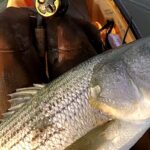
As the days shorten, Striped Bass become the undeniable kings of Fortescue Creek. School-sized bass aggressively patrol the sod banks and creek mouths, intercepting bait being flushed out by the tide. You will find these fish highly active during low-light conditions, taking advantage of the shifting currents to ambush their prey.
Sleeper Pick: White Perch
While the glory-seekers chase stripers, the savvy local angler knows that White Perch offer incredible light-tackle action and superb table fare. Often overlooked, these aggressive panfish stack up in the deeper holes and channel bends of the creek, providing consistent action even when the larger predators have lockjaw.
Baitfish Report
The current forage base is robust, driving the predatory feeding frenzy. Peanut bunker (juvenile menhaden) and silver mullet are actively schooling and dropping out of the shallow marsh creeks into the main channel. Additionally, the resident grass shrimp and small green crabs remain a staple for bottom-feeders. Matching your presentation to these specific bait profiles is non-negotiable for consistent success.
TACTICAL STRATEGY
Where to Deploy
Focus your efforts on the lower third of Fortescue Creek, specifically where the creek mouth meets the open Delaware Bay. Look for the sharp 8-to-12-foot drop-offs along the outer bends of the channel. The sod bank points that create current seams during the outgoing tide are prime ambush zones. Avoid wasting time in the dead-end shallow mud coves unless you are fishing the top of the high tide at first light.
Lure Selection and Color
To mimic the exiting peanut bunker, tie on a 4-inch paddletail swimbait rigged on a 3/8-ounce to 1/2-ounce lead jig head. Pearl white or chartreuse over white are the most productive colors in the slightly stained waters of the creek. If the water clarity drops due to heavy tidal movement, switch to a darker profile like rootbeer or purple to create a stronger silhouette.
Pro Tip: When targeting stripers near the sod banks, use a topwater walking bait like a Heddon Zara Spook in bone color during the first hour of daylight. The surface strikes in the quiet marsh are explosive.
Bait and Rigging
For those preferring natural bait, fresh chunks of bunker (menhaden) fished on a 6/0 inline circle hook with a fish-finder rig is the standard for striped bass. If you are targeting the sleeper White Perch, switch to a high-low rig equipped with #4 baitholder hooks. Tip these smaller hooks with fresh bloodworms or live grass shrimp. Keep your sinker weight just heavy enough to hold bottom—usually 1 to 2 ounces depending on the current.
Pro Tip: When fishing grass shrimp for perch, thread two or three shrimp onto the hook to create a larger, more enticing profile, and cast right to the edge of the submerged sod banks.
Timing the Bite
In tidal creeks, the clock on the wall matters far less than the tide chart. The absolute best feeding window occurs during the last two hours of the outgoing tide and the first hour of the incoming tide, particularly when these tidal phases align with dawn or dusk. This is when the bait is concentrated and vulnerable in the main channel.
REGULATIONS SNAPSHOT
Note: Marine regulations are subject to frequent changes. Always verify with the New Jersey Division of Fish and Wildlife before harvesting.
Striped Bass: Typically restricted to a slot limit (often 1 fish per angler between 28 and less than 31 inches). Circle hooks are mandatory when fishing with natural bait.
White Perch: Generally, there is no minimum size limit and no daily bag limit in these tidal waters, making them an excellent target for a fish fry.
Summer Flounder (Fluke): If the season remains open during your trip, strict size limits (usually around 18 inches) and bag limits apply. Check current seasonal closure dates, as fall often marks the end of the legal harvest season.
REGIONAL ALTERNATIVE
If Fortescue Creek is unfishable due to extreme low tides, heavy winds, or overwhelming boat traffic, make the short drive southeast to the Maurice River near Port Norris and Bivalve.
The Maurice River offers a larger, deeper waterway that is less susceptible to sudden blowout tides. You can access the river via several local marinas and public bulkheads. The target species remain largely the same, but the Maurice River holds a phenomenal run of White Perch in the fall, along with resident channel catfish in the upper, less saline reaches.
Tactical Approach for the Alternative: Anchor up along the main channel edges in 15 to 20 feet of water. Deploy bloodworms on heavy high-low rigs for massive perch, or drift live eels along the bottom contours for migrating striped bass pushing up the river with the incoming tide.
Tight lines!
Editor's Choice: Must-Have Gear
FISHINGSIR Next-Gen Waterproof Chest Waders
★★★★★4.4 (7,370+ reviews)
2-Ply Tech: Upgraded nylon with 2.5x higher density than standard fabrics.
100% Waterproof: Lab-approved intrusion resistance with taped visible seams.
Ultra-Lightweight: Designed for all-day comfort while hunting or fishing.
As an Amazon Associate I earn from qualifying purchases. #ad
Loading forecast...
Live Fishing Conditions: Tides, Weather & Waves
Get real‑time tides, marine weather, swell and solunar activity for each spot so you know exactly when conditions line up for your best chance at a bite.
🎣
Fortescue CreeK, New Jersey
Loading coordinates...
🌤️
WEATHER CONDITIONS
--°F
--°C
Loading...
🌡️
Feels Like--°F--°C
💧
Humidity--%
💨
Wind-- mph-- km/h
🧭
Direction--
📊
Pressure-- inHg-- hPa
☀️
UV Index--
🌊
MARINE CONDITIONS
🌊Wave Height
-- ft
-- m
Loading...
🧭Wave Direction
--°
Loading...
⏱️Wave Period
-- s
Loading...
📈Tide Status
-- ft
-- m
Loading...
🌙
LUNAR & SOLUNAR
🌕
Loading...
Illumination: --%
Major Period--:-- - --:----:-- - --:--
Minor Period--:-- - --:----:-- - --:--
🌅Sunrise--:--
🌇Sunset--:--
📅
24-HOUR FORECAST
Loading fishing conditions...
Fishing Spots Map
🎣
Book a Fishing Charter near Fortescue CreeK, New Jersey Fishing Report Today 🎣
Local guides & charters. Verified captains, instant booking, best price guaranteed.
There was an error loading the map. Please try refreshing the page.
Info
Local Access & Facilities
Fortescue Creek represents the raw, unpolished heart of the Delaware Bay fishery. Far removed from the manicured marinas of the Atlantic coast, this area is defined by vast expanses of tidal salt marsh, nutrient-rich mudflats, and a labyrinth of tidal creeks. For the serious angler, this isn't a place for casual cruising; it is a tactical environment where understanding the interplay between tidal flow and bottom topography is paramount. The area serves as a critical nursery for finfish and shellfish, fed by the nutrient exchange of the Delaware National Estuarine Research Reserve.
The vibe here is decidedly rugged and quiet. You won't find bustling boardwalks or high-rise condos casting shadows on the water. Instead, the horizon is dominated by cordgrass and the open expanse of the bay. It is a destination for those who prefer solitude and are willing to navigate the challenges of a shallow-water estuary. The primary draw here includes striped bass, weakfish, and blue crabs, all thriving in the brackish mix where the creek meets the bay.
Expert captains know that this fishery is biologically dense. The area boasts the largest population of spawning horseshoe crabs in the world and the second-largest concentration of migrating shorebirds in the Western Hemisphere. This biological richness translates directly to the food chain, attracting game fish to the shallows. However, the very mudflats that support this life can trap the unprepared mariner, making local knowledge of the channels essential.
Access & Getting There
Reaching Fortescue Creek requires a commitment to back roads and a departure from the main highway arteries. Located in Downe, New Jersey, the approach is generally low-traffic, but the final miles are on smaller coastal roads where speed limits drop and wildlife crossings are frequent. Access to the water is primarily facilitating through local ramps and the nearby wildlife refuges. There are three identified boat launch points in the immediate vicinity, ranging from less than half a mile to 2.3 miles from the central creek area. These are functional, utility-focused launch sites rather than luxury facilities.
The launch realities here are dictated entirely by the tide. The ramps are generally trailer-accessible, but the gradient can be tricky at dead low tide. The mudflats in this region are unforgiving; launching a larger draft vessel requires strict adherence to the tide charts. Experienced locals generally aim to launch on the rising tide to ensure safe passage through the creek mouth out to the bay.
💡 Captain's Tip: Tides & Topography
The mudflats here are extensive. Never stray from the marked channels on a falling tide. Local pros recommend marking your track line on a high tide entry to ensure a safe return if you stay out through the ebb.
Weather is the primary gatekeeper for this fishery. The Delaware Bay is notorious for its short, steep chop when the wind bucks the tide. A strong northwest wind can drain the creek, making recovery at the ramp difficult, while a stiff southerly wind can stack water and create rough conditions at the creek mouth. Parking at the local access points is available but limited; unlike the massive lots at ocean inlets, these spots are designed for lower volume. Security is generally good due to the remote nature of the community, but standard precautions apply.
Fortescue Creek, New Jersey Pre-Trip Checklist
Facilities & Amenities
Infrastructure around Fortescue Creek is sparse, which is part of its charm but a logistical challenge for the unprepared. You will not find a "superstore" marine center at the water's edge. The closest reliable source for bait and essential gear is Hooked On Fishing, Not On Drugs - Cumberland County in Leesburg, located approximately 8.5 miles away. For heavy-duty offshore gear or specialized marine electronics support, you are looking at a haul to Boulevard Bait & Tackle in Ocean View or Off the Hook Marina Bait & Tackle in Cape May, both over 23 miles distant. This means you must arrive fully stocked; running back to the shop for a forgotten spool of leader is a trip-ending mistake.
The local charter fleet is largely based out of the larger hubs to the south. Operators like Salty Grunt Sportfishing and Atlantic Adventure run out of the Cape May area, often making the run north to fish the bay structure. If you are looking to hire a guide, expect to meet them at the southern marinas rather than at the creek itself.
💡 Captain's Tip: The "Negative" Logistics
Be aware that the local boat ramps listed have no restrooms, showers, or fish cleaning stations. Plan your comfort stops accordingly before hitting the landing, and bring a cooler to transport your catch whole for cleaning at home.
For anglers planning a multi-day assault on the bay, lodging options are rustic and centered around camping. Lazy River Campground in Estell Manor (19.4 miles) and Jersey Shore Haven Airstream Park offer proximity for those towing travel trailers. For a more conventional stay, Cape May Crossing provides accommodation, though it is a roughly 24-mile drive to the launch, necessitating an early start for dawn patrol.
Facility Type
Name
Distance
Notes
Bait & Tackle
Hooked On Fishing, Not On Drugs
8.5 miles
Closest option; essential for last-mile supplies.
Parking
Parking Booths (Millville)
10.1 miles
Nearest formal parking facility outside the immediate ramp areas.
Lodging
Lazy River Campground
19.4 miles
Good option for anglers towing campers.
Charter Fleet
Salty Grunt Sportfishing
24.6 miles
Based in Cape May; open 24 hours for booking.
Permits, Regulations & Fees
Fishing this region places you in the middle of a highly sensitive ecological zone. The waters are influenced by the Bombay Hook National Wildlife Refuge and the Cape May National Wildlife Refuge. While recreational fishing is a celebrated activity here, it is strictly managed to protect the habitat. Regulations are enforced by the State Fishing Agency, and anglers must possess a valid state saltwater registry or license. Because this is a shared border water with Delaware, be acutely aware of state boundary lines in the middle of the bay to avoid jurisdictional issues.
The area's designation as a Ramsar Wetland of International Importance underscores the need for "leave no trace" practices. Special attention must be paid during the spring horseshoe crab spawning season. These animals are protected, and their eggs are the fuel for the migratory shorebirds that define the region. Disturbing spawning crabs or sensitive marsh banks is a serious offense. Additionally, parts of the Delaware National Estuarine Research Reserve may have specific restrictions on speed or anchoring to protect research plots; always check the latest notices at the launch.
Events & Seasonal Information
The rhythm of Fortescue Creek is seasonal. The spring brings the legendary horseshoe crab spawn, a prehistoric spectacle that draws nature lovers and biologists. For the angler, this signals the arrival of drum and striped bass looking to feed on the eggs. Summer settles into a pattern of blue crabs and resident weakfish, while the fall migration sees the return of stripers pushing bait into the creeks.
While there are no major tournaments hosted directly on the creek's banks, the surrounding Delaware Bay is the arena for various regional tournaments, particularly for drum and striped bass in the spring and fall. The best fishing windows are dictated by the wind; early mornings are crucial before the thermal trade winds kick up across the open fetch of the bay. The "golden hour" here is often dead calm, allowing for topwater action before the chop builds.
Contact Information & Resources
For official information regarding access and regulations, the primary point of contact is the Delaware National Estuarine Research Reserve at 302-739-3436. For issues related to the nearby wildlife refuges, contact Bombay Hook National Wildlife Refuge at 302-653-9345. In an emergency, rely on VHF Channel 16, but be aware that cell service can be spotty in the low-lying marsh areas. Self-reliance is key; carry a backup battery and a visual distress signal.
For precise locations of the boat ramps, real-time wind conditions, and the locations of the nearest bait shops mentioned above, consult the live dashboard and interactive maps below.
Our spot reports combine data-driven forecasts with curated local information. The forecast is generated by our proprietary Fishing Score algorithm (0–100%), which analyzes real-time data from Open-Meteo API, validated against NOAA CO-OPS tide gauges and USGS water-monitoring stations. The model weights tide dynamics (35%), wave energy (25%), wind patterns (20%) and time of day (20%)—factors shown to influence fish feeding behavior through marine-biology research and decades of charter log data.
Access, facilities and services information for each fishing spot is sourced from official datasets such as Recreation.gov (RIDB), state park & wildlife agencies, and geospatial providers like Google Maps. These sections undergo scheduled re-validation every 3–6 months to ensure that boat ramps, park access, contact details and local services remain accurate.
Narrative sections (catches, seasonal behavior, local tips) are synthesized from these data sources and refined following the Fishing Reports Today editorial guidelines, combining bibliographic research from ichthyology and oceanography with expert angler experience. Our team reviews reports on a regular basis, while the forecast model itself updates every 6 hours for real-time accuracy.
⚠️ Important: Always verify current local regulations, access restrictions and weather conditions before fishing. These reports are intended as a planning aid, not a guarantee of catches or safety. When in doubt, contact local authorities or park managers listed on the page.
To provide the best experiences, we use technologies like cookies to store and/or access device information. Consenting to these technologies will allow us to process data such as browsing behavior or unique IDs on this site. Not consenting or withdrawing consent, may adversely affect certain features and functions.
Functional Always active
The technical storage or access is strictly necessary for the legitimate purpose of enabling the use of a specific service explicitly requested by the subscriber or user, or for the sole purpose of carrying out the transmission of a communication over an electronic communications network.
Preferences
The technical storage or access is necessary for the legitimate purpose of storing preferences that are not requested by the subscriber or user.
Statistics
The technical storage or access that is used exclusively for statistical purposes.The technical storage or access that is used exclusively for anonymous statistical purposes. Without a subpoena, voluntary compliance on the part of your Internet Service Provider, or additional records from a third party, information stored or retrieved for this purpose alone cannot usually be used to identify you.
Marketing & Affiliates
The technical storage or access is required to create user profiles to send advertising, or to track the user on a website or across several websites for similar marketing purposes, including affiliate tracking for products recommended in our reports.


Leave a Reply