As we transition into the early fall patterns, Steinaker Reservoir is receiving a solid "GO" rating. The intense heat of the Utah summer has broken, and surface water temperatures are hovering in the low to mid-70s and steadily dropping. This cooling trend is the exact catalyst we need to trigger aggressive pre-winter feeding behaviors across multiple species. Weather conditions are currently stable with moderate winds, making boat control manageable and shore fishing comfortable. There are no ice conditions to worry about at this time of year, and water levels, while historically prone to fluctuation, are currently sufficient for both motorized boat launching at the main concrete ramp and shore access along the northern banks.
SPECIES INTEL
Primary Target: Largemouth Bass and Rainbow Trout
Steinaker is a phenomenal dual-threat fishery right now. The Largemouth Bass are moving out of their deep summer sanctuaries and pushing up shallow to gorge before the water gets too cold. Simultaneously, the Rainbow Trout, which have been sulking in the 30-plus foot depths to find cold, oxygenated water, are beginning to cruise the upper water column and push toward the shorelines.
🎣Nautrek
Private Beta
J
M
R
100+ anglers on the waitlist
The fishing network where your reputation matters.
Find trusted captains, join real trips with cost splitting, and build your Angler Rank. Your spots stay private — you decide who sees your intel.
While most anglers visit Steinaker for the trout and largemouth, the Wipers are the true sleeper pick for those looking for a drag-screaming fight. These hybrids are schooling up and aggressively corralling baitfish. Because they are open-water roamers, they often go completely unnoticed by anglers beating the banks or soaking bait on the bottom.
Baitfish Report
The primary forage base driving the current bite consists of juvenile bluegill, green sunfish, and a highly active crayfish population. The bass are heavily keyed in on the crayfish right now, rooting them out of the rocky transition zones. For the pelagic species like Wipers and larger trout, small baitfish profiles matching juvenile sunfish are the ticket.
TACTICAL STRATEGY
Where
For Largemouth Bass, focus your efforts on the rocky points and the submerged structure near the dam face. As the sun rises and warms the shallows, work the 8 to 12-foot drop-offs adjacent to the weedlines in the northern bay. For shore-bound trout anglers, the Byway Turnout along the shallow north shoreline is an excellent ambush point, especially where the bottom transitions from mud to gravel. If you are targeting Wipers, rely on your electronics to scan the main lake basin, looking for suspended schools of bait in the 15 to 25-foot range.
Lure
To match the crayfish hatch for bass, tie on a 3/8oz football jig paired with a craw trailer, or a medium-diving crankbait that deflects erratically off the rocks. For the Wipers, a 3-inch to 4-inch paddletail swimbait on a 1/4oz jig head is deadly. Trout anglers casting hardware should look to a 1/4oz Kastmaster or a Rapala Jigging Rap #5 worked with an aggressive lift-and-fall cadence.
Color
Water clarity at Steinaker is generally good to stained. For your jigs and crankbaits, stick to natural crayfish tones: green pumpkin, brown, and subtle orange bellies. For swimbaits and spoons, silver, white, and chartreuse will best mimic the flash of panfish and draw reaction strikes in lower light conditions.
Bait
If you prefer soaking bait for trout, a classic slip-sinker rig is the way to go. Suspend garlic-scented PowerBait (chartreuse or rainbow colored) about 18 to 24 inches off the bottom to keep it visible above any low-lying grass. Nightcrawlers injected with a small puff of air to float them off the bottom are also highly effective right now.
Timing
The bite is heavily dictated by light penetration. The golden hours of dawn and dusk are producing the most aggressive topwater and shallow-water action for bass and wipers. Once the sun is high and bright, transition to dragging jigs slowly on the bottom or move out to deeper water to target suspended trout.
Pro Tip: When dragging a football jig for bass in the rocky transition zones, do not hop the bait. Instead, maintain constant bottom contact and slowly drag it, allowing the jig to grind against the rocks. This perfectly mimics a defensive crayfish and often triggers the largest bass in the reservoir.
Pro Tip: The green sunfish population in Steinaker is robust and actively competes with the trout. If you are fishing small worms or panfish jigs near the shoreline structure, expect fast and furious action from these aggressive panfish—a perfect scenario if you are bringing kids or beginner anglers.
REGULATIONS SNAPSHOT
Steinaker Reservoir is designated as a Blue Ribbon Fishery and falls under Utah's statewide regulations with a few specific exceptions to keep in mind. The Largemouth Bass limit is 6 fish, but critically, only 1 of those bass may be larger than 15 inches. This regulation is designed to protect the breeding stock and maintain the trophy potential of the lake. Standard statewide limits apply for Rainbow Trout and Brown Trout. Additionally, while spearfishing is permitted for some species during specific times of the year, it is strictly closed for largemouth and smallmouth bass from April 1 through the fourth Saturday of June. Always possess a valid Utah fishing license before hitting the water.
REGIONAL ALTERNATIVE
If the wind unexpectedly howls through the valley making Steinaker unfishable, or if you simply want to switch up your scenery, Red Fleet Reservoir is your immediate backup plan. Located just a short drive away, Red Fleet offers a stunning backdrop of red rock sandstone and a very similar species profile. It is an excellent secondary option for Largemouth Bass, Bluegill, and Trout. At Red Fleet, focus on the steep sandstone walls and deep coves using drop-shot rigs and finesse plastics for bass, or troll small spinners right down the center channel for cruising trout. The facilities at Red Fleet are fantastic, offering concrete ramps and ample shore access.
Tight lines!
Editor's Choice: Must-Have Gear
FISHINGSIR Next-Gen Waterproof Chest Waders
★★★★★4.4 (7,370+ reviews)
2-Ply Tech: Upgraded nylon with 2.5x higher density than standard fabrics.
100% Waterproof: Lab-approved intrusion resistance with taped visible seams.
Ultra-Lightweight: Designed for all-day comfort while hunting or fishing.
As an Amazon Associate I earn from qualifying purchases. #ad
Loading forecast...
Live Fishing Conditions: Tides, Weather & Waves
Get real‑time tides, marine weather, swell and solunar activity for each spot so you know exactly when conditions line up for your best chance at a bite.
🎣
Steinaker Res
Loading coordinates...
🌤️
WEATHER CONDITIONS
--°F
--°C
Loading...
🌡️
Feels Like--°F--°C
💧
Humidity--%
💨
Wind-- mph-- km/h
🧭
Direction--
📊
Pressure-- inHg-- hPa
☀️
UV Index--
🌊
MARINE CONDITIONS
🌊Wave Height
-- ft
-- m
Loading...
🧭Wave Direction
--°
Loading...
⏱️Wave Period
-- s
Loading...
📈Tide Status
-- ft
-- m
Loading...
🌙
LUNAR & SOLUNAR
🌕
Loading...
Illumination: --%
Major Period--:-- - --:----:-- - --:--
Minor Period--:-- - --:----:-- - --:--
🌅Sunrise--:--
🌇Sunset--:--
📅
24-HOUR FORECAST
Loading fishing conditions...
Fishing Spots Map
🎣
Book a Fishing Charter near Steinaker Res Fishing Report Today 🎣
Local guides & charters. Verified captains, instant booking, best price guaranteed.
There was an error loading the map. Please try refreshing the page.
Info
Local Access & Facilities
Steinaker Reservoir stands as a vibrant emerald oasis set against the arid, dramatic backdrop of the Uinta Basin. Located at an elevation of 5,520 feet, this fishery offers a distinct contrast to the surrounding high desert scrub and red sandstone formations. For the seasoned angler, this 800-acre impoundment serves as a critical gateway fishery, bridging the gap between the high Uinta Mountains and the dinosaur-rich desert floor. The water here is regulated by the Steinaker Dam, creating a stable environment that supports a healthy population of game fish despite the harsh exterior climate.
The atmosphere at Steinaker is deceptively rugged. While the access is paved and manageable, the environment demands respect, characterized by intense high-altitude sun and the stark beauty of the geologic formations like nearby Red Mountain. It is not merely a roadside stop; it is a destination where the water conditions can shift rapidly with the desert winds. Anglers here appreciate the lack of urban congestion, finding a solitude that is becoming increasingly rare in Western fisheries.
The primary draw for expert rods at Steinaker is the dual-threat fishery of Rainbow Trout and Largemouth Bass. The cool water inputs from Ashley Creek maintain temperature gradients that allow trout to thrive, while the structure along the shoreline provides ample cover for bass. Whether you are trolling deep channels or casting toward the rocky banks, the reservoir offers a technical challenge that rewards understanding the specific bottom topography and seasonal water level fluctuations.
Access & Getting There
Reaching Steinaker Reservoir is a straightforward logistical affair, but seasoned captains know that "easy access" can still present challenges during peak transit times. The reservoir is located approximately 7 miles north of Vernal, Utah, directly off U.S. Highway 191. This is a major trucking and travel corridor, so anglers towing wide beams should remain vigilant for heavy commercial traffic, particularly when navigating the grades leading out of the Uinta Basin.
The primary launch facility is the Steinaker Reservoir Boat Ramp. This is an all-weather access point designed to handle standard trailer traffic. The ramp is generally wide enough for efficient launching, but the concrete can become slick with algae during the late summer drawdown. The approach from Highway 191 is paved, reducing the wear and tear on your trailer suspension compared to more remote Uinta waters. However, during winter months, ice on the ramp is a certainty; carry sand or salt if you are attempting a late-season launch before the hard deck forms.
💡 Captain's Tip: Wind Awareness
At 5,520 feet, the Uinta Basin acts as a funnel for high winds. The afternoons often see stiff breezes kicking up chop on the open water. Plan your launch for early dawn to capitalize on the glass-calm surface, and keep an eye on the ridgelines to the west for building cloud cover that signals incoming gusts.
Parking at the reservoir is generally adequate, with designated areas for trailers. However, during the peak summer recreation season (April through October), the lot can fill with recreational boaters and jet skis by mid-morning. For those hauling larger rigs or requiring overnight storage away from the water, the Truck Parking Club locations in Vernal (roughly 4 miles south) offer secure options. The Uintah County Free Parking lot is another logistical asset for dropping a vehicle if you are coordinating a multi-car shuttle.
Steinaker Res Pre-Trip Checklist
Facilities & Amenities
While Steinaker Reservoir feels remote, its proximity to Vernal ensures that critical supplies are never far away. However, on-site amenities are focused strictly on the fundamentals of launching and camping. There is no commercial marina or fuel dock on the water. Captains must ensure their tanks are topped off in Maeser or Vernal before launching. Running out of fuel here means a long drift to the rocks.
For tackle and gear, Basin Sports on West Main Street in Vernal is the local authority. Located just 4.4 miles from the water, this shop services the heavy demands of the region's anglers. Whether you need specific baits for the local bass patterns or replacement hardware for your trailer, this is your primary logistical hub. They open at 9:00 AM, so if you are planning a dawn patrol, you must secure your bait the evening before.
💡 Captain's Tip: Provisioning Strategy
Since there is no on-water ship store, self-reliance is key. Stock your cooler with ample ice and water in Vernal. The high-altitude desert air dehydrates anglers faster than they realize. If you need to make repairs, the proximity to Vernal means auto parts and hardware are close, but you have to pull the boat to get there.
Lodging logistics favor the early riser. The Steinaker State Park Campground offers the ultimate advantage: waking up practically at the boat ramp. These sites offer standard hookups and are suitable for RVs. For those preferring a roof, the East Meadows Mobile Home Park area or hotels in Vernal provide close alternatives. For a more rustic, high-country experience, the Colton Guard Station is about 10 miles away, offering a different vantage point of the region.
Facility Name
Type
Distance
Key Notes
Steinaker Reservoir Boat Ramp
Launch
On-Site
All-weather concrete; trailer parking available.
Basin Sports
Bait & Tackle
4.4 miles
Primary outfitter; opens 9:00 AM.
Steinaker State Park Campground
Lodging
On-Site
RV hookups; immediate water access.
Truck Parking Club
Parking
3.9 miles
Secure overflow parking for large rigs.
Permits, Regulations & Fees
Fishing and boating at Steinaker are managed by the Utah Division of Parks and Recreation. A valid Utah fishing license is mandatory for all anglers. The reservoir is subject to specific state regulations regarding bag limits for trout and bass, which can shift based on biological assessments. It is the skipper's responsibility to check the current proclamation before keeping any catch.
Entry to Steinaker State Park requires a fee. This day-use fee covers access to the boat ramp and parking areas. If you are camping, the entrance fee is typically included in your reservation, but verify this upon arrival. The funds generated here are crucial for maintaining the ramp infrastructure and the fish cleaning stations, ensuring the resource remains viable for future seasons.
Cultural and environmental respect is paramount in the Uinta Basin. The area is rich in history, from dinosaur fossils to Native American heritage. Nearby sites like the Moonshine Arch Trailhead pass near private lands; anglers exploring the shoreline or nearby trails must respect posted private property boundaries. Additionally, aquatic invasive species (AIS) are a major concern in Utah. Mandatory boat inspections may be in effect. Ensure your vessel is "Clean, Drained, and Dry" before arrival to avoid fines or denied access.
Events & Seasonal Information
The rhythm of Steinaker Reservoir is dictated by the extreme seasonal swings of the high desert. The prime open-water season runs from April through October. Spring offers the most aggressive trout bite as the water warms and fish move into the shallows to feed. As summer heat sets in, the bass bite heats up, often requiring early morning or late evening efforts to find fish active in the water column.
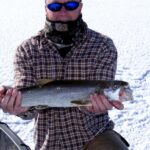
Winter transforms the fishery completely. Steinaker is a renowned destination for ice fishing. When the hard deck forms, usually by late December or January, the reservoir attracts hard-water anglers targeting trout. Access during this time is generally good, but the boat ramp becomes a staging area for sleds and ATVs rather than bass boats. The "Carnage" or Rojo Mountain Bike Trail nearby indicates the rugged nature of the terrain—winter storms here are severe, and whiteout conditions can descend rapidly.
💡 Captain's Tip: Summer Traffic
During July and August, the reservoir is a magnet for water sports enthusiasts from Vernal. Wakeboarders and jet skis dominate the main basin from 11:00 AM to 5:00 PM. Serious anglers should plan their drifts for the "golden hours" at dawn and dusk to avoid the heavy wake and noise.
Contact Information & Resources
For the most current conditions, ramp status, and camping reservations, direct communication with the park management is recommended. The Steinaker State Park office can be reached at 435-789-4432. They are the definitive source for real-time data regarding water levels and algae blooms.
In the event of an emergency, cell service is generally reliable due to the proximity to Highway 191, but dead zones exist in the canyon shadows. The local managing agency works in conjunction with the Bureau of Reclamation. For medical emergencies, the nearest facilities are located in Vernal. Always file a float plan with a contact on land, especially when fishing during the shoulder seasons when hypothermia risks are elevated.
For precise locations, real-time weather data, and detailed facility maps, consult the live dashboard and interactive widgets below.
Our spot reports combine data-driven forecasts with curated local information. The forecast is generated by our proprietary Fishing Score algorithm (0–100%), which analyzes real-time data from Open-Meteo API, validated against NOAA CO-OPS tide gauges and USGS water-monitoring stations. The model weights tide dynamics (35%), wave energy (25%), wind patterns (20%) and time of day (20%)—factors shown to influence fish feeding behavior through marine-biology research and decades of charter log data.
Access, facilities and services information for each fishing spot is sourced from official datasets such as Recreation.gov (RIDB), state park & wildlife agencies, and geospatial providers like Google Maps. These sections undergo scheduled re-validation every 3–6 months to ensure that boat ramps, park access, contact details and local services remain accurate.
Narrative sections (catches, seasonal behavior, local tips) are synthesized from these data sources and refined following the Fishing Reports Today editorial guidelines, combining bibliographic research from ichthyology and oceanography with expert angler experience. Our team reviews reports on a regular basis, while the forecast model itself updates every 6 hours for real-time accuracy.
⚠️ Important: Always verify current local regulations, access restrictions and weather conditions before fishing. These reports are intended as a planning aid, not a guarantee of catches or safety. When in doubt, contact local authorities or park managers listed on the page.
To provide the best experiences, we use technologies like cookies to store and/or access device information. Consenting to these technologies will allow us to process data such as browsing behavior or unique IDs on this site. Not consenting or withdrawing consent, may adversely affect certain features and functions.
Functional Always active
The technical storage or access is strictly necessary for the legitimate purpose of enabling the use of a specific service explicitly requested by the subscriber or user, or for the sole purpose of carrying out the transmission of a communication over an electronic communications network.
Preferences
The technical storage or access is necessary for the legitimate purpose of storing preferences that are not requested by the subscriber or user.
Statistics
The technical storage or access that is used exclusively for statistical purposes.The technical storage or access that is used exclusively for anonymous statistical purposes. Without a subpoena, voluntary compliance on the part of your Internet Service Provider, or additional records from a third party, information stored or retrieved for this purpose alone cannot usually be used to identify you.
Marketing & Affiliates
The technical storage or access is required to create user profiles to send advertising, or to track the user on a website or across several websites for similar marketing purposes, including affiliate tracking for products recommended in our reports.



Leave a Reply