Current conditions in Raritan Bay require a cautious approach. We have been experiencing a persistent, hard Northeast blow pushing through the New York/New Jersey Bight, which has churned up the main bay and created significant, tightly spaced chop. While the falling water temperatures have triggered aggressive feeding behaviors, small craft operators need to be extremely mindful of the wind forecasts before heading out. If you are launching a vessel under twenty feet, you will want to hug the lee shorelines or stick to the inner harbor areas to avoid taking a beating in the open water. The weather impact has stained the water in the shallower flats, meaning visibility is slightly reduced, but the turbulence is exactly what pushes baitfish into concentrated pockets.
SPECIES INTEL
Primary Target: Striped Bass
The highly anticipated fall run is beginning to materialize, and Striped Bass are officially taking center stage. As these linesiders push south, they are using Raritan Bay as a major feeding stopover. The bass are actively corralling bait in the middle of the bay and along the channel edges. While we are seeing a mix of resident fish and the first waves of migratory bass, the overall aggression level is rising daily as water temperatures dip.
From the editor
Tired of fishing with strangers you can’t trust?
Nautrek is the first social network for serious anglers — verified partners, real trips, cost splitting and intel sharing without burning your spots. Private beta now open.
While the fleet is relentlessly chasing striper marks on their sonar, aggressive schools of Bluefish are tearing through the bay. These "gator" blues are taking advantage of the wind-blown bait and offer spectacular, tackle-busting action. They are often holding just beneath the surface feeds or patrolling the deeper edges of the flats, making them an incredible target for anglers willing to step away from the striper crowds.
Baitfish Report
The forage base is exceptionally strong right now. The bay is absolutely loaded with massive schools of menhaden. We are seeing a healthy mix of adult bunker in the deeper channels and dense clouds of peanut bunker (juvenile menhaden) getting pushed up onto the shallow flats and shorelines. Matching this hatch is critical for success; your presentations must mimic erratic, fleeing menhaden.
TACTICAL STRATEGY
Where to Fish
Avoid aimlessly wandering the open bay. Instead, focus your efforts on the channel edges near Sandy Hook and the 8-to-12-foot drop-offs just outside the Keyport flats. The stripers are using these depth changes to ambush bait that gets swept out with the current. When the Northeast wind is howling, look for bait getting pinned against the southern shorelines of the bay. The deeper channels around Raritan Reach are also holding large schools of adult bunker, with big bass lurking just below them.
Lure Selection
When targeting the schools of peanut bunker near the surface, a topwater pencil popper (around 5 to 6 inches) will draw explosive strikes. For fish holding deeper along the channel edges, drop a 6-inch flutter spoon or a 1.5-ounce white bucktail jig tipped with a 4-inch chartreuse curly-tail grub. If the bluefish are thick, switch your soft plastics out for metal jigs or diamond jigs to avoid getting bitten off constantly.
Color Patterns
Due to the recent wind churning up the bay, water clarity is stained. High-contrast colors are your best bet. Bone, pearl white, and chartreuse are outperforming natural translucent patterns. A white bucktail provides the perfect silhouette against the murky water.
Pro Tip:When fishing flutter spoons in heavy chop, keep a slight bow in your line on the fall. The erratic fluttering action happens as the spoon drops, and a tight line will kill the action, while too much slack will cause you to miss the strike.
Bait Fishing
If artificials aren't producing, live-lining adult bunker is a highly effective tactic for trophy-sized bass. Snag or net your bait, and rig them on an 8/0 inline circle hook through the bridge of the nose. If the current is ripping, a sliding fish-finder rig with just enough weight to hold bottom is ideal for chunking fresh bunker heads along the channel slopes.
Timing
The outgoing tide has been the most productive window, particularly when it aligns with dawn or dusk. The falling water pulls bait out of the shallow marshes and flats, funneling them right into the waiting mouths of predators positioned on the drop-offs. The first two hours of the outgoing tide are currently the golden window.
Pro Tip:Pay attention to the birds, but don't just chase them blindly. Often, the largest stripers are holding 50 to 100 yards down-current from the main surface frenzy, picking off the stunned baitfish that drift away from the chaos.
REGULATIONS SNAPSHOT
Compliance is critical to maintaining this world-class fishery. Please note the following current regulations for our primary targets:
Striped Bass: Anglers are permitted one fish per day. The legal slot limit is strictly between 28 inches and less than 31 inches. All fish outside this slot must be safely released. Inline circle hooks are mandatory when fishing with natural bait.
Bluefish: Private boat and shore anglers are limited to three fish per day. There is no minimum size limit for bluefish.
REGIONAL ALTERNATIVE
If the Northeast winds make Raritan Bay completely unfishable or unsafe for your vessel, pack up and head south to the protected backwaters of Barnegat Bay or the Toms River. These areas offer excellent shelter from heavy ocean swells and strong coastal winds. You can launch near Ocean Gate and target resident stripers holding around sod banks, dock lights, and bridge pilings. Scale down your tackle here—throw 3/8-ounce jigheads with 4-inch paddletails or small swimming plugs like a Rapala X-Rap in silver/black. The water is generally calmer, allowing for precision casting and a highly enjoyable light-tackle experience while you wait for the main bay to settle down.
Tight lines!
Editor's Choice: Must-Have Gear
FISHINGSIR Next-Gen Waterproof Chest Waders
★★★★★4.4 (7,370+ reviews)
2-Ply Tech: Upgraded nylon with 2.5x higher density than standard fabrics.
100% Waterproof: Lab-approved intrusion resistance with taped visible seams.
Ultra-Lightweight: Designed for all-day comfort while hunting or fishing.
As an Amazon Associate I earn from qualifying purchases. #ad
Loading forecast...
Live Fishing Conditions: Tides, Weather & Waves
Get real‑time tides, marine weather, swell and solunar activity for each spot so you know exactly when conditions line up for your best chance at a bite.
🎣
Raritan Bay
Loading coordinates...
🌤️
WEATHER CONDITIONS
--°F
--°C
Loading...
🌡️
Feels Like--°F--°C
💧
Humidity--%
💨
Wind-- mph-- km/h
🧭
Direction--
📊
Pressure-- inHg-- hPa
☀️
UV Index--
🌊
MARINE CONDITIONS
🌊Wave Height
-- ft
-- m
Loading...
🧭Wave Direction
--°
Loading...
⏱️Wave Period
-- s
Loading...
📈Tide Status
-- ft
-- m
Loading...
🌙
LUNAR & SOLUNAR
🌕
Loading...
Illumination: --%
Major Period--:-- - --:----:-- - --:--
Minor Period--:-- - --:----:-- - --:--
🌅Sunrise--:--
🌇Sunset--:--
📅
24-HOUR FORECAST
Loading fishing conditions...
Fishing Spots Map
🎣
Book a Fishing Charter near Raritan Bay Fishing Report Today 🎣
Local guides & charters. Verified captains, instant booking, best price guaranteed.
There was an error loading the map. Please try refreshing the page.
Info
Local Access & Facilities
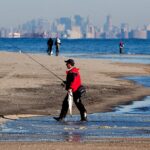
Raritan Bay stands as a monumental intersection where the industrial might of the New York metropolitan area meets the raw, Atlantic-fed saltwater ecosystem. For the seasoned angler, this is not merely a bay; it is a complex tactical arena where deep shipping channels cut through expansive flats, creating a nutrient-rich funnel for migratory game fish. The backdrop here is unmatched, shifting from the distant Manhattan skyline to the rugged, dune-lined coast of Sandy Hook, offering a visual theater as dynamic as the fishery itself.The area serves as the strategic gateway between the open ocean and the harbor, creating strong tidal currents that scour the bottom and aggregate baitfish. While the casual weekend warrior might be distracted by the boat traffic, the expert knows that the structure along the edges of the channels and the rips off the hook hold massive potential. Whether you are targeting the flats or working the deeper cuts, success here requires an understanding of how urban infrastructure and natural topography coexist.
Access & Getting There
Accessing the prime waters of Raritan Bay requires navigating the dense infrastructure of Northern New Jersey. For those trailering boats from the south or west, the primary artery is the Garden State Parkway to Exit 117, feeding into Route 36 East. Seasoned skippers know that summer traffic on Route 36 can be brutal, particularly on weekends; a "dawn patrol" arrival is not just a fishing strategy, it is a logistical necessity to avoid the bumper-to-bumper crawl through Keyport and Middletown.
💡 Captain's Tip: Launch Logistics
Trailer parking at popular ramps fills rapidly. If you are targeting the Sandy Hook area, arrive well before sunrise. When winds oppose the tide, the bay can develop a steep, tight chop quickly—small skiffs should stick to the leeward shoreline during strong trade winds.
For boaters, the Great Kills Park Boat Ramp on the Staten Island side offers a reliable launch point into the bay, though it demands patience during peak season. On the Jersey side, access is often dictated by the tides. Non-motorized vessels, such as kayaks and canoes, have a dedicated launch at Horseshoe Cove within the Gateway National Recreation Area. This is a prime launch for stealth fishing the shallows, but be explicitly warned: landing a motorized boat on the beaches here is strictly prohibited and enforced.
Raritan Bay Pre-Trip Checklist
Facilities & Amenities
The local infrastructure is robust but specific. Unlike pristine wilderness fisheries, you are operating in a developed zone where specialized shops cater to serious saltwater pursuits. The area is serviced by several high-caliber bait and tackle shops that understand the "early out" mentality. Up Front Bait and Tackle in Keyport is a standout resource, opening its doors at 05:00 AM—critical for grabbing fresh bunker or clam before the morning bite ignites.
💡 Captain's Tip: Gear Hauling
If you plan to stay overnight at Camp Gateway, be aware there is zero vehicle access to the campsites. You must hike your gear 0.25 miles from the parking lot. Bring a heavy-duty wagon with sand tires; carrying coolers and tackle boxes by hand is a recipe for exhaustion before you even wet a line.
For anglers looking to connect with local knowledge or book a heavy-hitter trip, the local charter fleet is top-tier. Operations like Chasin' Tail Sportfishing in Port Monmouth and Kill Shot Charters in Atlantic Highlands are staples of the local community. These captains specialize in navigating the bay's shifting shoals and busy lanes. Note that while fuel and ice are generally available at commercial marinas, the National Park facilities at Sandy Hook are more primitive; do not expect a fuel dock at the Horseshoe Cove launch.
Facility Name
Type
Key Details
Distance
Up Front Bait and Tackle
Bait Shop
Opens 5:00 AM daily; Keyport location
6.5 miles
Camp Gateway - Sandy Hook
Camping
Tent only; Hike-in (0.25 mi); No showers
6.9 miles
Great Kills Park Ramp
Boat Launch
Trailer parking available; Busy weekends
3.5 miles
Chasin' Tail Sportfishing
Charter
Port Monmouth; 24-hour operations
3.7 miles
Accommodations for the hardcore angler are unique here. Camp Gateway offers a rare opportunity to sleep within earshot of the surf, but it is not for the "glamper." These are tent-only, hike-in sites with no electrical hookups and no showers—only flush toilets and running water are available. It is strictly a basecamp for those prioritizing proximity to the water over comfort.
Permits, Regulations & Fees
Navigating the regulatory environment in Raritan Bay is as critical as reading the depth finder. The area falls under the jurisdiction of multiple agencies, including the National Park Service (Gateway National Recreation Area) and state environmental departments. A valid saltwater fishing registry is required for anglers in both New York and New Jersey waters.
💡 Captain's Tip: Surfcasting Rules
Surf fishing is permitted on most beaches, but there is a hard rule: no fishing in guarded swimming areas when lifeguards are on duty (typically 10:00 AM to 6:00 PM). Plan your surf casting for dawn and dusk, or move to ungarded stretches like the "M" lot or Fishing Beach.
Conservation is heavily enforced here, particularly regarding bird nesting. During the spring and summer months, specific sections of the shoreline, often including prime spots near "M" lot, may be closed to protect endangered shorebirds. These closures are non-negotiable and clearly marked. Furthermore, respect the local "Kapu" regarding private property and military history; the Sandy Hook Proving Ground is a National Historic Landmark, and metal detecting or digging for artifacts is illegal.
Events & Seasonal Information
The fishing calendar in Raritan Bay is driven by the migration of striped bass and bluefish, followed by the summer fluke run. The peak recreational season runs from Memorial Day through Labor Day, coinciding with the heaviest boat traffic. During this window, the bay can feel like a washing machine by midday due to the convergence of wakes from ferries, tankers, and pleasure craft.Competitive anglers should keep an eye on the summer tournament circuits that frequent these waters. However, for the solitude-seeking pro, the "shoulder seasons" (late spring and early fall) offer the best combination of active fish and quieter waters. Be aware that amenities like the Camp Gateway are seasonal; the campground is staffed from late May to mid-July, but becomes unstaffed in the off-season, requiring self-reliance.
Contact Information & Resources
For the most current information on ramp conditions, closures, and camping availability, direct contact with the managing agencies is recommended.Gateway National Recreation Area (Sandy Hook Unit): (732) 872-5918Camp Gateway Staffed Line (Seasonal): (347) 630-1124* Emergency: 911 or VHF Channel 16Safety in Raritan Bay means respecting the shipping lanes. Large vessels have limited maneuverability, and small fishing boats must yield. Always maintain a radio watch and have your safety gear accessible.For precise locations, real-time wind conditions, and detailed bathymetry of the channels mentioned above, consult the live dashboard and interactive maps below.
Our spot reports combine data-driven forecasts with curated local information. The forecast is generated by our proprietary Fishing Score algorithm (0–100%), which analyzes real-time data from Open-Meteo API, validated against NOAA CO-OPS tide gauges and USGS water-monitoring stations. The model weights tide dynamics (35%), wave energy (25%), wind patterns (20%) and time of day (20%)—factors shown to influence fish feeding behavior through marine-biology research and decades of charter log data.
Access, facilities and services information for each fishing spot is sourced from official datasets such as Recreation.gov (RIDB), state park & wildlife agencies, and geospatial providers like Google Maps. These sections undergo scheduled re-validation every 3–6 months to ensure that boat ramps, park access, contact details and local services remain accurate.
Narrative sections (catches, seasonal behavior, local tips) are synthesized from these data sources and refined following the Fishing Reports Today editorial guidelines, combining bibliographic research from ichthyology and oceanography with expert angler experience. Our team reviews reports on a regular basis, while the forecast model itself updates every 6 hours for real-time accuracy.
⚠️ Important: Always verify current local regulations, access restrictions and weather conditions before fishing. These reports are intended as a planning aid, not a guarantee of catches or safety. When in doubt, contact local authorities or park managers listed on the page.
To provide the best experiences, we use technologies like cookies to store and/or access device information. Consenting to these technologies will allow us to process data such as browsing behavior or unique IDs on this site. Not consenting or withdrawing consent, may adversely affect certain features and functions.
Functional Always active
The technical storage or access is strictly necessary for the legitimate purpose of enabling the use of a specific service explicitly requested by the subscriber or user, or for the sole purpose of carrying out the transmission of a communication over an electronic communications network.
Preferences
The technical storage or access is necessary for the legitimate purpose of storing preferences that are not requested by the subscriber or user.
Statistics
The technical storage or access that is used exclusively for statistical purposes.The technical storage or access that is used exclusively for anonymous statistical purposes. Without a subpoena, voluntary compliance on the part of your Internet Service Provider, or additional records from a third party, information stored or retrieved for this purpose alone cannot usually be used to identify you.
Marketing & Affiliates
The technical storage or access is required to create user profiles to send advertising, or to track the user on a website or across several websites for similar marketing purposes, including affiliate tracking for products recommended in our reports.




Leave a Reply