For anglers planning a trip to Spinney Mountain Reservoir this season, the current status is a definitive "Caution." While the fishing itself remains highly productive for those willing to adapt, severe environmental factors demand careful planning. The reservoir is currently sitting at approximately 37 percent capacity. This dramatic drawdown has completely altered the shoreline, exposing massive expanses of mudflats and leaving traditional shallow-water habitats completely dry. Due to these extreme low water levels, the North Boat Ramp is officially closed to all trailered launching. However, the reservoir remains open to hand-launched, motorized vessels, kayaks, paddleboards, and float tubes.
Weather is the second critical factor in your go/no-go decision. South Park is notorious for its volatile atmospheric conditions, and this season is no exception. Mornings typically offer crisp, clear skies and glass-calm water, providing a perfect window for topwater action and sight casting. However, anglers must remain highly vigilant as the day progresses. Winds consistently build by early afternoon, transforming the open water into a dangerous chop. Furthermore, afternoon thunderstorms are highly likely to push over the surrounding peaks, bringing brief but intense heavy downpours and severe lightning hazards. If you are in a float tube or kayak, you must plan your exit strategy early and aim to be off the water before the afternoon weather turns hostile.
🎣Nautrek
Private Beta
J
M
R
100+ anglers on the waitlist
The fishing network where your reputation matters.
Find trusted captains, join real trips with cost splitting, and build your Angler Rank. Your spots stay private — you decide who sees your intel.
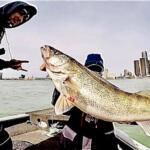
In a unique twist for this famous trout fishery, Northern Pike are the absolute primary target right now. Colorado Parks and Wildlife (CPW) has documented a dangerous spike in the pike population, which is heavily preying on the reservoir's young trout. To combat this, CPW is actively running a Pike Management Tournament, offering incentives for anglers to harvest these apex predators. The low water conditions have actually worked in the angler's favor here, concentrating the pike into the remaining deep-water channels and along the sharpest drop-offs. These fish are highly aggressive right now, actively gorging on anything that swims into their strike zone.
Sleeper Pick: Trophy Rainbow Trout
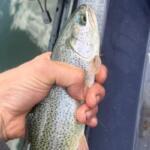
While the spotlight is firmly on the pike eradication effort, Spinney Mountain Reservoir remains one of Colorado's premier Gold Medal trout fisheries. The massive Rainbow Trout and Cutbows that made this lake famous are still cruising the depths. Because the water is so low and clear, these trophy trout are incredibly spooky. Most casual anglers are casting right over them or spooking them with heavy footsteps on the newly exposed banks. Those who employ stealthy, long-distance presentations are still connecting with fish in the two-foot class.
Baitfish Report
The forage base is currently a mix of late-season terrestrial insects, aquatic invertebrates, and juvenile fish. In the mornings, trout are keying in on Callibaetis mayflies and midge emergers. Along the banks, grasshoppers, flying ants, and beetles are getting blown into the water, providing high-protein meals for cruising trout. For the predatory pike, the menu consists almost entirely of juvenile trout and Yellow Perch. Matching your lures to the profile of a small stocker trout or a flashy perch is the ticket to triggering a violent strike.
TACTICAL STRATEGY
Where to Fish
Forget the shallow bays you fished last spring; they are likely mudflats now. You must completely recalibrate your approach and focus on the deeper channels, old submerged riverbeds, and the most dramatic depth changes available. If you are launching a float tube or kayak, paddle out past the shallow shoreline gradients and locate the 8 to 12-foot drop-offs. The deeper water near the islands (many of which are now connected to the mainland as peninsulas) provides excellent ambush points for pike and safe cruising lanes for trout. Shore anglers must be willing to hike through marshy sections to reach water deep enough to hold fish.
Pro Tip:Because the shoreline gradient is so shallow right now, your silhouette will easily spook cruising trout. Stay low, wear drab clothing, and make your casts well back from the water's edge before wading in.
Lure and Fly Selection
If you are targeting the aggressive Northern Pike, you need to throw large, attention-grabbing hardware. Upsize your gear and tie on large jerkbaits, such as Rapala Husky Jerks (sizes 10 to 14) or heavy spoons. Fly anglers should strip massive streamers like Slump Busters, articulated Woolly Buggers, and bunny leeches through the water column with an erratic, injured-baitfish retrieve.
For the trophy Rainbows, a suspended indicator rig is highly effective from a watercraft. Set your indicator to hold your flies 6 to 12 feet below the surface, suspending them just above the submerged weed beds. A Balanced Leech in size 10 or 12 is arguably the most effective pattern on the lake right now. Pair it with a Callibaetis nymph or a small chironomid dropper.
Color Theory
Water clarity is currently very high. For trout, stick to natural, muted tones that mimic the local forage: olive, black, claret, and brown. When targeting pike, however, you want to trigger a predatory reaction. Firetiger, bright chartreuse, and metallic rainbow trout patterns are producing the highest strike rates.
Timing the Bite
The golden window is undeniably from first light until roughly 10:30 AM. During this period, the wind is manageable, the trout are actively feeding on morning hatches, and you avoid the dangerous afternoon lightning storms. A secondary, highly productive window opens in the late evening as the sun dips behind the mountains, provided the afternoon storms have cleared out.
Pro Tip:When fishing for pike, employ a heavy fluorocarbon or wire leader. These fish have razor-sharp teeth that will effortlessly slice through standard trout tippet, costing you both your lure and a trophy fish.
REGULATIONS SNAPSHOT
Spinney Mountain Reservoir is strictly managed as a Gold Medal water, and CPW enforces regulations heavily to maintain the quality of the fishery. Before you make your first cast, you must understand the following rules:
Tackle Restrictions: Fishing is strictly restricted to artificial flies and lures ONLY. The use of live bait, cut bait, scented plastics, or salt is completely prohibited.
Trout Limits: The bag, possession, and minimum size limit for trout is ONE fish, which must be 20 inches or longer. All trout under 20 inches must be immediately and carefully released.
Pike and Perch: There is absolutely no bag or possession limit for Northern Pike or Yellow Perch. In fact, CPW strongly encourages the harvest of all Northern Pike to protect the vulnerable trout population.
Restricted Areas: Fishing is entirely prohibited near the face of the dam, from any boat ramp, and in the Homestake Conveyance Channel past the posted signs.
Operating Hours: Fishing is prohibited from one-half hour after sunset to one-half hour before sunrise. Ice fishing is never permitted at this reservoir.
REGIONAL ALTERNATIVE
If you arrive in South Park to find Spinney Mountain Reservoir unfishable due to howling winds, or if the lack of a trailered boat ramp ruins your plans, you have a world-class backup option just a few miles down the road: Eleven Mile Reservoir.
Unlike Spinney, Eleven Mile Reservoir is currently holding near full capacity, offering vast amounts of fishable water and fully operational boat ramps (the North Shore ramp is open for trailered vessels). This reservoir boasts a highly healthy, balanced ecosystem teeming with Rainbow Trout, Brown Trout, Cutbows, and Northern Pike.
For a quick tactical approach at Eleven Mile, boaters should focus on trolling Tasmanian Devils or Rapalas along the outer weedlines and rock ledges near Witch's Head or Howbert Point. The water temperatures here are slightly cooler, pushing fish into an aggressive pre-winter feeding frenzy. If you are fishing from the shore, Eleven Mile allows standard bait fishing (unlike Spinney). Shore anglers soaking nightcrawlers or marshmallows in the early morning hours are seeing fantastic catch rates. Keep an eye on the weather, pack your rain gear, and you can easily salvage a blown-out day with incredible action at this neighboring lake.
Pro Tip:If you decide to pivot to Eleven Mile, focus your efforts on the transition zones where shallow weed beds sharply drop off into deeper, cooler channels. Fish use these ledges as highways to move between feeding flats and deep-water sanctuaries.
Tight lines!
Editor's Choice: Must-Have Gear
FISHINGSIR Next-Gen Waterproof Chest Waders
★★★★★4.4 (7,370+ reviews)
2-Ply Tech: Upgraded nylon with 2.5x higher density than standard fabrics.
100% Waterproof: Lab-approved intrusion resistance with taped visible seams.
Ultra-Lightweight: Designed for all-day comfort while hunting or fishing.
As an Amazon Associate I earn from qualifying purchases. #ad
Loading forecast...
Live Fishing Conditions: Tides, Weather & Waves
Get real‑time tides, marine weather, swell and solunar activity for each spot so you know exactly when conditions line up for your best chance at a bite.
🎣
Spinney Mountain Reservoir
Loading coordinates...
🌤️
WEATHER CONDITIONS
--°F
--°C
Loading...
🌡️
Feels Like--°F--°C
💧
Humidity--%
💨
Wind-- mph-- km/h
🧭
Direction--
📊
Pressure-- inHg-- hPa
☀️
UV Index--
🌊
MARINE CONDITIONS
🌊Wave Height
-- ft
-- m
Loading...
🧭Wave Direction
--°
Loading...
⏱️Wave Period
-- s
Loading...
📈Tide Status
-- ft
-- m
Loading...
🌙
LUNAR & SOLUNAR
🌕
Loading...
Illumination: --%
Major Period--:-- - --:----:-- - --:--
Minor Period--:-- - --:----:-- - --:--
🌅Sunrise--:--
🌇Sunset--:--
📅
24-HOUR FORECAST
Loading fishing conditions...
Fishing Spots Map
🎣
Book a Fishing Charter near Spinney Mountain Reservoir Fishing Report Today 🎣
Local guides & charters. Verified captains, instant booking, best price guaranteed.
There was an error loading the map. Please try refreshing the page.
Info
Local Access & Facilities
Situated within the high-altitude basin known as South Park, Spinney Mountain Reservoir represents a convergence of rolling prairie ecosystems and the dramatic backdrop of the Continental Divide. This fishery is defined by its exposure to the elements and its sweeping views of the College Peaks and surrounding fourteeners. For the serious angler, this location offers a rugged, open-water experience that contrasts sharply with the sheltered canyons found elsewhere in Colorado. The environment here is characterized by vast, grassy plains that drop abruptly into cold, productive waters, creating a unique biological engine that drives the local food web.
The atmosphere at Spinney Mountain is strictly utilitarian and nature-focused; this is not a manicured urban park with paved promenades. It is a destination where the wind dictates the strategy and the vastness of the landscape demands self-reliance. The reservoir serves as a critical component of the South Platte River system, a name synonymous with legendary western angling. While the scenery is dominated by the "Peaks to Prairies" transition zone, the underwater topography is equally significant, offering submerged channels and flats that attract seasoned boaters and wade fishermen alike.
Anglers traveling here are typically targeting coldwater game fish that thrive in these high-elevation impoundments. The biological productivity of the reservoir, fed by the nutrient-rich South Platte, supports a robust population of fish that grow rapidly. However, the open nature of the terrain means that success is often determined by a captain's ability to read surface conditions and manage boat control in the face of the region's notorious winds.
Access & Getting There
Reaching Spinney Mountain Reservoir requires navigating the high country of Central Colorado. The primary access routes typically involve travel along US Highway 24, a corridor that winds through the heart of the state's mountainous terrain. Traffic in this region can be deceptive; while the roads are generally wide, weekend congestion during peak summer months and autumn leaf-peeping seasons can significantly alter travel times. Anglers towing vessels should be particularly mindful of the grades and weather conditions on the passes leading into the Hartsel area, as conditions can change rapidly from sun to hail or snow, even in late spring.
For boaters, the launch situation requires specific attention to logistics. The data indicates multiple boat launch facilities within an 8-mile radius of the central reference point. While the ramps are generally serviceable, the "South Park Breeze"—a euphemism for sustained winds often exceeding 20 knots—can make launching and retrieving a challenge. Experienced skippers know to time their arrival for the early morning lull. The sheer exposure of the ramps means there is little natural windbreak, so solo launching requires a well-rehearsed routine.
💡 Captain's Tip: Trailer Management
While boat ramps generally accommodate trailers, satellite parking areas like Charlie Meyers State Rec Parking and Highline are listed with no trailer parking capability. Drop your vessel at the designated ramp and ensure you are parking your rig in the correct lot to avoid fines or maneuvering nightmares.
Parking infrastructure is distributed across several key points. The Charlie Meyers State Rec Parking area is located approximately 3.5 miles from the central coordinate, serving as a primary staging ground for shore anglers and those with smaller craft. However, strictly observe signage regarding trailer prohibitions in specific satellite lots. For those exploring the wider area, the Florissant Fossil Beds National Monument Parking is roughly 20 miles away, offering a paved alternative for non-angling excursions, though it is not a staging ground for the reservoir itself.
Spinney Mountain Reservoir Pre-Trip Checklist
Facilities & Amenities
The infrastructure surrounding Spinney Mountain Reservoir is designed for the self-sufficient sportsman rather than the resort tourist. This is a "pack-it-in, pack-it-out" environment where amenities are sparse and functional. The primary sanitary facilities are vault toilets located at key access points and campgrounds. You will not find extensive marinas with fuel docks or full-service restaurants on the water. All fuel for vessels and tow vehicles should be purchased in the nearby towns of Hartsel or Lake George before entering the recreation area, as the reservoir itself lacks a commercial fuel dock.
Regarding provisions and tackle, the local ecosystem relies on a network of specialized shops located a significant distance from the water. Water Walker Guiding and Flies & Lies are approximately 29 miles away, while ArkAnglers is nearly 38 miles distant in Salida. This geographic reality necessitates a thorough gear check before leaving the pavement. Experts know that forgetting a specific tippet spool or spare prop nut here means a minimum one-hour round trip to rectify the mistake. These shops are highly specialized, however, catering to the technical demands of the South Platte drainage, so they are worth the stop en route rather than as an emergency detour.
💡 Captain's Tip: Supply Chain
With the nearest comprehensive tackle shops over 25 miles away, carry a "save-a-trip" kit including spare drain plugs, fuel filters, and a duplicate of your primary lure or fly selection. The isolation here is part of the charm, but it punishes the unprepared.
Lodging and camping options favor those willing to rough it or tow their accommodation. The Pulver Mountain Group Site, located about 9.6 miles away, is a standout facility for larger fishing parties. It features a pavilion, large communal campfire rings, and vault toilets, making it an excellent base camp for clubs or multi-boat flotillas. Note that this is a non-electric site, so onboard charging systems for trolling motors must be self-contained or generator-supported. For a standard campground closer to the action, Lazy Boy Campground is roughly 6.5 miles from the water. For those seeking a roof over their heads, options like Lost Valley Ranch offer a more upscale experience but are situated over 20 miles away, requiring a longer morning commute for dawn patrol launches.
Permits, Regulations & Fees
Navigating the regulatory landscape here is essential for both legal compliance and the preservation of this high-pressure fishery. The area falls under the jurisdiction of the Pike and San Isabel National Forests (PSICC) and state wildlife agencies. Anglers must possess a valid Colorado fishing license, and strict adherence to possession limits is enforced to maintain the quality of the fishery. The reservoir is often subject to specific seasonal closures or "Gold Medal" regulations depending on the specific section of water and time of year, so consulting the current year's brochure is mandatory.
A specific regulatory note for this region concerns the use of technology. The Forest Service has issued critical information regarding Unmanned Aircraft Systems (UAS) or drones. While they provide excellent aerial scouting footage, their use is heavily regulated to prevent harassment of wildlife and interference with wildfire suppression efforts. Given the dry, grassy nature of the surrounding prairie, fire danger is a constant concern; visitors should be hyper-aware of fire restrictions, especially when using the communal fire pits at Pulver Mountain.
Additionally, the proximity to the Florissant Fossil Beds National Monument (20 miles east) brings an added layer of conservation awareness to the region. While fishing is the primary draw at the reservoir, the surrounding land contains paleontological resources. The ethos of "Leave No Trace" is elevated here; removing rocks, artifacts, or disturbing the landscape is strictly prohibited to protect the historical integrity of the area.
Events & Seasonal Information
The fishing calendar at Spinney Mountain is dictated entirely by the elevation. The open water season is relatively short, typically running from ice-out in late spring until the freeze in late autumn. The "shoulder seasons" of May and October often produce the largest fish as they gorge to recover from spawning or prepare for winter. However, these are also the most volatile weather months, where a calm morning can turn into a blizzard by noon.
Daily rhythms are crucial for success. The wind in South Park is clockwork-reliable, usually remaining calm until mid-morning before the thermal gradients kick in and whip the reservoir into whitecaps. Experienced captains plan their runs to the far end of the lake at first light and work their way back toward the ramp as the breeze builds. Mid-day often requires drifting tactics or anchoring in protected coves, if they can be found.
While specific tournament dates fluctuate annually, the reservoir's reputation draws competitive anglers throughout the summer. The influx of boats during these events can crowd the ramps, so recreational anglers should check local boards or tackle shop reports for scheduled competitions to avoid the logistical bottleneck at the launch.
Contact Information & Resources
For the most current information regarding water levels, fire bans, and access road conditions, direct contact with the managing agencies is recommended. The Florissant Fossil Beds National Monument can be reached at (719) 748-3253 for regional queries, while the PSICC (Forest Service) manages the broader federal lands surrounding the water. For camping inquiries at the Pulver Mountain Group Site, email contact via tbolton@goexplorus.com is often more effective than phone calls due to the remote nature of the hosts.
Safety in this remote basin is the responsibility of the individual. Cell phone service can be spotty in the low points of the reservoir. Always file a float plan with someone on shore and ensure your vessel is equipped with all Coast Guard-required safety gear, particularly life jackets, as the cold water temperatures can induce hypothermia rapidly even in summer.
For precise locations of boat ramps, real-time weather data, and interactive navigation aids, consult the live dashboard and maps below.
Our spot reports combine data-driven forecasts with curated local information. The forecast is generated by our proprietary Fishing Score algorithm (0–100%), which analyzes real-time data from Open-Meteo API, validated against NOAA CO-OPS tide gauges and USGS water-monitoring stations. The model weights tide dynamics (35%), wave energy (25%), wind patterns (20%) and time of day (20%)—factors shown to influence fish feeding behavior through marine-biology research and decades of charter log data.
Access, facilities and services information for each fishing spot is sourced from official datasets such as Recreation.gov (RIDB), state park & wildlife agencies, and geospatial providers like Google Maps. These sections undergo scheduled re-validation every 3–6 months to ensure that boat ramps, park access, contact details and local services remain accurate.
Narrative sections (catches, seasonal behavior, local tips) are synthesized from these data sources and refined following the Fishing Reports Today editorial guidelines, combining bibliographic research from ichthyology and oceanography with expert angler experience. Our team reviews reports on a regular basis, while the forecast model itself updates every 6 hours for real-time accuracy.
⚠️ Important: Always verify current local regulations, access restrictions and weather conditions before fishing. These reports are intended as a planning aid, not a guarantee of catches or safety. When in doubt, contact local authorities or park managers listed on the page.
To provide the best experiences, we use technologies like cookies to store and/or access device information. Consenting to these technologies will allow us to process data such as browsing behavior or unique IDs on this site. Not consenting or withdrawing consent, may adversely affect certain features and functions.
Functional Always active
The technical storage or access is strictly necessary for the legitimate purpose of enabling the use of a specific service explicitly requested by the subscriber or user, or for the sole purpose of carrying out the transmission of a communication over an electronic communications network.
Preferences
The technical storage or access is necessary for the legitimate purpose of storing preferences that are not requested by the subscriber or user.
Statistics
The technical storage or access that is used exclusively for statistical purposes.The technical storage or access that is used exclusively for anonymous statistical purposes. Without a subpoena, voluntary compliance on the part of your Internet Service Provider, or additional records from a third party, information stored or retrieved for this purpose alone cannot usually be used to identify you.
Marketing & Affiliates
The technical storage or access is required to create user profiles to send advertising, or to track the user on a website or across several websites for similar marketing purposes, including affiliate tracking for products recommended in our reports.




Leave a Reply