The current conditions on the South Platte River through the Deckers corridor are prime for late-summer angling, earning a solid "GO" status. Recent water management operations from Cheesman Reservoir have provided a healthy bump in flows, pushing the river into the highly desirable 200 to 300 Cubic Feet per Second (CFS) range. This increased volume is a massive benefit for the fishery right now. It provides the trout with a higher dissolved oxygen content, cooler water temperatures, and a wider array of holding lies compared to the stagnant, low-flow conditions often experienced during the dog days of summer.
Water temperatures are currently fluctuating between the low 50s in the morning and peaking in the low 60s by late afternoon. Because the water is being released from the bottom of the dam, the river remains cold and highly oxygenated, keeping the trout active throughout the day. However, anglers should always carry a stream thermometer. If you see afternoon water temperatures creeping toward the 65-degree mark, it is best to pack it up and give the fish a break to prevent exhaustion and mortality.
From the editor
Tired of fishing with strangers you can’t trust?
Nautrek is the first social network for serious anglers — verified partners, real trips, cost splitting and intel sharing without burning your spots. Private beta now open.
Weather conditions are typical for late summer in the Colorado high country: expect cool, crisp mornings giving way to warm, sunny afternoons, often followed by brief, localized thunderstorms. These afternoon cloud covers can actually be your best friend, as they trigger localized mayfly hatches and give the fish a false sense of security, prompting them to feed more aggressively in shallower water.
SPECIES INTEL
Primary Target: Rainbow and Brown Trout
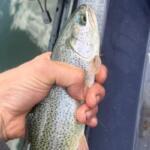
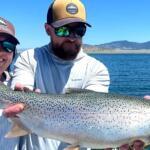
The Deckers stretch is renowned for its robust populations of wild Brown Trout and beautifully colored Rainbow Trout. Right now, these fish are incredibly healthy, utilizing the increased flows to spread out from the deep wintering pools into the faster riffles, seams, and pocket water. The Rainbows are heavily keyed in on the morning Trico hatches, while the Browns are aggressively holding in the deeper undercut banks and heavier seams, waiting to ambush larger aquatic insects and terrestrials.
Sleeper Pick: The "Cutbow" Hybrid
While the purebred Rainbows and Browns get all the glory, the occasional Cutthroat-Rainbow hybrid (Cutbow) is the true sleeper of this stretch. These fish often hold in the softer, inside seams just off the main current. They are highly opportunistic and tend to be slightly less selective than the hyper-educated Rainbows, making them highly susceptible to a well-presented terrestrial pattern or a flashy attractor nymph.
Baitfish & Forage Report
The South Platte is a classic tailwater, meaning the forage base is heavily dominated by aquatic macroinvertebrates rather than baitfish. The menu right now is a smorgasbord of late-summer staples:
Tricos: The undeniable main event of the early morning. These tiny mayflies (sizes 20-24) hatch at dawn and fall to the water as spent spinners shortly after, creating a blanket of food on the surface.
Caddis: Active in the late morning and late afternoon. The fish are keyed in on both the emergent pupa stage and the fluttering adults (sizes 14-18).
Pale Morning Duns (PMDs): Still making a strong showing in the late morning to early afternoon, especially on overcast days.
Terrestrials: Hoppers, ants, and beetles are getting blown into the river from the grassy banks. This provides a high-calorie meal that the larger Browns simply cannot resist.
Midges: The year-round staple of the South Platte. When all else fails, a tiny midge pattern will usually produce.
TACTICAL STRATEGY
Where to Find Them
With the elevated flows, the trout have abandoned the slow, deep, stagnant pools and have migrated into highly oxygenated feeding lanes. Focus your efforts on the transition zones. The stretch from the Bridge Crossing down to the Tee Pee Club boundary is fishing exceptionally well. Look for the "walking speed" water—areas where the current moves at roughly the pace of a brisk walk. Target the soft inside seams next to heavy riffles, the submerged boulders creating pocket water, and the tailouts of larger runs just before the water breaks over the next shallow gravel bar.
Pro Tip: Do not wade right in! The elevated flows have pushed a significant number of fish tight to the banks, especially where overhanging grass provides cover. Fish the water at your feet before you ever step into the river. Wading too deep, too quickly will spook the best fish in the run.
Lure & Bait Selection
Deckers is heavily pressured, and the fish are educated, so your fly selection and presentation must be flawless. Here is exactly what you need to tie on:
The Morning Dry Fly Rig: When the Tricos are falling, precision is everything. Use a 9-foot, 5X or 6X fluorocarbon leader. Start with a visible lead fly like a size 20 Parachute Adams or a black foam-wing emerger, and trail it with a size 22-24 Trico Spinner (such as a Pearl-butt Trico or a CDC Spinner) about 18 inches behind.
The Hopper-Dropper Setup: As the sun gets high and the Trico hatch fades (usually around 10:00 AM), switch to a terrestrial rig. Use a size 10-12 Chubby Chernobyl in tan or olive, or a size 10 Amy's Ant as your indicator fly. Drop a size 16 UV Scud or a size 18 Two-Bit Hooker 24 to 36 inches below it. This covers both the surface-feeding fish looking for a big meal and the subsurface feeders.
The Deep Nymph Rig: For the deeper runs and shelves, a tandem nymph rig is mandatory. Start with a heavier attractor like a size 12 Pat's Rubber Legs (coffee/black) or a size 14 San Juan Worm (red or pink) to get the rig down quickly. Trail this with a size 20 Top Secret Midge, a size 22 Chocolate Foam Wing Emerger, or a size 18 Graphic Caddis.
Pro Tip: Weight is more important than the exact fly pattern when nymphing. With the current flows, you need your flies ticking the bottom. If you are not occasionally snagging moss or rocks, you are not fishing deep enough. Adjust your split shot constantly as you move from shallow riffles to deep runs.
Timing & Presentation
The golden hours are from first light until about 11:00 AM. This is when the water is coolest, the Tricos are active, and the fish are least wary. The midday hours can be tough under a bright sun, requiring stealthy approaches, longer leaders, and flawless dead drifts. If the afternoon clouds roll in, expect a resurgence in activity, particularly with Caddis and PMDs. Remember, drag is your worst enemy on the South Platte. Mend your line diligently and ensure your flies are drifting at the exact same speed as the natural current.
REGULATIONS SNAPSHOT
The Deckers section of the South Platte River (from the Wigwam Club boundary downstream to Scraggy View) is designated as Gold Medal Water. It is heavily protected to maintain the quality of the fishery.
Regulation Category
Rule Details
Tackle Restrictions
Artificial flies and lures ONLY. Absolutely no organic bait, scented baits, or soft plastics permitted.
Bag & Size Limits
The daily bag limit is two (2) trout, and they must be a minimum of 16 inches in length. However, catch-and-release is heavily encouraged by the guiding community to protect the resource.
Licensing
A valid Colorado State Fishing License is required for all anglers 16 and older. Additionally, a Habitat Stamp is mandatory for anglers aged 18-64.
Always pinch your barbs. It makes releasing these beautiful fish much easier and causes far less damage to their mouths.
REGIONAL ALTERNATIVE
If you arrive at Deckers and find the parking lots overflowing or a sudden thunderstorm has muddied the lower tributaries, your immediate backup plan should be to drive upstream to Cheesman Canyon.
Cheesman Canyon begins just below Cheesman Dam and runs down to the upper boundary of the Wigwam Club. Because it is located immediately below the dam, the water clarity is almost always gin-clear, completely unaffected by the rain runoff that can occasionally muddy the Deckers stretch. Cheesman is strictly catch-and-release, flies and lures only, and is widely considered one of the most technical and beautiful trout fisheries in the United States.
The hike into the canyon is steep and requires physical exertion, which naturally thins out the crowds. Once in the canyon, you will be sight-fishing to large, incredibly smart trout holding in deep, emerald-green pools and turbulent pocket water. The tactical approach here requires scaling down: use 6X or even 7X fluorocarbon tippet, micro-split shot, and tiny midge and baetis patterns (sizes 22-26). Sight fishing is the name of the game here; locate a feeding fish, study its movements, and present your flies with absolute perfection. It is a challenging but immensely rewarding alternative.
Tight lines!
Editor's Choice: Must-Have Gear
FISHINGSIR Next-Gen Waterproof Chest Waders
★★★★★4.4 (7,370+ reviews)
2-Ply Tech: Upgraded nylon with 2.5x higher density than standard fabrics.
100% Waterproof: Lab-approved intrusion resistance with taped visible seams.
Ultra-Lightweight: Designed for all-day comfort while hunting or fishing.
As an Amazon Associate I earn from qualifying purchases. #ad
Loading forecast...
Live Fishing Conditions: Tides, Weather & Waves
Get real‑time tides, marine weather, swell and solunar activity for each spot so you know exactly when conditions line up for your best chance at a bite.
🎣
Deckers
Loading coordinates...
🌤️
WEATHER CONDITIONS
--°F
--°C
Loading...
🌡️
Feels Like--°F--°C
💧
Humidity--%
💨
Wind-- mph-- km/h
🧭
Direction--
📊
Pressure-- inHg-- hPa
☀️
UV Index--
🌊
MARINE CONDITIONS
🌊Wave Height
-- ft
-- m
Loading...
🧭Wave Direction
--°
Loading...
⏱️Wave Period
-- s
Loading...
📈Tide Status
-- ft
-- m
Loading...
🌙
LUNAR & SOLUNAR
🌕
Loading...
Illumination: --%
Major Period--:-- - --:----:-- - --:--
Minor Period--:-- - --:----:-- - --:--
🌅Sunrise--:--
🌇Sunset--:--
📅
24-HOUR FORECAST
Loading fishing conditions...
Fishing Spots Map
🎣
Book a Fishing Charter near Deckers Fishing Report Today 🎣
Local guides & charters. Verified captains, instant booking, best price guaranteed.
There was an error loading the map. Please try refreshing the page.
Info
Local Access & Facilities
The Deckers Fishery: A South Platte Icon
The stretch of the South Platte River flowing through Deckers, Colorado, represents one of the most technically demanding and historically significant trout fisheries in the American West. Situated at the convergence of the North Fork and the main stem of the South Platte, this area is a "Gold Medal" water destination that draws serious anglers from across the globe. The landscape is defined by the rugged, red-granite outcrops of the Pike National Forest and the towering Ponderosa pines that line the riverbanks. For the expert angler, Deckers offers a complex puzzle of currents, deep pools, and highly pressured fish that require precision presentations and intimate knowledge of the aquatic insect life.
Unlike the manicured tailwaters found elsewhere, the river corridor here retains a raw, canyon atmosphere despite its popularity. The water flows clear and cold from the bottom-release Cheesman Dam upstream, creating a year-round fishery that remains productive even when high-country streams are locked in ice. The bottom topography varies from freestone-style riffles to deep, slow-moving runs that hold trophy Rainbow and Brown Trout. This is not a location for the casual caster; the trout here have seen every fly pattern in the book, making success a true badge of honor for seasoned captains and guides.
The atmosphere in Deckers itself is a blend of historic charm and focused angling intensity. The area, originally settled by Stephen Decker in the 1890s as a general store and saloon, maintains its status as a social hub for those coming off the water. While the river is the primary draw, the surrounding wilderness offers a backdrop of spectacular geologic formations, including views of Pikes Peak in the distance. For the boat captain or wading pro, understanding the nuances of access, particularly the balance between public easements and private property, is the first step to unlocking this legendary water.
💡 Captain's Tip: The "Tuber Hatch" Contingency
During summer months, the river sees heavy recreational use from tubers and kayakers starting around 10:00 AM. Seasoned anglers plan their "dawn patrol" to be on the water by first light to fish the trico spinner falls before the flotilla arrives. Alternatively, waiting until late evening often yields the best dry fly action after the crowds have dispersed.
Access & Getting There
Reaching the Deckers corridor requires navigating winding mountain roads that can be deceptive depending on the season. The primary route from the Denver metro area involves taking Highway 285 southwest to Pine Junction, then turning south on Jefferson County Road 126. This 28-mile stretch drops significantly in elevation, offering sweeping views of the valley floor. Drivers should be vigilant for wildlife, particularly mule deer and elk, which frequently cross the tarmac at dawn and dusk. In winter, this route can become treacherous with black ice, so 4WD is recommended for any off-season expeditions.
Upon arrival, parking logistics become a critical strategic element. The Lone Rock Campground area serves as a central hub for river access. The roads and parking aprons here are paved, but capacity is finite. On weekends, the lots fill rapidly. Anglers towing drift boats or rafts need to be particularly conscious of their footprint; while the ramps are generally accessible, maneuvering a trailer in tight, crowded lots requires patience. The boat access here is primarily for small craft, kayaks, and tubers, as the river's character is better suited for wading in many stretches.
For those looking to explore beyond the immediate bridge area, the Gill Trail offers foot access into the more remote Cheesman Canyon. The trailhead is located near the campground and extends 7 miles southwest toward the dam. This is hiking-access only, requiring anglers to pack in their gear. The effort is often rewarded with less pressured water and solitude that is hard to find near the road. Additionally, the Log Jumper Trailhead, located approximately 5.8 miles from the main hub, provides alternative parking for those willing to hike to different river sections.
💡 Captain's Tip: Winter Road Realities
The road down from Pine Junction is steep and shaded. Even if it is sunny in Denver, the corners on Hwy 126 often hold ice well into the afternoon. Ensure your vehicle has appropriate tires and carry chains if towing a drift boat trailer during the shoulder seasons.
Deckers Pre-Trip Checklist
Facilities & Amenities
The infrastructure in Deckers is purpose-built for the outdoor enthusiast, but it lacks the amenities of a full-service marina town. The epicenter of local angling intelligence is Flies & Lies, a bait and tackle shop located directly in the hamlet, a mere 75 feet from the central reference point. This shop is not just a retail space; it is the repository of daily river flows, hatch reports, and gear adjustments. They open at 8:00 AM, which is sufficient for grabbing last-minute tippet, but serious pros usually have their boxes sorted the night before. For more extensive outfitting or heavy gear needs, South Platte Fly Shop in Woodland Park (20.6 miles away) or Ken's Anglers in Littleton (23.6 miles away) are the nearest major outfitters.
Regarding lodging and basecamp operations, Lone Rock Campground is the primary facility directly on the water. It sits at an elevation of 6,479 feet and offers basic amenities including two vault toilets and a community drinking water hydrant. It is critical to note that there are no RV hookups or sewer services here. The sites are paved and can accommodate vehicles up to roughly 35-40 feet depending on the specific site, but it is essentially dry camping. Firewood is available for sale, and trash collection is provided, but self-reliance is the rule. For a more upscale experience or client lodging, Lost Valley Ranch is located about 7.9 miles away, offering a distinct step up in comfort.
Fuel and provisions are another logistical consideration. While there is a general store history in Deckers, grocery availability is limited to basics. Captains should advise clients to stock up on substantial provisions in Sedalia or Woodland Park before descending into the canyon. There is no marina-style fuel dock on the river; all vessels must be fueled prior to launch, and carrying reserve jerry cans is unnecessary for river floats but good practice for tow vehicles given the distance to the nearest gas station.
Facility Name
Type
Distance
Notes
Flies & Lies
Tackle Shop
75 ft
Local hub, opens 8 AM.
Lone Rock Campground
Camping/Access
0.4 miles
Vault toilets, no hookups, river views.
Chatfield Lake
Rec Area/Launch
22.9 miles
Full marina services for larger vessels.
Lost Valley Ranch
Lodging
7.9 miles
Upscale guest ranch accommodation.
Pulver Mountain Group Site
Camping
20.5 miles
Group facilities, pavilion, vault toilets.
Permits, Regulations & Fees
Fishing the South Platte River corridor places anglers under the jurisdiction of the Pike National Forest and state wildlife agencies. Strict regulations are enforced to maintain the "Gold Medal" status of the water. While specific bag limits and tackle restrictions (such as flies-only or barbless hook requirements) should be verified immediately prior to fishing via the interactive map below or local signage, the general ethos here is catch-and-release conservation. The pressure on this fishery is immense, and the regulations are designed to sustain the population of wild Rainbow and Brown Trout.
Lone Rock Campground and other developed recreation sites operate under the Federal Recreation Lands Enhancement Act. Day-use fees are typically required for parking at improved lots like the Bridge Crossing Picnic Area. If you are camping, a reservation is highly recommended, especially for weekends. Cancellations and no-shows incur fees, and the reservation window is competitive. The Pulver Mountain Group Site offers a private area with a pavilion for larger parties or organized trips, but it requires advance booking and has a locked gate for privacy.
Anglers must also respect private property boundaries. The river corridor is a patchwork of National Forest land and private holdings. In Colorado, the stream bed is often considered private property if it flows through private land, meaning wading can constitute trespassing. Always stay within the high-water mark in public zones and utilize designated access points like the Scraggy View or Bridge Crossing picnic areas to avoid conflict. Respecting "Kapu" (forbidden/sacred) concepts of stewardship and land ownership is vital for maintaining angler access in the future.
💡 Captain's Tip: Technical Rigging
The trout in the clear waters near the bridge are notoriously line-shy. Pros typically size down to 5x or 6x fluorocarbon tippet and use strike indicators that land softly, such as yarn or New Zealand wool, rather than heavy plastic bobbers that spook fish in the slow pools.
Events & Seasonal Information
The South Platte at Deckers is a true four-season fishery, but the rhythms of the river dictate the strategy. Spring and Fall are the premier angling seasons, offering the best balance of hatch activity (Blue Winged Olives and Midges) and manageable water temperatures. Summer brings the "recreational hatch" of non-anglers, which changes the dynamic of the water significantly during midday hours. The water remains ice-free near the dam release in winter, providing a sanctuary for anglers willing to brave the cold for technical midge fishing.
While specific tournament schedules vary, the corridor is a frequent host for conservation events and river cleanups organized by local chapters of Trout Unlimited. The South Platte River Corridor has a rich history as a resort destination dating back to the early 1900s, and that legacy continues with high visitation during holidays. Anglers should anticipate peak traffic on Memorial Day, July 4th, and Labor Day. During these windows, the Lone Rock and Bridge Crossing areas will be at maximum capacity by mid-morning.
Weather patterns in this canyon can shift rapidly. Thunderstorms build quickly over the Rampart Range in the summer afternoons. The granite canyon walls amplify the sound of thunder, and lightning is a serious hazard for those holding graphite rods. It is advisable to be off the water or near shelter when the dark clouds crest the ridge line. Conversely, winter days can be surprisingly mild, but once the sun drops behind the canyon rim, temperatures plummet instantly.
Contact Information & Resources
For official information regarding campsite availability, road closures, and fire restrictions, the Pike National Forest, South Platte Ranger District is the primary authority. They can be reached regarding facility-specific queries at 303-275-5610. For inquiries specifically related to the Lone Rock Campground, the direct line is 303-647-2366. In the event of an emergency, cell service is spotty and unreliable within the deep granite canyons. A satellite messenger or travel to the high ground near Pine Junction or Woodland Park may be necessary to reach 911 services.
For visitors interested in the broader natural history of the region, the Florissant Fossil Beds National Monument is located approximately 23.8 miles away (Phone: 719-748-3253). This site offers a fascinating geological context to the prehistoric landscape you are fishing in. Always inform a shore contact of your float plan or hiking itinerary before descending into the river corridor.
For precise locations of the best wading entry points, real-time river flow data, and the location of the nearest fly shop, consult the live dashboard and interactive maps below.
🎣
Deckers
Sedalia • Colorado • 39.2542, -105.2269
🅿️
Parking
5
Log Jumper(677) Trailhead
⭐ 5.05.8 mi
📍7501-7917 S Rampart Range Rd, Sedalia, CO 80135, USA
Our spot reports combine data-driven forecasts with curated local information. The forecast is generated by our proprietary Fishing Score algorithm (0–100%), which analyzes real-time data from Open-Meteo API, validated against NOAA CO-OPS tide gauges and USGS water-monitoring stations. The model weights tide dynamics (35%), wave energy (25%), wind patterns (20%) and time of day (20%)—factors shown to influence fish feeding behavior through marine-biology research and decades of charter log data.
Access, facilities and services information for each fishing spot is sourced from official datasets such as Recreation.gov (RIDB), state park & wildlife agencies, and geospatial providers like Google Maps. These sections undergo scheduled re-validation every 3–6 months to ensure that boat ramps, park access, contact details and local services remain accurate.
Narrative sections (catches, seasonal behavior, local tips) are synthesized from these data sources and refined following the Fishing Reports Today editorial guidelines, combining bibliographic research from ichthyology and oceanography with expert angler experience. Our team reviews reports on a regular basis, while the forecast model itself updates every 6 hours for real-time accuracy.
⚠️ Important: Always verify current local regulations, access restrictions and weather conditions before fishing. These reports are intended as a planning aid, not a guarantee of catches or safety. When in doubt, contact local authorities or park managers listed on the page.
To provide the best experiences, we use technologies like cookies to store and/or access device information. Consenting to these technologies will allow us to process data such as browsing behavior or unique IDs on this site. Not consenting or withdrawing consent, may adversely affect certain features and functions.
Functional Always active
The technical storage or access is strictly necessary for the legitimate purpose of enabling the use of a specific service explicitly requested by the subscriber or user, or for the sole purpose of carrying out the transmission of a communication over an electronic communications network.
Preferences
The technical storage or access is necessary for the legitimate purpose of storing preferences that are not requested by the subscriber or user.
Statistics
The technical storage or access that is used exclusively for statistical purposes.The technical storage or access that is used exclusively for anonymous statistical purposes. Without a subpoena, voluntary compliance on the part of your Internet Service Provider, or additional records from a third party, information stored or retrieved for this purpose alone cannot usually be used to identify you.
Marketing & Affiliates
The technical storage or access is required to create user profiles to send advertising, or to track the user on a website or across several websites for similar marketing purposes, including affiliate tracking for products recommended in our reports.



Leave a Reply