Conditions are prime along the Florida East Coast. The fall transition is in full swing, and the legendary autumn mullet migration is peaking. Seas are generally manageable, but as always during the fall shift, keep an eye on passing cold fronts that can kick up the northeast winds. Water temperatures are hovering in the upper 70s to low 80s, creating explosive feeding windows. Safety-wise, use extreme caution when navigating the major inlets on an outgoing tide opposing an east swell, as standing waves can become treacherous for small vessels.
SPECIES INTEL
Primary Target: Snook and Redfish
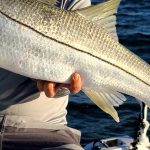
Right now, it is a toss-up between trophy linesiders and bull redfish. The bait run has both species in an absolute feeding frenzy. Oversized redfish are schooling tightly around the inlets and nearshore troughs, while snook are aggressively ambushing bait along the jetties, seawalls, and mangrove shorelines.
🎣Nautrek
Private Beta
J
M
R
100+ anglers on the waitlist
The fishing network where your reputation matters.
Find trusted captains, join real trips with cost splitting, and build your Angler Rank. Your spots stay private — you decide who sees your intel.
While many anglers are hyper-focused on slot reds and snook, the Silver Kings are quietly shadowing the massive bait pods just off the beaches. These migrating tarpon offer world-class, heavy-tackle action before the winter cold fronts push them further south.
Baitfish Report
It is all about the mullet. Finger mullet (3 to 6 inches) are pouring out of the estuaries and running south along the beaches. You will also find larger striped mullet in the mix. Match your presentation to the specific size of the bait in the pod you are fishing.
TACTICAL STRATEGY
Where to Deploy
Focus your efforts around major choke points like Sebastian Inlet and Jupiter Inlet. Specifically, fish the north jetties during the outgoing tide. The current sweeps the bait out, pinning them against the rocks where predators wait. If the inlet is too crowded, move to the immediate beaches and look for the deep troughs just outside the shore break where redfish patrol.
Lure Selection
When you need to cover water, throw a 4-inch to 6-inch walking topwater plug to mimic a fleeing baitfish. For sub-surface action in heavy current, a 1-ounce to 1.5-ounce flair hawk jig is absolutely deadly for snook holding deep in the inlet channels.
Color Patterns
Keep it natural. Silver, white, and gray patterns with a hint of black on the back perfectly mimic the local forage. If the water gets stained from a hard northeast blow, switch to a chartreuse or bone-colored topwater to increase visibility.
Live Bait Rigging
You cannot beat a live finger mullet right now. Rig them on a 4/0 to 6/0 inline circle hook. For fishing the inlets, use a slip-sinker rig (fish finder rig) with just enough egg weight (1 to 2 ounces) to hold bottom, paired with a 40-pound to 50-pound fluorocarbon leader. When fishing the beach troughs, freeline the bait without weight so it can swim naturally in the surf.
Timing the Bite
Pro Tip: Fish the windows. Dawn and dusk are the most explosive times, especially when they align with a falling tide. The outgoing water flushes the bait from the safety of the lagoon directly into the waiting mouths of predators.
REGULATIONS SNAPSHOT
Always verify current Florida Fish and Wildlife Conservation Commission (FWC) rules before harvesting, as Atlantic coast regulations are strictly enforced:
Snook: The Atlantic season is open. Slot limit is not less than 28 inches or more than 32 inches total length. Bag limit is one per harvester per day.
Redfish: Regulations vary tightly by management zone along the east coast. Generally, the slot is 18 to 27 inches with a one-fish bag limit, but many areas are catch-and-release only. Ensure you know your specific zone boundaries.
Tarpon: Catch-and-release only. Fish over 40 inches must remain in the water at all times to ensure healthy release.
REGIONAL ALTERNATIVE
Backup Plan: The Indian River Lagoon
If the northeast winds howl and blow out the beaches and inlets, retreat to the sheltered waters of the Indian River Lagoon. Access via the ramp at Max Brewer Bridge in Titusville or various ramps around Melbourne. Target the mangrove shorelines and deeper residential docks for resident snook, seatrout, and juvenile tarpon. Downsize your tackle to medium-light spinning gear and throw 3-inch paddle tail swimbaits on a 1/8-ounce jighead. The water will be calmer, and you can still find excellent action out of the wind.
Pro Tip: When fishing the lagoon docks, skip your baits as far under the structure as possible. The biggest fish hold in the deepest shadows during the middle of the day, waiting to ambush passing forage.
Tight lines!
Editor's Choice: Must-Have Gear
FISHINGSIR Next-Gen Waterproof Chest Waders
★★★★★4.4 (7,370+ reviews)
2-Ply Tech: Upgraded nylon with 2.5x higher density than standard fabrics.
100% Waterproof: Lab-approved intrusion resistance with taped visible seams.
Ultra-Lightweight: Designed for all-day comfort while hunting or fishing.
As an Amazon Associate I earn from qualifying purchases. #ad
Loading forecast...
Live Fishing Conditions: Tides, Weather & Waves
Get real‑time tides, marine weather, swell and solunar activity for each spot so you know exactly when conditions line up for your best chance at a bite.
🎣
Florida East Coast
Loading coordinates...
🌤️
WEATHER CONDITIONS
--°F
--°C
Loading...
🌡️
Feels Like--°F--°C
💧
Humidity--%
💨
Wind-- mph-- km/h
🧭
Direction--
📊
Pressure-- inHg-- hPa
☀️
UV Index--
🌊
MARINE CONDITIONS
🌊Wave Height
-- ft
-- m
Loading...
🧭Wave Direction
--°
Loading...
⏱️Wave Period
-- s
Loading...
📈Tide Status
-- ft
-- m
Loading...
🌙
LUNAR & SOLUNAR
🌕
Loading...
Illumination: --%
Major Period--:-- - --:----:-- - --:--
Minor Period--:-- - --:----:-- - --:--
🌅Sunrise--:--
🌇Sunset--:--
📅
24-HOUR FORECAST
Loading fishing conditions...
Fishing Spots Map
🎣
Book a Fishing Charter near Florida East Coast Fishing Report Today 🎣
Local guides & charters. Verified captains, instant booking, best price guaranteed.
There was an error loading the map. Please try refreshing the page.
Info
Local Access & Facilities
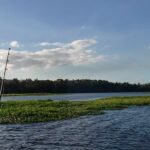
The Florida East Coast fishery, specifically centered around the sprawling estuary systems of Jacksonville and the historic St. Johns River, offers a complex tactical environment for the serious angler. This is not merely a coastline; it is a convergence of massive salt marshes, hardwood hammocks, and the open Atlantic. The topography here is defined by the interplay between the deep river channels and the shallow, grassy flats of the Timucuan Ecological & Historic Preserve. Anglers here must be versatile, ready to switch from working the backwater creeks for Redfish to punching out of the inlets for pelagic species along the Atlantic trade routes.
The atmosphere is a distinct blend of Southern history and rugged coastal wilderness. Unlike the manicured resort harbors further south, this region retains a raw, "Old Florida" feel, particularly within the 6,000-year-old human history preserved at Fort Caroline and the surrounding wetlands. It is a place where the industrial pulse of a major port city fades quickly into the silence of the salt marsh. The primary draw for expert captains here is the year-round inshore game, though the proximity to the Gulf Stream makes it a strategic launch point for offshore heavy hitters when the weather window opens.
Access & Getting There
Navigating to the prime launch points requires a strategic approach to the local highway infrastructure. The primary artery is I-95, but the seasoned angler knows that the coastal route, State Route A1A, provides the most direct access to the beach-side ramps and the historic district. Traffic around Jacksonville can be dense, particularly during the morning rush; plan to clear the downtown interchange before 6:00 AM to ensure a stress-free arrival at the ramp. Accessing the Timucuan Preserve requires taking the Southside Connector to Merrill Road, which transitions into Fort Caroline Road.
💡 Captain's Tip: Trailer Management
While urban parking is available, be highly selective. Golden Isles Valet Parking is rated highly but explicitly noted to "Avoid with trailers." For heavy rigs, stick to the dedicated lots at the larger marinas or the surface lots further from the dense valet zones.
Launch realities in this region vary significantly between the developed coast and the protected preserve. The Timucuan Ecological & Historic Preserve offers access to unspoiled wetlands, but the infrastructure is designed for low-impact usage. Kayak and canoe launches are prevalent, with a notable launch point located approximately 3 miles from the central hub. For trailer boats, the ramps can be tidal-dependent; low tide in the marsh creeks can leave you grounded in mud, so consult the tide tables religiously before committing to a backwater creek.
Weather is the dictating factor for access here. The region sits exposed to the Atlantic trade winds. When the wind blows from the Northeast, the inlets can become treacherous, and the shallow marshes chop up quickly. In these conditions, utilizing the leeward launches within the river system or the protected waters near Kingsley Plantation is a prudent move. Parking at popular spots like the Touchdown Lot or near Fort Caroline fills rapidly on weekends, so a "dawn patrol" arrival is essential for securing a trailer-friendly space.
Florida East Coast Pre-Trip Checklist
Facilities & Amenities
The infrastructure in Jacksonville and St. Augustine caters to a wide spectrum of anglers, from shore-bound casuals to offshore charter captains. It is critical to note that while general amenities are plentiful, specialized pro shops are scattered. The Sinker Guy, located on Tynan Avenue, is a known entity for terminal tackle, while Jacksonville Beach Bait & Tackle on 20th Street North serves the coastal surf crowd. For those heading further south towards Green Cove Springs, Reverence Outdoors provides essential gear support.
Facility Name
Type
Distance
Key Logistics
The Sinker Guy
Bait & Tackle
9.2 miles
Opens 10 AM (Late for dawn patrol)
Jax Beach Bait & Tackle
Bait & Tackle
10.7 miles
Opens 6 AM (Ideal for early starts)
Always Hookin Charters
Fleet
11.2 miles
Located on Ocean St; 24-hour ops
One Ocean Resort & Spa
Lodging
13.2 miles
High-end; 24-hour access
The local charter fleet is robust, with reputable operations like Always Hookin Fishing Charters and North Florida Fishing Charters based out of Ocean Street. These outfits are known for their versatility, targeting both inshore drum and offshore pelagics. If you are looking for local intelligence or a guide to navigate the complex marsh tides, these are the hubs to visit. Note that some smaller marina facilities may lack high-speed diesel pumps; captains running large sportfishers should verify fuel availability at the major commercial docks before leaving the inlet.
💡 Captain's Tip: Fuel & Ice Logistics
There is no dedicated fuel dock explicitly listed for the remote Timucuan Preserve launch points. Top off your tanks at highway stations along I-95 or A1A before entering the preserve boundaries to avoid a dry tank in the marsh.
For lodging, the options range from the historic to the tactical. The Casa Marina Hotel and Restaurant in Jacksonville Beach is the "Grand Lady of the Beach," offering a historic 1920s atmosphere for anglers who appreciate luxury after a long day on the water. For those prioritizing logistics and early exits, Stadium Base Camp offers proximity to the city center. Military personnel or veterans should look into Pelican Roost RV Park, which offers excellent amenities and secure access near the water.
Permits, Regulations & Fees
Fishing this region places you in a matrix of state and federal jurisdictions. The primary regulatory body is the State Fishing Agency, and strict adherence to size and bag limits is enforced. However, the overlay of the Timucuan Ecological & Historic Preserve adds a layer of federal oversight. This area protects one of the last unspoiled coastal wetlands on the Atlantic Coast. The regulations here are not just about conservation; they are about preserving 6,000 years of human history.
Special care must be taken when fishing near historical structures. The Kingsley Plantation and Fort Caroline National Memorial are sensitive cultural sites. It is imperative to respect the "No Wake" zones and shoreline buffers in these areas. The tabby cabins and dune systems, such as the Nana dune at American Beach, are federally protected. Anchoring on or disturbing submerged historical artifacts is a severe federal offense. Treat these waters with the same reverence you would a sanctuary.
There are generally no permit entrances for the preserve itself, but specific activities may require coordination with the National Park Service. Boaters should be aware that the Castillo De San Marcos National Monument further south in St. Augustine also has strict perimeter rules regarding vessel approach distances. Always carry your valid Florida saltwater fishing license and a federal HMS permit if you plan to cross into federal waters offshore.
Events & Seasonal Information
The rhythm of this fishery is dictated by the seasons of the Atlantic. Summer brings calmer seas and the arrival of tarpon and sharks along the beaches, while the cooler months trigger the schooling of Redfish in the shallows. The area is historically significant as part of the Atlantic trade route, meaning the water here has been a thoroughfare for mariners for over 450 years. This historical depth often coincides with modern seasonal gatherings and local tournaments that celebrate the maritime heritage of the First Coast.
Timing your day is critical. The trade winds typically pick up by mid-morning, around 10:00 AM. For those targeting spotted seatrout or tailing reds in the Theodore Roosevelt Area wetlands, the window from dawn until the wind line hits is your "golden hour." Conversely, the summer heat can be oppressive in the marsh; afternoon thunderstorms are clockwork reliable. Plan to be off the exposed water or near a sheltered marina by 2:00 PM during the humid months.
Contact Information & Resources
For the most current information on water conditions and park access, the Timucuan Preserve Visitor Center at Fort Caroline is your primary resource. They can be reached at (904) 641-7155. For questions regarding the southern historic districts, contact the Castillo De San Marcos ranger station at (904) 829-6506. In the event of an on-water emergency, standard VHF Channel 16 protocols apply, but be aware that cell signal can be spotty in the deep creeks of the preserve.
Self-reliance is the rule of the road here. Carry ample water, sun protection, and a backup communication device. The history of this coast is written in survival; ensure your trip doesn't become a statistic.
For precise locations, real-time weather data, and detailed facility maps, consult the live dashboard and interactive widgets below.
🎣
Florida East Coast
Jacksonville • Florida • 30.1891, -81.5500
🅿️
Parking
5
Golden Isles Valet Parking
⭐ 5.03.6 mi
📍11250 Old St Augustine Rd, Jacksonville, FL 32257, USA
Our spot reports combine data-driven forecasts with curated local information. The forecast is generated by our proprietary Fishing Score algorithm (0–100%), which analyzes real-time data from Open-Meteo API, validated against NOAA CO-OPS tide gauges and USGS water-monitoring stations. The model weights tide dynamics (35%), wave energy (25%), wind patterns (20%) and time of day (20%)—factors shown to influence fish feeding behavior through marine-biology research and decades of charter log data.
Access, facilities and services information for each fishing spot is sourced from official datasets such as Recreation.gov (RIDB), state park & wildlife agencies, and geospatial providers like Google Maps. These sections undergo scheduled re-validation every 3–6 months to ensure that boat ramps, park access, contact details and local services remain accurate.
Narrative sections (catches, seasonal behavior, local tips) are synthesized from these data sources and refined following the Fishing Reports Today editorial guidelines, combining bibliographic research from ichthyology and oceanography with expert angler experience. Our team reviews reports on a regular basis, while the forecast model itself updates every 6 hours for real-time accuracy.
⚠️ Important: Always verify current local regulations, access restrictions and weather conditions before fishing. These reports are intended as a planning aid, not a guarantee of catches or safety. When in doubt, contact local authorities or park managers listed on the page.
To provide the best experiences, we use technologies like cookies to store and/or access device information. Consenting to these technologies will allow us to process data such as browsing behavior or unique IDs on this site. Not consenting or withdrawing consent, may adversely affect certain features and functions.
Functional Always active
The technical storage or access is strictly necessary for the legitimate purpose of enabling the use of a specific service explicitly requested by the subscriber or user, or for the sole purpose of carrying out the transmission of a communication over an electronic communications network.
Preferences
The technical storage or access is necessary for the legitimate purpose of storing preferences that are not requested by the subscriber or user.
Statistics
The technical storage or access that is used exclusively for statistical purposes.The technical storage or access that is used exclusively for anonymous statistical purposes. Without a subpoena, voluntary compliance on the part of your Internet Service Provider, or additional records from a third party, information stored or retrieved for this purpose alone cannot usually be used to identify you.
Marketing & Affiliates
The technical storage or access is required to create user profiles to send advertising, or to track the user on a website or across several websites for similar marketing purposes, including affiliate tracking for products recommended in our reports.


Leave a Reply