As we transition deep into the fall season, the Space Coast experiences shifting weather patterns that dictate our fishing windows. The arrival of seasonal cold fronts and passing coastal storms can whip up the Atlantic, creating steep swells and stirred-up water out to the Gulf Stream. Offshore anglers must monitor the marine forecast closely; a strong east wind can quickly turn a deep-sea trip into a rough, uncomfortable ride. However, when the wind lays down, the offshore bite is phenomenal, offering a classic high-risk, high-reward scenario.
For those looking to stay closer to land, the inshore and nearshore waters offer a solid GO. The barrier islands and mangrove shorelines provide excellent windbreaks. Higher seasonal water levels push fish deeper into the backwater creeks and mangrove tree lines, giving you plenty of protected areas to fish even when the open ocean is blown out.
From the editor
Tired of fishing with strangers you can’t trust?
Nautrek is the first social network for serious anglers — verified partners, real trips, cost splitting and intel sharing without burning your spots. Private beta now open.
The fall mullet run is the main event right now, and the oversized Bull Redfish are taking full advantage of the buffet. These massive, spawning-class fish are stacking up heavily in the inlets, deep channels, and along the jetties of Port Canaveral. They are aggressive, feeding heavily to sustain their spawning activities, making them the absolute undisputed kings of the current nearshore bite.
Sleeper Pick: Tripletail
While most anglers are either chasing redfish inside or trolling for pelagics outside, the Tripletail is an overlooked gem this time of year. Fall storms inevitably push a significant amount of flotsam, seagrass, and debris near the shoals. These floating structure pieces in the 40 to 60-foot depth range act as magnets for Tripletail. Keep a keen eye on any floating debris, crab trap buoys, or weed lines.
Baitfish Report
Forage is abundant right now. Finger mullet are pouring down the beaches and through the port, which is the primary driver for the inshore predator activity. Offshore and near the tip of the cape, you will find schools of pogies (Atlantic menhaden). They can be slightly elusive early in the morning, but taking the time to throw the cast net over a pod of pogies is essential for a successful day of slow-trolling.
TACTICAL STRATEGY
Where
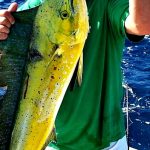
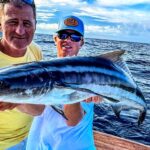
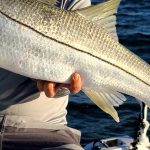
Inshore/Nearshore: Focus your efforts on the Port Canaveral jetties and the deep-water channels leading out to the ocean. The leeward shorelines of the Banana River, particularly around oyster bars and creek mouths, are holding excellent numbers of slot-sized redfish and snook. Offshore: If the weather permits, push out to Pelican Flats and the 8A Reef. These natural limestone and coral ledges sit in the perfect depth to hold bait, which in turn draws in King Mackerel, Sailfish, and Mahi. If you are bottom fishing, the 12-fathom line features dramatic relief drops that harbor quality grouper and snapper.
Lure
For artificial enthusiasts working the inshore waters, a 1/2-ounce bucktail jig in white or chartreuse is highly effective when bounced along the bottom of the inlet for reds and snook. For early morning topwater action along the mangrove edges, throw a Rapala Skitter Walk (Size 08) to mimic a fleeing finger mullet.
Color
Water clarity can be heavily stained due to recent winds and tidal flushing. Stick to high-contrast colors. White and silver combinations are perfect for matching the mullet hatch, while rootbeer or gold flake plastics work wonders in the tannin-stained backwaters.
Bait
Live finger mullet is the undeniable champion for inshore fishing right now. Rig them on a 5/0 inline circle hook using a standard fish-finder rig with a 1 to 2-ounce egg sinker (depending on the tidal current) for the inlet Bull Reds. If you are heading offshore, slow-trolling live pogies on wire stinger rigs is the most productive method for targeting smoker Kingfish and Wahoo over the reefs.
Timing
The bite is heavily dictated by the tides rather than the clock. The last two hours of the outgoing tide and the first hour of the incoming tide at Port Canaveral create a flushing effect that pulls baitfish out of the lagoon and into the waiting mouths of predators. For topwater action on the flats, the first hour of daylight is crucial before the sun gets too high.
Pro Tip: When bottom fishing the offshore ledges around the 8A Reef, do not let your bait sit idle on the bottom. As the ocean swell lifts your boat, your bait lifts; as the boat falls, quickly retrieve the slack. Failing to do so will give a big grouper the exact amount of slack it needs to rock you up and break your leader.
REGULATIONS SNAPSHOT
Note: Always verify current local Florida Fish and Wildlife Conservation Commission (FWC) regulations before harvesting, as emergency closures can occur.
Species
Size Limits
Bag Limits
Season Status
Redfish
18" to 27" slot limit
Catch and Release Only (Indian River Lagoon region)
Open (No harvest allowed currently in this zone)
Snook
28" to 32" slot limit
1 per angler per day
Open
Tripletail
18" minimum
2 per angler per day
Open
King Mackerel
24" minimum fork length
2 per angler per day
Open
Pro Tip: The Bull Redfish you encounter at the inlets are the crucial breeding stock for our entire coastal fishery. Handle them with extreme care. Keep them in the water as much as possible, support their belly if you must lift them for a quick photo, and spend ample time reviving them by moving them back and forth in the current until they kick off strongly.
REGIONAL ALTERNATIVE
If the offshore waters of Cape Canaveral are completely blown out by a stiff easterly wind, do not cancel your fishing plans. Pack up your inshore gear and make the short drive north to the Mosquito Lagoon near Titusville. This world-renowned estuary offers highly protected waters that remain fishable even when the ocean is raging.
In the Mosquito Lagoon, you will be targeting slot-sized Redfish and Speckled Sea Trout. The strategy here shifts from heavy inlet gear to stealthy light tackle. Drift the shallow grass flats and concentrate on the sandy potholes. A live jumbo shrimp suspended under a popping cork is a deadly search bait here. Alternatively, a 1/4-ounce weedless gold spoon cast long distances across the grass will trigger aggressive strikes from cruising redfish. The key in the lagoon is stealth; use a push pole or trolling motor on a low setting, as these shallow-water fish are highly pressured and easily spooked.
Tight lines!
Editor's Choice: Must-Have Gear
FISHINGSIR Next-Gen Waterproof Chest Waders
★★★★★4.4 (7,370+ reviews)
2-Ply Tech: Upgraded nylon with 2.5x higher density than standard fabrics.
100% Waterproof: Lab-approved intrusion resistance with taped visible seams.
Ultra-Lightweight: Designed for all-day comfort while hunting or fishing.
As an Amazon Associate I earn from qualifying purchases. #ad
Loading forecast...
Live Fishing Conditions: Tides, Weather & Waves
Get real‑time tides, marine weather, swell and solunar activity for each spot so you know exactly when conditions line up for your best chance at a bite.
🎣
Cape Canaveral
Loading coordinates...
🌤️
WEATHER CONDITIONS
--°F
--°C
Loading...
🌡️
Feels Like--°F--°C
💧
Humidity--%
💨
Wind-- mph-- km/h
🧭
Direction--
📊
Pressure-- inHg-- hPa
☀️
UV Index--
🌊
MARINE CONDITIONS
🌊Wave Height
-- ft
-- m
Loading...
🧭Wave Direction
--°
Loading...
⏱️Wave Period
-- s
Loading...
📈Tide Status
-- ft
-- m
Loading...
🌙
LUNAR & SOLUNAR
🌕
Loading...
Illumination: --%
Major Period--:-- - --:----:-- - --:--
Minor Period--:-- - --:----:-- - --:--
🌅Sunrise--:--
🌇Sunset--:--
📅
24-HOUR FORECAST
Loading fishing conditions...
Fishing Spots Map
🎣
Book a Fishing Charter near Cape Canaveral Fishing Report Today 🎣
Local guides & charters. Verified captains, instant booking, best price guaranteed.
There was an error loading the map. Please try refreshing the page.
Info
Local Access & Facilities
Cape Canaveral represents a unique intersection of high-technology and primal nature, offering a fishery that is as diverse as it is historically significant. Situated on Florida’s "Space Coast," this area is defined not just by the Atlantic surf, but by the sprawling, brackish labyrinth of the Merritt Island National Wildlife Refuge. For the serious angler, the allure here is the juxtaposition of sight-fishing for tailing redfish in the shadow of a launch pad, or heading offshore from a coast that has launched humanity to the stars. The atmosphere is distinct: a blend of rugged, undeveloped barrier island scrub, expansive seagrass beds, and the deep blue potential of the Atlantic shelf.
The vibe here shifts dramatically depending on where you launch. To the north, the Refuge offers solitude and silence, broken only by the splash of a Gator or the roar of a rocket engine. To the south, the energy is more frantic, driven by the commercial and recreational bustle of Port Canaveral. Experienced captains know that this is a dynamic ecosystem where the Mosquito Lagoon meets the ocean. Whether you are targeting inshore slam species like snook, redfish, and trout, or gearing up for pelagics offshore, understanding the logistical layout of this dual-nature fishery is the first step to a successful day on the water.
This is not a manicured resort fishery; it is a working coast. The bottom topography varies from the shallow, grassy flats of the Indian River Lagoon system to the shifting sandbars of the Atlantic beaches. Success here requires respecting the tides, the wind, and the strict regulations that govern these federally protected waters. It is a place where preparation pays dividends, and where the seasoned angler can find world-class action if they know how to navigate the local infrastructure.
Access & Getting There
Reaching the prime fishing grounds of Cape Canaveral generally involves navigating the corridors connecting the mainland to the barrier islands. The primary artery for those heading to the Merritt Island National Wildlife Refuge is State Road 406 (Garden Street) via I-95 Exit 220 in Titusville. This route takes you east across the Max Brewer Causeway Bridge, a critical choke point that offers your first look at the water conditions. Traffic on the causeway can be heavy during launch windows or weekends, so seasoned locals advise checking launch schedules before trailering a boat. If you are targeting the southern end or the Port, the approach is typically via the Bennett Causeway (SR 528), which handles heavier commercial traffic.
💡 Captain's Tip: Wind Awareness
The Max Brewer Causeway is highly exposed. If you are towing a skiff or a light bay boat, be cautious when winds exceed 15 knots, as crosswinds on the bridge can be severe. Always check the flags at the marina before committing to a specific ramp.
Launch realities in this region vary significantly. The official access point within the Refuge (ID 1513) serves as a primary gateway for backcountry anglers. While the ramps are generally serviceable, the "Launch Realities" here include potential slickness at low tide and limited amenities. The data indicates that several local ramps do not have restrooms or fish cleaning stations immediately on-site, so self-reliance is key. You are entering a Wildlife Refuge, not a marina; expect nature, not luxury. Parking at these access points, particularly near the Adams Ave Beach Access (approx. 5.9 miles from the hub), fills rapidly. The "dawn patrol" mentality is essential here; arriving after 6:00 AM on a weekend often results in a frustrating search for a spot.
Parking security and logistics require a strategic approach. While there are commercial lots like Lots of Honor and Park N Cruise (approx. 8.9 miles away), these are often geared towards cruise ship passengers rather than boat trailers. For the angler towing a rig, sticking to the designated boat ramp parking within the Refuge or the public ramps near the causeway is vital. Be mindful that the Refuge is federal land; adhere strictly to parking boundaries to avoid fines. The surfaces can be a mix of paved and packed dirt/sand, so ensure your tow vehicle has adequate traction if recent rains have softened the shoulders.
Cape Canaveral Pre-Trip Checklist
Facilities & Amenities
The infrastructure around Cape Canaveral caters to two distinct crowds: the heavy-tackle offshore fleet and the technical inshore specialist. Understanding where to stop for supplies can save you an hour of running around in the dark. For anglers coming from the mainland (Titusville side), Space Coast Bait & Tackle (Captain Hooks) is the strategic stop. Located on Garden Street, they open at 5:00 AM, making them the only reliable option for grabbing live shrimp or frozen bait before hitting the Refuge ramps at first light. Their location, roughly 21 miles from the central Cape spot but directly on the route to the Refuge, makes them indispensable.
On the island/beach side, the Cocoa Beach Fishing Center and Cocoa Beach Bait & Tackle Rentals serve the fleet closer to the Port. The Fishing Center opens at 6:00 AM and is located about 7 miles from the core fishing zones. If you need specialized gear or rentals, these shops are well-equipped, but they open an hour later than their mainland counterpart. Florida Water Sports is another option, though their hours may vary. The table below details the logistical spread of these critical resources.
Facility Name
Specialty
Distance from Center
Dawn Patrol Access
Space Coast Bait & Tackle
Live Bait / Inshore Gear
21.0 miles (Mainland)
5:00 AM (Excellent)
Cocoa Beach Fishing Center
Offshore / Heavy Tackle
7.1 miles (Beachside)
6:00 AM (Good)
Cocoa Beach Bait & Tackle
General Tackle / Rentals
10.4 miles
9:00 AM (Late)
Regarding the local fleet, the area is home to top-tier charter operations. Fired Up Fishing Charters and Fin & Fly Fishing Charters are located within 10 miles of the main access points and are highly rated for their knowledge of the seasonal pelagic runs. Captain Micah Fishing Charters operates out of Titusville, positioning them perfectly for backcountry Refuge trips. If you are looking to book a guide, these operators have the specific local knowledge required to navigate the complex security zones and shifting shoals.
💡 Captain's Tip: The "Negative Knowledge" Check
Be aware that many of the smaller, unnamed boat ramps and shore access points in the Refuge area do not have restrooms or fresh water. The data explicitly flags amenities as "false" for several access coordinates. Bring ample water and plan your comfort stops at the bait shops before launching.
For lodging, proximity to the launch is the main factor. Discovery Beach Resort offers a comfortable stay just 7.2 miles away, but for those towing boats who prefer a camp-and-fish setup, the Indian River RV Park in Titusville (20.2 miles) or Wickham Park (21.5 miles) offer trailer-friendly accommodations. Note that staying in Titusville positions you better for the Refuge, while staying in Cocoa Beach positions you better for the Port and offshore access.
Permits, Regulations & Fees
Fishing in the Cape Canaveral area, particularly within the Merritt Island National Wildlife Refuge, requires a heightened level of regulatory awareness. This is not just a fishery; it is a federally managed overlay of the Kennedy Space Center. The "Why" behind the strict rules here is twofold: the conservation of sensitive estuarine habitats that support manatees and bird populations, and the national security requirements of the space program. Anglers must respect that they are guests in a sanctuary.
While a standard Florida saltwater fishing license is required (managed by the State Fishing Agency), specific activities within the Refuge may require a dedicated Refuge Permit. Although the current data snapshot indicates "Permit Required: Null," seasoned visitors know to always check the specific Refuge signage or the Visitor Center (approx. 18 miles from the spot) for the most current pass requirements, especially for boat launching. There are distinct zones within the waterways that are closed to public access for security reasons. These "Security Zones" are strictly enforced by federal agents. Ignorance of a closure zone can lead to severe penalties and the immediate end of your fishing trip.
Cultural and environmental respect is paramount. The concept of "Kapu"—or sacred restriction—applies here in the form of "No Motor Zones" and "Pole & Troll Zones." These areas are established to protect the seagrass beds from prop scarring. Running a combustion engine in a pole-and-troll zone is a major violation of local etiquette and law. Silence is a tool here; the quieter you are, the less you disturb the wildlife and the better your fishing will be. Furthermore, do not approach or harass the wildlife, particularly the alligators and manatees often seen in the canals.
Events & Seasonal Information
The rhythm of the Cape Canaveral fishery is dictated by the seasons and the weather patterns of the Atlantic. Summer brings calmer seas and the famous runs of Kingfish and Tarpon along the beaches, while the cooler months often push Redfish and Trout into the deeper holes and canals of the Refuge. The transition periods—Spring and Fall—are often the most productive for the inshore "slam."
While specific tournament dates fluctuate, the area is a hotbed for Redfish tournaments and offshore Billfish events during the warmer months. The presence of high-caliber fleets like Fired Up and Fin & Fly suggests a competitive environment where local knowledge is guarded. If you are visiting during a major tournament window, expect ramp traffic to triple and bait supplies to dwindle by sunrise.
💡 Captain's Tip: The 10:00 AM Rule
On the flats and open basins of the Lagoon, the trade winds typically begin to stiffen around 10:00 AM. Plan your sight-fishing for the early morning slick calm. Once the chop picks up, switch to bait or drift fishing tactics.
Timing your day is critical. With bait shops like Captain Hooks opening at 5:00 AM, the local rhythm is undeniably early. The summer heat can be oppressive by noon, and the afternoon thunderstorms are a daily hazard in Florida. The smartest anglers are off the water or seeking shelter by 2:00 PM during the summer season.
Contact Information & Resources
For official information regarding access, closures, and current conditions, the primary point of contact is the Merritt Island National Wildlife Refuge. They can be reached at 321-861-5601 or via email at MerrittIsland@fws.gov. The Visitor Center is a valuable resource for maps and current "No Motor Zone" delineations.
Safety in this area is largely a matter of self-reliance. Cell reception can be spotty in the deep backcountry of the Refuge. Always file a float plan with someone on land. In the event of an emergency on the water, the U.S. Coast Guard and local marine patrol monitor VHF Channel 16. Given the abundance of oyster bars and submerged obstacles, carrying a spare prop and a push pole is highly recommended for small boaters.
For precise locations of the boat ramps, real-time weather overlays, and specific coordinates for the bait shops mentioned above, consult the live dashboard and interactive maps below.
Our spot reports combine data-driven forecasts with curated local information. The forecast is generated by our proprietary Fishing Score algorithm (0–100%), which analyzes real-time data from Open-Meteo API, validated against NOAA CO-OPS tide gauges and USGS water-monitoring stations. The model weights tide dynamics (35%), wave energy (25%), wind patterns (20%) and time of day (20%)—factors shown to influence fish feeding behavior through marine-biology research and decades of charter log data.
Access, facilities and services information for each fishing spot is sourced from official datasets such as Recreation.gov (RIDB), state park & wildlife agencies, and geospatial providers like Google Maps. These sections undergo scheduled re-validation every 3–6 months to ensure that boat ramps, park access, contact details and local services remain accurate.
Narrative sections (catches, seasonal behavior, local tips) are synthesized from these data sources and refined following the Fishing Reports Today editorial guidelines, combining bibliographic research from ichthyology and oceanography with expert angler experience. Our team reviews reports on a regular basis, while the forecast model itself updates every 6 hours for real-time accuracy.
⚠️ Important: Always verify current local regulations, access restrictions and weather conditions before fishing. These reports are intended as a planning aid, not a guarantee of catches or safety. When in doubt, contact local authorities or park managers listed on the page.
To provide the best experiences, we use technologies like cookies to store and/or access device information. Consenting to these technologies will allow us to process data such as browsing behavior or unique IDs on this site. Not consenting or withdrawing consent, may adversely affect certain features and functions.
Functional Always active
The technical storage or access is strictly necessary for the legitimate purpose of enabling the use of a specific service explicitly requested by the subscriber or user, or for the sole purpose of carrying out the transmission of a communication over an electronic communications network.
Preferences
The technical storage or access is necessary for the legitimate purpose of storing preferences that are not requested by the subscriber or user.
Statistics
The technical storage or access that is used exclusively for statistical purposes.The technical storage or access that is used exclusively for anonymous statistical purposes. Without a subpoena, voluntary compliance on the part of your Internet Service Provider, or additional records from a third party, information stored or retrieved for this purpose alone cannot usually be used to identify you.
Marketing & Affiliates
The technical storage or access is required to create user profiles to send advertising, or to track the user on a website or across several websites for similar marketing purposes, including affiliate tracking for products recommended in our reports.



Leave a Reply