


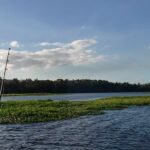
The Florida East Coast fishery, specifically centered around the sprawling estuary systems of Jacksonville and the historic St. Johns River, offers a complex tactical environment for the serious angler. This is not merely a coastline; it is a convergence of massive salt marshes, hardwood hammocks, and the open Atlantic. The topography here is defined by the interplay between the deep river channels and the shallow, grassy flats of the Timucuan Ecological & Historic Preserve. Anglers here must be versatile, ready to switch from working the backwater creeks for Redfish to punching out of the inlets for pelagic species along the Atlantic trade routes.
The atmosphere is a distinct blend of Southern history and rugged coastal wilderness. Unlike the manicured resort harbors further south, this region retains a raw, "Old Florida" feel, particularly within the 6,000-year-old human history preserved at Fort Caroline and the surrounding wetlands. It is a place where the industrial pulse of a major port city fades quickly into the silence of the salt marsh. The primary draw for expert captains here is the year-round inshore game, though the proximity to the Gulf Stream makes it a strategic launch point for offshore heavy hitters when the weather window opens.
Access & Getting There
Navigating to the prime launch points requires a strategic approach to the local highway infrastructure. The primary artery is I-95, but the seasoned angler knows that the coastal route, State Route A1A, provides the most direct access to the beach-side ramps and the historic district. Traffic around Jacksonville can be dense, particularly during the morning rush; plan to clear the downtown interchange before 6:00 AM to ensure a stress-free arrival at the ramp. Accessing the Timucuan Preserve requires taking the Southside Connector to Merrill Road, which transitions into Fort Caroline Road.
💡 Captain's Tip: Trailer Management
While urban parking is available, be highly selective. Golden Isles Valet Parking is rated highly but explicitly noted to "Avoid with trailers." For heavy rigs, stick to the dedicated lots at the larger marinas or the surface lots further from the dense valet zones.
Launch realities in this region vary significantly between the developed coast and the protected preserve. The Timucuan Ecological & Historic Preserve offers access to unspoiled wetlands, but the infrastructure is designed for low-impact usage. Kayak and canoe launches are prevalent, with a notable launch point located approximately 3 miles from the central hub. For trailer boats, the ramps can be tidal-dependent; low tide in the marsh creeks can leave you grounded in mud, so consult the tide tables religiously before committing to a backwater creek.
Weather is the dictating factor for access here. The region sits exposed to the Atlantic trade winds. When the wind blows from the Northeast, the inlets can become treacherous, and the shallow marshes chop up quickly. In these conditions, utilizing the leeward launches within the river system or the protected waters near Kingsley Plantation is a prudent move. Parking at popular spots like the Touchdown Lot or near Fort Caroline fills rapidly on weekends, so a "dawn patrol" arrival is essential for securing a trailer-friendly space.
Florida East Coast Pre-Trip Checklist
Facilities & Amenities
The infrastructure in Jacksonville and St. Augustine caters to a wide spectrum of anglers, from shore-bound casuals to offshore charter captains. It is critical to note that while general amenities are plentiful, specialized pro shops are scattered. The Sinker Guy, located on Tynan Avenue, is a known entity for terminal tackle, while Jacksonville Beach Bait & Tackle on 20th Street North serves the coastal surf crowd. For those heading further south towards Green Cove Springs, Reverence Outdoors provides essential gear support.
| Facility Name | Type | Distance | Key Logistics |
|---|---|---|---|
| The Sinker Guy | Bait & Tackle | 9.2 miles | Opens 10 AM (Late for dawn patrol) |
| Jax Beach Bait & Tackle | Bait & Tackle | 10.7 miles | Opens 6 AM (Ideal for early starts) |
| Always Hookin Charters | Fleet | 11.2 miles | Located on Ocean St; 24-hour ops |
| One Ocean Resort & Spa | Lodging | 13.2 miles | High-end; 24-hour access |
The local charter fleet is robust, with reputable operations like Always Hookin Fishing Charters and North Florida Fishing Charters based out of Ocean Street. These outfits are known for their versatility, targeting both inshore drum and offshore pelagics. If you are looking for local intelligence or a guide to navigate the complex marsh tides, these are the hubs to visit. Note that some smaller marina facilities may lack high-speed diesel pumps; captains running large sportfishers should verify fuel availability at the major commercial docks before leaving the inlet.
💡 Captain's Tip: Fuel & Ice Logistics
There is no dedicated fuel dock explicitly listed for the remote Timucuan Preserve launch points. Top off your tanks at highway stations along I-95 or A1A before entering the preserve boundaries to avoid a dry tank in the marsh.
For lodging, the options range from the historic to the tactical. The Casa Marina Hotel and Restaurant in Jacksonville Beach is the "Grand Lady of the Beach," offering a historic 1920s atmosphere for anglers who appreciate luxury after a long day on the water. For those prioritizing logistics and early exits, Stadium Base Camp offers proximity to the city center. Military personnel or veterans should look into Pelican Roost RV Park, which offers excellent amenities and secure access near the water.
Permits, Regulations & Fees
Fishing this region places you in a matrix of state and federal jurisdictions. The primary regulatory body is the State Fishing Agency, and strict adherence to size and bag limits is enforced. However, the overlay of the Timucuan Ecological & Historic Preserve adds a layer of federal oversight. This area protects one of the last unspoiled coastal wetlands on the Atlantic Coast. The regulations here are not just about conservation; they are about preserving 6,000 years of human history.
Special care must be taken when fishing near historical structures. The Kingsley Plantation and Fort Caroline National Memorial are sensitive cultural sites. It is imperative to respect the "No Wake" zones and shoreline buffers in these areas. The tabby cabins and dune systems, such as the Nana dune at American Beach, are federally protected. Anchoring on or disturbing submerged historical artifacts is a severe federal offense. Treat these waters with the same reverence you would a sanctuary.
There are generally no permit entrances for the preserve itself, but specific activities may require coordination with the National Park Service. Boaters should be aware that the Castillo De San Marcos National Monument further south in St. Augustine also has strict perimeter rules regarding vessel approach distances. Always carry your valid Florida saltwater fishing license and a federal HMS permit if you plan to cross into federal waters offshore.
Events & Seasonal Information
The rhythm of this fishery is dictated by the seasons of the Atlantic. Summer brings calmer seas and the arrival of tarpon and sharks along the beaches, while the cooler months trigger the schooling of Redfish in the shallows. The area is historically significant as part of the Atlantic trade route, meaning the water here has been a thoroughfare for mariners for over 450 years. This historical depth often coincides with modern seasonal gatherings and local tournaments that celebrate the maritime heritage of the First Coast.
Timing your day is critical. The trade winds typically pick up by mid-morning, around 10:00 AM. For those targeting spotted seatrout or tailing reds in the Theodore Roosevelt Area wetlands, the window from dawn until the wind line hits is your "golden hour." Conversely, the summer heat can be oppressive in the marsh; afternoon thunderstorms are clockwork reliable. Plan to be off the exposed water or near a sheltered marina by 2:00 PM during the humid months.
Contact Information & Resources
For the most current information on water conditions and park access, the Timucuan Preserve Visitor Center at Fort Caroline is your primary resource. They can be reached at (904) 641-7155. For questions regarding the southern historic districts, contact the Castillo De San Marcos ranger station at (904) 829-6506. In the event of an on-water emergency, standard VHF Channel 16 protocols apply, but be aware that cell signal can be spotty in the deep creeks of the preserve.
Self-reliance is the rule of the road here. Carry ample water, sun protection, and a backup communication device. The history of this coast is written in survival; ensure your trip doesn't become a statistic.
For precise locations, real-time weather data, and detailed facility maps, consult the live dashboard and interactive widgets below.


Leave a Reply