Current seasonal conditions at Evergreen Lake are prime for anglers looking to capitalize on the fall feed. As water temperatures steadily drop into the low 60s and upper 50s, we are seeing the classic autumn transition. Fish are moving out of their sluggish summer patterns and aggressively chasing baitfish to pack on weight before winter sets in. The lake is generally at full pool this time of year, with good water clarity in the main basin.
From a safety perspective, conditions are highly favorable, but caution is always warranted during the fall. Because Evergreen Lake is strictly a 10-horsepower limit lake, you cannot simply outrun a sudden squall or high winds. Pay close attention to the wind forecast; the lake's orientation can create a nasty chop in the main basin when sustained winds push above 15 miles per hour. Dress in layers, wear your personal flotation device, and ensure your trolling motor batteries are fully charged to handle potential headwinds on your return to the boat ramp.
From the editor
Tired of fishing with strangers you can’t trust?
Nautrek is the first social network for serious anglers — verified partners, real trips, cost splitting and intel sharing without burning your spots. Private beta now open.
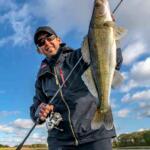
Primary Target: Saugeye (Hybrid Walleye) and Muskellunge
Evergreen Lake is arguably one of the premier fisheries in central Illinois for both Saugeye and Muskie, thanks to an aggressive and highly successful stocking program by the Department of Natural Resources. The Saugeye are currently the most active species, feeding heavily along the weedlines. The Muskie bite is also heating up significantly; these apex predators thrive in cooler water and are currently prowling the shallows and structural edges looking for large meals.
Sleeper Pick: Black Crappie
While the toothy critters get all the magazine covers, the Black Crappie fishing here is highly underrated during the fall. Anglers often struggle to find them because Evergreen Lake is notoriously devoid of standing timber or obvious brush piles. However, if you can locate the remaining green weeds or subtle drop-offs in the mid-depth ranges, you will find schools of slab crappies waiting to ambush passing bait.
Baitfish Report
The primary forage base consists of gizzard shad and juvenile panfish, particularly small bluegills. With the water cooling, shad are beginning to school up tightly. Matching the hatch right now means utilizing lures with silver, white, or pearl profiles to mimic shad, or incorporating chartreuse and orange patterns to imitate juvenile sunfish.
3. TACTICAL STRATEGY
Where to Find the Fish
Evergreen Lake is defined by its extensive coontail grass beds rather than wood structure. Right now, the absolute best holding zones are the outer edges of the coontail weedlines situated in 7 to 14 feet of water. Focus your efforts on the main lake points and the sharp drop-offs near the White Oak boat launch area. Because timber is scarce, these grass edges act as the primary ambush points. Use your side-imaging sonar to find the distinct transition where the grass ends and the muddy or sandy bottom begins.
Lure Selection and Presentation
For Saugeye, precision is key. Cast a 1/4-ounce lead-head jig paired with a 3-inch curly tail grub in white or chartreuse right to the edge of the grass. Let it fall to the bottom, and use a slow, steady retrieve with occasional pops. Alternatively, vertical jigging a Rapala Jigging Rap #5 in chrome/blue along the deeper 12-to-14-foot breaks can trigger aggressive reaction strikes from suspended fish.
For Muskie, you want to move water and create a disturbance. Large inline bucktail spinners (size 8 or 10 blades) in white and silver are producing explosive strikes when burned over the tops of submerged weed beds. Glide baits in natural shad patterns are also highly effective when worked with a rhythmic, side-to-side cadence along the primary points.
Live Bait Applications
If you prefer live bait for Saugeye, a simple slip-bobber rig tipped with a medium golden roach or fathead minnow is deadly when hovered just inches above the weed tops. For Muskie anglers using live bait, large suckers are the ticket. Take note: State and lake regulations mandate that any live bait larger than 8 inches must be rigged with a quick-set rig to ensure the fish's survival upon release.
Optimal Timing
The golden hours of dawn and dusk are providing the most consistent action. Saugeye are notoriously light-sensitive and will push bait up onto the shallower 5-to-7-foot flats during low light conditions. Overcast, breezy days—often referred to as "walleye chop"—will extend this feeding window well into the midday hours.
Pro Tip: When targeting the coontail edges for Saugeye, keep your trolling motor speed between 0.8 and 1.2 mph if you are pulling spinner rigs or bottom bouncers. Anything faster will cause your bait to ride too high in the water column, completely missing the strike zone.
Pro Tip: Because Evergreen lacks standing timber, do not waste time casting to barren shorelines. Trust your electronics. If you do not see grass or baitfish on your sonar, keep moving until you find the coontail.
4. REGULATIONS SNAPSHOT
Evergreen Lake has specific, strict site regulations that are actively enforced to maintain the quality of the fishery. A county watercraft registration decal is required to launch. Furthermore, this is a strict 10-horsepower limit lake; larger motors must be turned off and tilted up. Anglers are limited to a maximum of two poles per person, with no more than two hooks or lures attached to each line. Trotlines, jugs, and bank poles are strictly prohibited.
Species
Minimum Length Limit
Daily Harvest Limit
Saugeye / Walleye / Sauger
18 inches
3 fish (combined)
Muskellunge
48 inches
1 fish
Largemouth / Smallmouth Bass
15 inches
3 fish (combined)
Crappie (Black, White, Hybrid)
None (Size restriction applies)
15 fish (Maximum of 5 fish ≥ 10 inches)
5. REGIONAL ALTERNATIVE
If you arrive at Evergreen Lake and find the wind howling, making boat control on a 10 HP motor impossible, or if you simply want a change of scenery, Lake Bloomington is your best immediate backup. Located just over 5 miles away, Lake Bloomington offers a slightly smaller, more sheltered footprint (594 acres) with excellent protection from heavy winds in its numerous coves.
Lake Bloomington does not have the Saugeye or Muskie pedigree of Evergreen, but it boasts a phenomenal Largemouth Bass and Crappie fishery. If you pivot to this location, target the numerous residential boat docks and retaining walls that line the shoreline. Pitching a 3/8-ounce black and blue jig around the dock pilings or shooting small tube jigs under the pontoon boats will quickly salvage a blown-out day. Access is straightforward, though similar horsepower restrictions and local watercraft decal requirements may apply, so verify at the local bait shop before launching.
Tight lines!
Editor's Choice: Must-Have Gear
FISHINGSIR Next-Gen Waterproof Chest Waders
★★★★★4.4 (7,370+ reviews)
2-Ply Tech: Upgraded nylon with 2.5x higher density than standard fabrics.
100% Waterproof: Lab-approved intrusion resistance with taped visible seams.
Ultra-Lightweight: Designed for all-day comfort while hunting or fishing.
As an Amazon Associate I earn from qualifying purchases. #ad
Loading forecast...
Live Fishing Conditions: Tides, Weather & Waves
Get real‑time tides, marine weather, swell and solunar activity for each spot so you know exactly when conditions line up for your best chance at a bite.
🎣
Evergreen Lake Illinois
Loading coordinates...
🌤️
WEATHER CONDITIONS
--°F
--°C
Loading...
🌡️
Feels Like--°F--°C
💧
Humidity--%
💨
Wind-- mph-- km/h
🧭
Direction--
📊
Pressure-- inHg-- hPa
☀️
UV Index--
🌊
MARINE CONDITIONS
🌊Wave Height
-- ft
-- m
Loading...
🧭Wave Direction
--°
Loading...
⏱️Wave Period
-- s
Loading...
📈Tide Status
-- ft
-- m
Loading...
🌙
LUNAR & SOLUNAR
🌕
Loading...
Illumination: --%
Major Period--:-- - --:----:-- - --:--
Minor Period--:-- - --:----:-- - --:--
🌅Sunrise--:--
🌇Sunset--:--
📅
24-HOUR FORECAST
Loading fishing conditions...
Fishing Spots Map
🎣
Book a Fishing Charter near Evergreen Lake Illinois Fishing Report Today 🎣
Local guides & charters. Verified captains, instant booking, best price guaranteed.
There was an error loading the map. Please try refreshing the page.
Info
Local Access & Facilities
Situated within the intricate hydrological tapestry where the Mississippi and Illinois Rivers converge, Evergreen Lake and its surrounding floodplain waters offer a distinct experience for the Illinois angler. This is not merely a standalone reservoir; it is part of a broader ecosystem influenced heavily by the Two Rivers National Wildlife Refuge. The area is defined by a mosaic of wetlands, bottomland forests, and open water that supports a robust fishery, distinct from the manicured, high-traffic reservoirs found closer to the metropolitan center of St. Louis.
The vibe here is decidedly rustic and quiet, appealing to those who prefer the rugged tranquility of a floodplain environment over a bustling marina scene. While the proximity to Brighton and Alton keeps civilization within reach, once you launch, you are entering a habitat managed primarily for wildlife conservation. The water here can be dynamic, fluctuating with the seasonal pulses of the great rivers nearby, creating a shifting topography that challenges even seasoned captains to stay sharp regarding depth and structure.
Anglers targeting this region are typically pursuing species that thrive in nutrient-rich, backwater environments. While the refuge is famous for its migratory bird populations, the waters hold their own for sportfishing. The environment demands a shallow-draft mindset and a respect for the natural "Kapu" of protected wildlife zones. Success here requires understanding the relationship between river levels and accessible structure.
💡 Captain's Tip: Ferry Logistics
If approaching from the Missouri side or crossing between rivers, keep small bills handy. The Golden Eagle Ferry charges $5.00 per car each way. These crossings are scenic but can add time to your commute; always check ferry status during high water events before hitching the trailer.
Access & Getting There
Reaching the prime fishing grounds around Evergreen Lake and the Two Rivers National Wildlife Refuge requires navigating a network of rural highways and river crossings. For those towing boats from Illinois, the primary artery is the Great River Road (Hwy 100). This route is scenic but can be slow-going on weekends due to sightseers. If you are heading deep into the refuge areas near Brussels, you will likely utilize the Brussels Ferry. From the Missouri side, the route involves Highway 370 to Huster Road and eventually the Golden Eagle Ferry. Traffic is generally light in the early mornings, but ferry lines can bottleneck during mid-day peak hours.
The launch situation in this region is functional but utilitarian. The data indicates several key launch points, including Bunker Hill Reservoir Number 2 and Alton-Woodriver Sportsmens Reservoir. These are not high-capacity "mega ramps." They are designed for local access. The ramps are generally paved, but the facilities are minimal. At Bunker Hill, trailer parking is available, but the turning radius can be tight for larger center consoles.
Weather plays a critical role in access here. Because much of this fishery is located in a floodplain, heavy rains can impact road accessibility leading to the ramps. The Great River Road is susceptible to closures during extreme high water events. Furthermore, wind conditions on the open stretches of the nearby rivers can make loading and unloading challenging at exposed ramps. When the winds howl down the river valley, the chop can stack up quickly against the concrete.
Parking strategies should be defensive. While the designated lots at Bunker Hill and Gordon More Lake allow for trailer parking, they are unguarded. Ensure your vehicle is locked and valuables are out of sight. During peak migration seasons for waterfowl, these lots may share capacity with birdwatchers, so an early arrival—ideally before 7:00 AM—is recommended to secure a spot that allows for an easy pull-out.
💡 Captain's Tip: Launch Preparedness
Data indicates that local ramps like Bunker Hill Reservoir Number 2 lack lighting. If you are launching for a pre-dawn bite or retrieving after sunset, bring independent lighting for your trailer and workspace to avoid mishaps on the slick concrete.
Evergreen Lake Illinois Pre-Trip Checklist
Facilities & Amenities
The infrastructure surrounding Evergreen Lake is characterized by a "bring what you need" reality. Unlike commercialized harbors with fuel docks and yacht clubs, the facilities here are sparse. The boat ramps at Bunker Hill Reservoir Number 2, Alton-Woodriver Sportsmens Reservoir, and Gordon More Lake are strictly launch-and-go points. Crucially, the data confirms there are no restrooms, showers, or fish cleaning stations at these specific launch sites. Anglers must plan accordingly, handling biological needs before arrival and preparing to transport their catch home on ice for cleaning.
For bait and tackle, you are well-served by a ring of competent local shops in the surrounding towns. Bluff City Outdoors in Alton is a standout resource, located roughly 9.8 miles from the central fishing grounds. With hours extending from 8:00 AM to 8:00 PM most days, it is a reliable stop for live bait and last-minute terminal tackle. For specialized gear, Razr Rodz in Wood River offers a more custom-focused inventory. If you are coming from the north, Outrageous Outdoors in Jerseyville or Wild Haven Outdoors in Carlinville serve as solid outposts, though check their opening times as they may not support the earliest dawn patrols.
Lodging options favor the outdoorsman. The Bear Den is the closest accommodation, located just 5.5 miles away, providing a convenient base camp. For a more immersive experience, Camp Warren Levis in Godfrey offers proximity to the water. Those seeking standard hotels will find them further out towards St. Louis or Alton. Note that there is no on-water fuel available at the immediate ramps; topping off your tank at a highway gas station in Brighton or Alton is mandatory before hitching the boat.
💡 Captain's Tip: Provisioning
Bluff City Outdoors opens at 8:00 AM. If you plan to be on the water at first light, purchase your live bait the evening before. There are no 24-hour bait vending machines reported at the landings.
Permits, Regulations & Fees
Fishing this area requires navigating a layer of state and federal regulations. The primary management authority is the State Fishing Agency, and a standard Illinois fishing license is the baseline requirement. However, because much of the surrounding water falls under the jurisdiction of the Two Rivers National Wildlife Refuge, federal rules often apply. The refuge was established to protect migratory birds, meaning certain areas may have seasonal closures or "no-wake" zones designed to minimize disturbance to resting waterfowl.
The Duncan Farm area within the Gilbert Lake Division contains an American Indian mound. This is a protected cultural resource. Anglers accessing the shoreline or exploring nearby land must exercise extreme respect—trespassing on or disturbing these sites is a serious federal offense. Treat these areas as "Kapu" (sacred/forbidden) and stick to established waterways and trails.
While the boat ramps listed (such as Bunker Hill) do not currently show mandatory launch fees in the data, the ferry crossings mentioned earlier are toll-based. Always carry cash for these transit fees. Additionally, the Two Rivers National Wildlife Refuge emphasizes the protection of threatened species like the decurrent false aster; ensure you are not trampling vegetation when accessing shore spots. Compliance is not just about avoiding fines; it is about maintaining the privilege to fish in this federally managed habitat.
Events & Seasonal Information
The rhythm of life at Evergreen Lake and the confluence region is dictated by the seasons. Spring brings high water and the potential for flooding, which can inundate access roads and ramps. Summer stabilizes the water levels, making for more predictable patterns, though the heat and humidity in the river valley can be intense. The fall transition is perhaps the most visually stunning and biologically active time, as cooling water temperatures trigger feeding frenzies ahead of winter.
While there are no major professional tournament circuits explicitly listed for this specific lake in the data, the region's strong fishing culture means local club tournaments are common on weekends. The National Great Rivers Museum, located about 11 miles away, often hosts events and educational programs that can provide excellent context on the river systems' current health and flow rates.
Timing your day is crucial. In the summer months, the bite is often best right at dawn before the sun beats down on the open water. However, with bait shops like Bluff City Outdoors opening at 8:00 AM, the "dawn patrol" angler needs to be self-sufficient. Conversely, the late evening bite can be productive, and local shops remain open until 8:00 PM, allowing for after-work restocking.
Contact Information & Resources
For the most current information regarding water levels, ramp closures, and refuge regulations, direct contact with management agencies is recommended. The Two Rivers National Wildlife Refuge headquarters can be reached at 618-883-2524 or via email at tworivers@fws.gov. They are the definitive source for access conditions within the refuge boundaries.
For broader regional information and river conditions, the National Great Rivers Museum is a valuable resource. In terms of safety, cell service can be spotty in the low-lying floodplain areas. Always file a float plan with someone on shore. There are no dedicated coast guard stations immediately on these small lakes, so self-reliance is paramount.
For precise locations of the boat ramps, bait shops, and real-time weather conditions, consult the live dashboard and interactive maps below.
Our spot reports combine data-driven forecasts with curated local information. The forecast is generated by our proprietary Fishing Score algorithm (0–100%), which analyzes real-time data from Open-Meteo API, validated against NOAA CO-OPS tide gauges and USGS water-monitoring stations. The model weights tide dynamics (35%), wave energy (25%), wind patterns (20%) and time of day (20%)—factors shown to influence fish feeding behavior through marine-biology research and decades of charter log data.
Access, facilities and services information for each fishing spot is sourced from official datasets such as Recreation.gov (RIDB), state park & wildlife agencies, and geospatial providers like Google Maps. These sections undergo scheduled re-validation every 3–6 months to ensure that boat ramps, park access, contact details and local services remain accurate.
Narrative sections (catches, seasonal behavior, local tips) are synthesized from these data sources and refined following the Fishing Reports Today editorial guidelines, combining bibliographic research from ichthyology and oceanography with expert angler experience. Our team reviews reports on a regular basis, while the forecast model itself updates every 6 hours for real-time accuracy.
⚠️ Important: Always verify current local regulations, access restrictions and weather conditions before fishing. These reports are intended as a planning aid, not a guarantee of catches or safety. When in doubt, contact local authorities or park managers listed on the page.
To provide the best experiences, we use technologies like cookies to store and/or access device information. Consenting to these technologies will allow us to process data such as browsing behavior or unique IDs on this site. Not consenting or withdrawing consent, may adversely affect certain features and functions.
Functional Always active
The technical storage or access is strictly necessary for the legitimate purpose of enabling the use of a specific service explicitly requested by the subscriber or user, or for the sole purpose of carrying out the transmission of a communication over an electronic communications network.
Preferences
The technical storage or access is necessary for the legitimate purpose of storing preferences that are not requested by the subscriber or user.
Statistics
The technical storage or access that is used exclusively for statistical purposes.The technical storage or access that is used exclusively for anonymous statistical purposes. Without a subpoena, voluntary compliance on the part of your Internet Service Provider, or additional records from a third party, information stored or retrieved for this purpose alone cannot usually be used to identify you.
Marketing & Affiliates
The technical storage or access is required to create user profiles to send advertising, or to track the user on a website or across several websites for similar marketing purposes, including affiliate tracking for products recommended in our reports.



Leave a Reply