Conditions across the Geelong waterfront and greater Corio Bay area are prime for spring fishing. As water temperatures slowly climb out of their winter lows, we are seeing a massive influx of marine life pushing into the inner harbour. The seasonal transition is fully underway, triggering the highly anticipated spring Snapper run.
Safety and weather advisory: Anglers should remain highly vigilant regarding the unpredictable spring westerlies that can funnel through the bay. While the inner harbour and the lee side of Point Henry offer excellent shelter during strong winds, the outer shipping channels can become treacherous for small vessels when the wind opposes the tide. Always check the local marine forecast before crossing the spoil grounds. Water clarity remains slightly stained from recent spring showers, which is actually playing into our hands by extending the low-light bite windows.
From the editor
Tired of fishing with strangers you can’t trust?
Nautrek is the first social network for serious anglers — verified partners, real trips, cost splitting and intel sharing without burning your spots. Private beta now open.
The undisputed king of the spring fishery in Victoria is the Snapper, and the Corio Bay system is currently holding dense schools of early-season fish. These aggressive predators are utilizing the deep dredged shipping channels as highways to push into the inner bay, feeding heavily to build energy for the upcoming spawning period.
Sleeper Pick: Southern Calamari
While the fleet is anchored up soaking baits for Snapper, the shallow seagrass beds are quietly producing trophy-sized Southern Calamari. Often viewed merely as bait by the big-fish hunters, these premium table species are highly active in the 2 to 4-meter depths. Targeting them not only secures a gourmet meal but also provides the absolute best fresh bait you can drop down for the local Snapper.
Baitfish Report
The bay is currently teeming with small forage. We are seeing massive schools of whitebait and juvenile garfish dimpling the surface during calm mornings. Pilchards are also present along the channel drop-offs. Matching the hatch with slender, silver-profiled lures or utilizing fresh local bait is critical for consistent success right now.
3. TACTICAL STRATEGY
Where to Deploy
For boat-based anglers, the bend in the Corio Bay Shipping Channel is the current hot zone. You want to anchor strategically along the sloping channel edge, specifically targeting the 8 to 12-meter depth contour. Monitor your sonar closely; if you mark fish holding tight to the drop-off, deploy your anchor so your baits drift naturally down the ledge.
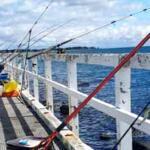
For land-based fishers, Cunningham Pier and the St Helens rock-wall are offering phenomenal access to deep water. Work the pylons and the rocky base where ambush predators lie in wait.
Lure Selection
If you prefer artificials, a 4-inch paddletail soft plastic rigged on a 1/4oz to 3/8oz jig head is deadly for both Snapper and large Sand Flathead. For the Southern Calamari, utilize size 3.0 or 3.5 squid jigs.
Color Theory
Given the slightly stained water clarity, UV-enhanced colors are outperforming natural tones. Motor Oil and Nuclear Chicken are the standout soft plastic colors. For squid jigs, lean heavily on white bodies with a red foil under-wrap to maximize contrast in the murky water.
Bait and Rigging
The professional approach right now is a heavy berley trail of cubed pilchards to bring the fish up the water column. Fish a running sinker rig with a snelled double-hook setup (size 5/0 or 6/0 beak hooks). Bait this with a whole pilchard or a fresh strip of Southern Calamari. Pro Tip: Leave the hood of the squid intact and cut long, pennant-shaped strips to ensure the bait flutters seductively in the tidal current.
Timing the Bite
The most violent strikes are occurring during the twilight periods. Position yourself on the channel edge one hour before sunrise or sunset. The bite is exponentially better when these low-light periods coincide with a tide change, particularly the first two hours of the run-in tide.
4. REGULATIONS SNAPSHOT
Victoria Fisheries enforces strict limits to ensure the sustainability of our world-class fisheries. Always measure your catch accurately from the tip of the snout to the tip of the tail.
Measure carefully; undersized fish are heavily penalized.
Sand Flathead
27 cm
20 per person
Handle with care to avoid venomous dorsal spines.
Southern Calamari
No minimum
10 per person
Combined limit with cuttlefish.
Pro Tip: While the legal limit allows for 10 Snapper, many local guides advocate for releasing the larger breeding females (fish over 60cm) to preserve the genetic health of the Port Phillip and Corio Bay spawning aggregations. Catch your feed of 40cm "pinkies" and let the big ones go.
5. REGIONAL ALTERNATIVE
If Corio Bay is blown out by stiff northerly winds, rendering the open water unfishable and unsafe, pack up your gear and take the short drive down the Bellarine Peninsula to Clifton Springs or Queenscliff.
Clifton Springs offers a fantastic boat ramp that provides excellent protection from northerly weather. You don't need to venture far from the ramp to find action. The inshore seagrass beds stretching from the Alcoa Pier back toward Curlewis are world-class grounds for King George Whiting and Calamari.
If you are land-based and seeking an alternative, the Queenscliff Pier provides exceptional access to deep, fast-moving water. This structure is a haven for Silver Trevally, Australian Salmon, and Whiting. Because the tidal flow here is immense, you must upsize your sinkers to hold bottom. Cast lightly weighted baits directly into the eddies formed behind the heavy wooden pylons where predatory fish wait to ambush bait swept through the current.
Tight lines!
Editor's Choice: Must-Have Gear
FISHINGSIR Next-Gen Waterproof Chest Waders
★★★★★4.4 (7,370+ reviews)
2-Ply Tech: Upgraded nylon with 2.5x higher density than standard fabrics.
100% Waterproof: Lab-approved intrusion resistance with taped visible seams.
Ultra-Lightweight: Designed for all-day comfort while hunting or fishing.
As an Amazon Associate I earn from qualifying purchases. #ad
Loading forecast...
Live Fishing Conditions: Tides, Weather & Waves
Get real‑time tides, marine weather, swell and solunar activity for each spot so you know exactly when conditions line up for your best chance at a bite.
🎣
Geelong
Loading coordinates...
🌤️
WEATHER CONDITIONS
--°F
--°C
Loading...
🌡️
Feels Like--°F--°C
💧
Humidity--%
💨
Wind-- mph-- km/h
🧭
Direction--
📊
Pressure-- inHg-- hPa
☀️
UV Index--
🌊
MARINE CONDITIONS
🌊Wave Height
-- ft
-- m
Loading...
🧭Wave Direction
--°
Loading...
⏱️Wave Period
-- s
Loading...
📈Tide Status
-- ft
-- m
Loading...
🌙
LUNAR & SOLUNAR
🌕
Loading...
Illumination: --%
Major Period--:-- - --:----:-- - --:--
Minor Period--:-- - --:----:-- - --:--
🌅Sunrise--:--
🌇Sunset--:--
📅
24-HOUR FORECAST
Loading fishing conditions...
Fishing Spots Map
My location
Loading map...
Unable to load map
There was an error loading the map. Please try refreshing the page.
Info
Local Access & Facilities
Situated on the western edge of the bay, Geelong serves as a vital maritime hub for anglers targeting the rich waters of Victoria. Unlike remote coastal outposts, this location offers a distinct urban fishing experience where manicured waterfronts collide with productive saltwater grounds. For the seasoned skipper, this area represents a strategic launchpad: it provides sheltered access compared to the open ocean swells found further south, making it a reliable option when coastal winds render offshore runs impossible.The atmosphere here is one of accessibility and infrastructure. The waterfront is highly developed, featuring the prominent Cunningham Pier and a surrounding precinct that balances recreational boating with commercial activity. While the vibe is decidedly metropolitan, the underwater topography in the surrounding bay commands respect. The area is known for its distinct channels and shallow flats, requiring navigational attentiveness despite the calm surface appearance. For the shore-bound angler, the integration of fishing access points within the city limits allows for quick sessions without the need for off-road travel.Professional anglers value this location for its logistical convenience. The proximity to major roadways allows for rapid deployment, yet the distance from the open ocean "Heads" means water conditions are generally more manageable for smaller vessels. Whether you are launching a trailer boat for a bay run or casting from the timber pilings of the pier, understanding the specific rhythm of this harbor—from its parking restrictions to its tidal movements—is essential for a successful outing.
💡 Captain's Tip: Bait Logistics
Do not expect to find fresh bait immediately at the boat ramp or pier. The specialized tackle shops are located in the surrounding suburbs like Drysdale and Ocean Grove. Stock up on ice and bait 10 to 12 miles out before you navigate the city traffic to the launch ramp.
Access & Getting There
Reaching the Geelong waterfront is straightforward via the main arterial highways, though captains towing wide beams should be mindful of urban traffic density during peak commuter hours. The primary access corridor leads directly to the foreshore, where the infrastructure is designed to handle significant visitation. However, because this is a multi-use precinct sharing space with playgrounds and promenades, navigating a trailer requires patience, particularly on weekends.The critical launch facility for serious boaters is Limeburners Point, located approximately 1.4 miles from the central waterfront area. This facility is the heartbeat of the local trailer boat fleet. It is engineered to handle recreational traffic, but seasoned locals know that efficiency here is paramount. The ramp area offers dedicated trailer parking, which is a significant asset in a city environment. However, during favorable weather windows, these spots reach capacity rapidly.For shore-based anglers or those meeting a vessel, parking strategy varies by time of day. The Promenade Car Park is a standout option for the "dawn patrol" or night operations, as it is open 24 hours a day. Located just 1,446 feet from the main activity hub, it provides a reliable fallback when street parking is congested. Alternatively, the Busport Car Park is exceptionally close—only 740 feet away—but is better suited for standard vehicles rather than heavy rigs.
💡 Captain's Tip: Night Operations
The Promenade Car Park is your best bet for overnight sessions or extreme early starts. Since it operates 24 hours, you avoid the risk of getting locked in or fined that comes with some of the other municipal lots closer to the retail district.
Geelong Pre-Trip Checklist
Facilities & Amenities
While the waterfront is teeming with general amenities, the specific infrastructure for heavy tackle and marine support requires a bit of travel. The immediate area is well-serviced for creature comforts; public restrooms are abundant, with facilities located 55 feet, 636 feet, and 671 feet from the central access points. This high density of amenities makes it an excellent location for guiding clients who require comfort, or for family-oriented shore fishing trips near Cunningham Pier Playground.However, a critical gap exists in immediate marine supply. There are no dedicated bait and tackle shops directly on the waterfront. To service your gear, you must look to the specialized hubs in the surrounding region. Drysdale Bait & Tackle is roughly 11.8 miles away and opens at 8:30 AM, making it a mid-morning resource rather than a pre-dawn stop. For those heading further east towards the Bellarine Peninsula, Taco Tackle in Ocean Grove (12.1 miles) and Burnside Country Furniture, Bait and Tackle in Queenscliff (18.3 miles) are the go-to outfitters. These shops are known for local intelligence and specific rigging advice that you won't find in general stores.For anglers looking to book heavy-tackle trips, the charter fleet is predominantly based out of Queenscliff, closer to the bay's entrance. Renowned operators like Big Red Fishing Charters and Ocean Grove Fishing Charters are stationed approximately 18.5 miles from the Geelong waterfront. These outfits are positioned to run through the "Heads" to offshore grounds, meaning you should plan your accommodation and driving logistics accordingly if you are fishing with them, rather than assuming a pickup at the city pier.
Lodging and Base Camps
Accommodation Name
Distance
Type
Notes
Werribee Park Motor Inn
23.7 miles
Hotel/Motel
Reliable parking; standard hours (8 AM - 8:30 PM).
Riverside Caravan Park
11.9 miles
Camping/Cabin
Located in Ocean Grove; good for trailer boats.
Honu Honi Surf Camp
13.5 miles
Surf Lodge
Located in Torquay; coastal vibe.
Bunjil's Lookout
17.2 miles
Free Camping
Open 24 hours; rugged option for self-sufficient anglers.
Permits, Regulations & Fees
Fishing in this region is governed by the State Fishing Agency, and strict adherence to licensing is mandatory. Victoria utilizes a recreational fishing license system that applies to all marine and estuarine waters. Patrols are frequent, particularly around high-visibility infrastructure like Limeburners Point and Cunningham Pier. It is the skipper's responsibility to ensure every person on board or on the shore holds a valid permit before a line hits the water.Conservation zones and size limits are strictly enforced to protect the bay's ecosystem. While the JSON data indicates no specific environmental alerts currently, anglers should always check the latest "State Fishing Agency" bulletins for seasonal closures, particularly regarding snapper or shellfish, which often have specific temporal protections in these bays.Cultural respect is also paramount. The waterfront is a shared public space. Anglers utilizing the Cunningham Pier area must be cognizant of the "families" and "shore fishing" designation. Casting heavy lead in crowded zones is not only dangerous but can lead to conflict and increased restrictions. Furthermore, when accessing spots like Bunjil's Lookout or areas near You Yangs (Big Rock Car Park), be respectful of the land, as these areas often hold cultural significance.
💡 Captain's Tip: Shore Etiquette
The Cunningham Pier is a mixed-use zone. When targeting fish from this structure, keep walkways clear of tackle boxes and bait buckets. Local authorities are quick to restrict access if anglers impede pedestrian flow or leave bait residue on the decking.
Events & Seasonal Information
The fishing calendar in Geelong is dictated by the seasonal movements of fish entering and exiting the bay. While the harbor offers protection, the bite is often influenced by the tidal push into the inner harbor. The 24-hour access at Promenade Car Park suggests a strong culture of night fishing, likely targeting species that move into the shallows under the cover of darkness to feed.Tournament seasons often bring increased traffic to the Limeburners Point ramp. During peak summer months, the bay comes alive, and the competition for parking spots can be fierce. Conversely, the cooler months often see a drop in recreational traffic, offering the dedicated pro a more solitary experience.Weather patterns here are generally more stable than the open coast, but the shallow nature of the bay means a stiff breeze can whip up a short, sharp chop quickly. The "Access Summary" notes explicitly to "Always check weather and ocean conditions before fishing." This is not boilerplate advice; the bay can become uncomfortable for small craft when the wind opposes the tide.
Contact Information & Resources
For emergency situations, immediate reliance on local emergency services is standard. For maritime specific issues, contact the local harbor master or coast guard equivalent. While specific phone numbers for the harbor master are not listed, the State Fishing Agency is the primary point of contact for regulatory questions.Safety on the water is self-regulated. Ensure your vessel is equipped with necessary safety gear, as checks at the ramp are common. For those heading to the You Yangs or inland spots like Big Rock Car Park, the contact number is 13 19 63 for park information.For precise locations, real-time wind conditions, and detailed bathymetry of the harbor channels, consult the live dashboard and interactive maps below.
Our spot reports combine data-driven forecasts with curated local information. The forecast is generated by our proprietary Fishing Score algorithm (0–100%), which analyzes real-time data from Open-Meteo API, validated against NOAA CO-OPS tide gauges and USGS water-monitoring stations. The model weights tide dynamics (35%), wave energy (25%), wind patterns (20%) and time of day (20%)—factors shown to influence fish feeding behavior through marine-biology research and decades of charter log data.
Access, facilities and services information for each fishing spot is sourced from official datasets such as Recreation.gov (RIDB), state park & wildlife agencies, and geospatial providers like Google Maps. These sections undergo scheduled re-validation every 3–6 months to ensure that boat ramps, park access, contact details and local services remain accurate.
Narrative sections (catches, seasonal behavior, local tips) are synthesized from these data sources and refined following the Fishing Reports Today editorial guidelines, combining bibliographic research from ichthyology and oceanography with expert angler experience. Our team reviews reports on a regular basis, while the forecast model itself updates every 6 hours for real-time accuracy.
⚠️ Important: Always verify current local regulations, access restrictions and weather conditions before fishing. These reports are intended as a planning aid, not a guarantee of catches or safety. When in doubt, contact local authorities or park managers listed on the page.
To provide the best experiences, we use technologies like cookies to store and/or access device information. Consenting to these technologies will allow us to process data such as browsing behavior or unique IDs on this site. Not consenting or withdrawing consent, may adversely affect certain features and functions.
Functional Always active
The technical storage or access is strictly necessary for the legitimate purpose of enabling the use of a specific service explicitly requested by the subscriber or user, or for the sole purpose of carrying out the transmission of a communication over an electronic communications network.
Preferences
The technical storage or access is necessary for the legitimate purpose of storing preferences that are not requested by the subscriber or user.
Statistics
The technical storage or access that is used exclusively for statistical purposes.The technical storage or access that is used exclusively for anonymous statistical purposes. Without a subpoena, voluntary compliance on the part of your Internet Service Provider, or additional records from a third party, information stored or retrieved for this purpose alone cannot usually be used to identify you.
Marketing
The technical storage or access is required to create user profiles to send advertising, or to track the user on a website or across several websites for similar marketing purposes.




Leave a Reply