Cocoa Beach Fishing Report: Space Coast Angling Guide
Welcome to the premier fishing intel for Cocoa Beach and the surrounding Space Coast waters. As the heat of the summer begins to break and we transition into the dynamic fall season, the local estuaries, beaches, and nearshore waters come alive. The annual bait migration transforms the Banana River, Indian River Lagoon, and Port Canaveral into a feeding frenzy. Whether you are poling the shallow grass flats or pitching baits around the port's heavy structure, this guide provides the tactical edge you need to maximize your time on the water.
Go/No-Go Status
Verdict: GO
Current seasonal conditions offer some of the most explosive fishing opportunities of the year, making this a definitive "GO" for anglers. The primary weather considerations right now are the persistent easterly sea breezes and the potential for late-afternoon localized thunderstorms. Water temperatures are slowly dropping, which is triggering heavy feeding activity.
From the editor
Tired of fishing with strangers you can’t trust?
Nautrek is the first social network for serious anglers — verified partners, real trips, cost splitting and intel sharing without burning your spots. Private beta now open.
Safety Advisory: While the estuaries remain relatively protected, anglers heading out of Port Canaveral into nearshore waters should monitor the wind forecast closely. Strong east winds can stack up the waves at the inlet mouth, creating hazardous conditions for smaller vessels on an outgoing tide. Always plan your inlet crossings during slack or incoming tides if a swell is running.
Species Intel
Primary Target: Redfish and Snook
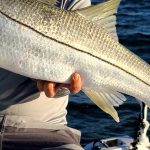
The undisputed kings of the fall transition in Cocoa Beach are Redfish (Red Drum) and Snook. These apex ambush predators are aggressively intercepting migrating bait schools. You will find them pushing wakes on the shallow flats of the Banana River and stacking up around dock pilings, mangrove roots, and the rocky jetties of Port Canaveral.
Sleeper Pick: Gulf Flounder
While most anglers are visually casting to surface-busting Snook and Reds, the savvy local guide knows that Gulf Flounder are quietly moving into the area. Often overlooked, these flatfish congregate around sandy potholes on the edges of grass flats and near the rocky drop-offs inside the port. They provide excellent table fare and a rewarding tactical challenge.
Baitfish Report
The legendary Fall Mullet Run is the driving force of the current ecosystem. Massive pods of finger mullet (ranging from three to six inches) are pushing south along the beaches and filtering through the lagoon systems. Additionally, you will find glass minnows and small pinfish holding over the deeper grass beds. Matching the hatch right now means replicating a fleeing finger mullet.
Tactical Strategy
Where to Deploy
To find the most consistent action, avoid the featureless middle waters and focus on high-probability transition zones. Inside the Thousand Islands area of Cocoa Beach, target the mangrove shorelines that feature deep undercuts with current flow.
If you are fishing the Banana River No Motor Zone (NMZ), locate the 12-to-18-inch flats adjacent to deeper 3-to-4-foot troughs. Look for nervous water or showering bait to pinpoint holding fish. For land-based anglers or those looking for heavy structure, the Port Canaveral Jetties and the turning basins offer deep-water access where massive Snook wait in ambush.
Lure Selection
Artificial purists should lean heavily on topwater walkers and subsurface swimbaits. A 4-inch paddle tail swimbait rigged on a 1/8-ounce or 1/4-ounce weedless swimbait hook is an absolute necessity for working the grassy shallows without fouling. For early morning surface strikes, a classic walk-the-dog topwater plug (like a Zara Spook or Skitter Walk) in a 4-to-5-inch profile is highly effective.
Color Theory
Water clarity dictates your color choice. In the clearer waters of the northern Banana River flats, natural patterns excel—think silver sides with a black or blue back to perfectly mimic a finger mullet. If you are fishing the tannin-stained waters deeper in the mangrove creeks, switch to high-contrast colors like rootbeer-gold, new penny, or solid white to maximize visibility.
Live Bait Rigging
Nothing beats the real thing during the mullet run. Cast-netting fresh finger mullet is the best way to guarantee action. Free-line a live 4-inch mullet by hooking it lightly through the upper lip or just behind the dorsal fin using a 3/0 or 4/0 inline circle hook. Use a 30-pound fluorocarbon leader on the flats, but upgrade to 40- or 50-pound fluorocarbon if you are pitching into the abrasive mangrove roots or port rocks to prevent break-offs from gill plates.
Timing the Bite
Low-light periods are critical. The first two hours of daylight offer the most aggressive topwater bites before the sun drives the fish into deeper, shaded cover. Tide is also a massive factor; an incoming tide pushing clean ocean water into the port and surrounding creeks always triggers a hot bite. Plan your trips around the moving water phases of the tide cycle.
Pro Tip: When fishing topwater lures for Redfish, wait until you actually feel the weight of the fish before setting the hook. Redfish have an inferior (bottom-facing) mouth, and they will often blow up on a surface lure two or three times, missing it completely before finally grabbing it. Striking too early at the splash will pull the lure right out of the strike zone.
Pro Tip: If you spot a massive pod of mullet being busted by predators, do not cast directly into the center of the school. Your bait will get lost in the crowd. Instead, cast to the outer fringes of the bait pod and retrieve your lure erratically away from the school to simulate a weak, isolated prey item.
Regulations Snapshot
Florida Fish and Wildlife Conservation Commission (FWC) regulations are strictly enforced in this region. The Indian River Lagoon system has specific regional management rules designed to protect recovering breeding stocks. Always double-check current FWC updates before harvesting, as emergency closures can occur.
Species
Size Limits
Bag Limits & Notes
Redfish (Red Drum)
18" to 27" Slot
Catch and Release ONLY in the Indian River Lagoon region.
Snook
28" to 32" Slot
1 per angler per day (when season is open). Handle with care.
Spotted Seatrout
15" to 19" Slot
2 per angler per day. May possess one over 19" per vessel.
Flounder
Minimum 14"
5 per angler per day.
Regional Alternative: Sebastian Inlet
If Cocoa Beach experiences severe algae blooms, excessive boat traffic, or if strong west winds muddy the eastern shorelines of the lagoon, your best fallback option is to head south to Sebastian Inlet State Park.
Sebastian Inlet is a world-renowned funnel for tidal flow and migrating fish. It offers incredible land-based access via the North and South jetties, as well as catwalks under the bridge. The primary targets here are monster bull Redfish and trophy Snook that stack up in the deep channels. The tactical approach shifts heavily to drifting live croakers, large mullet, or pinfish deep in the water column using heavy slip-sinker rigs. The current here rips, so heavy tackle (50-to-80-pound leader and 2-to-3-ounce weights) is required to keep your bait in the strike zone and steer massive fish away from the bridge pilings.
Tight lines!
Editor's Choice: Must-Have Gear
FISHINGSIR Next-Gen Waterproof Chest Waders
★★★★★4.4 (7,370+ reviews)
2-Ply Tech: Upgraded nylon with 2.5x higher density than standard fabrics.
100% Waterproof: Lab-approved intrusion resistance with taped visible seams.
Ultra-Lightweight: Designed for all-day comfort while hunting or fishing.
As an Amazon Associate I earn from qualifying purchases. #ad
Loading forecast...
Live Fishing Conditions: Tides, Weather & Waves
Get real‑time tides, marine weather, swell and solunar activity for each spot so you know exactly when conditions line up for your best chance at a bite.
🎣
Cocoa Beach
Loading coordinates...
🌤️
WEATHER CONDITIONS
--°F
--°C
Loading...
🌡️
Feels Like--°F--°C
💧
Humidity--%
💨
Wind-- mph-- km/h
🧭
Direction--
📊
Pressure-- inHg-- hPa
☀️
UV Index--
🌊
MARINE CONDITIONS
🌊Wave Height
-- ft
-- m
Loading...
🧭Wave Direction
--°
Loading...
⏱️Wave Period
-- s
Loading...
📈Tide Status
-- ft
-- m
Loading...
🌙
LUNAR & SOLUNAR
🌕
Loading...
Illumination: --%
Major Period--:-- - --:----:-- - --:--
Minor Period--:-- - --:----:-- - --:--
🌅Sunrise--:--
🌇Sunset--:--
📅
24-HOUR FORECAST
Loading fishing conditions...
Fishing Spots Map
🎣
Book a Fishing Charter near Cocoa Beach Fishing Report Today 🎣
Local guides & charters. Verified captains, instant booking, best price guaranteed.
There was an error loading the map. Please try refreshing the page.
Info
Local Access & Facilities
Cocoa Beach and the surrounding Merritt Island area represent a unique intersection where pristine estuarine wilderness meets the high-tech legacy of the Space Coast. For the serious angler, this location offers more than just a place to wet a line; it is a gateway to the Merritt Island National Wildlife Refuge, a massive expanse of habitat that has been federally protected since the dawn of the Kennedy Space Center. The atmosphere here shifts rapidly from the surf-town energy of the beach itself to the quiet, rugged isolation of the refuge waters.
The fishery is defined by its diverse access points, ranging from manicured causeways to remote refuge shorelines. While the Atlantic surf provides its own challenges, the real draw for many technical anglers is the access to the protected backwaters managed by the U.S. Fish and Wildlife Service. Navigating this area requires an understanding of the delicate balance between public recreation zones and strict conservation closures designed to protect species like the Eastern Black Rail and Wood Stork.
Accessing these waters requires a strategic approach to traffic and timing, particularly when launches coincide with space industry activity or peak tourist seasons. The infrastructure here is robust, supporting a heavy boating culture, but the vastness of the area means that knowing exactly where to launch and where to fuel up can save hours of transit time. This guide breaks down the logistical realities of fishing the Space Coast, ensuring you spend less time on the pavement and more time on the water.
Access & Getting There
Reaching the prime fishing grounds around Cocoa Beach and Merritt Island typically involves navigating from I-95. The primary artery for anglers heading toward the refuge waters is Exit 220 (State Road 406/Garden Street) in Titusville. From here, you will drive east for approximately four miles, crossing the Max Brewer Causeway Bridge. This route is the main vein into the northern sectors of the fishery and offers a dramatic transition from city streets to open water. Traffic on Garden Street is generally manageable, but congestion can spike during launch windows or heavy beach weekends.
For boaters trailing vessels, the launch situation is varied. The area features several boat access points, including the main facilities within the Merritt Island National Wildlife Refuge. While the refuge ramps are generally well-maintained, early arrival is standard procedure for locals, especially on calm-weather weekends. The ramps here place you directly into the habitat, minimizing idle times. If you are launching closer to the city center or the port, be aware that commercial traffic near Port Canaveral can create significant wakes and bottlenecks.
💡 Captain's Tip: Dawn Patrol Logistics
If you are planning a pre-dawn launch, note that many local bait shops do not open until 9:00 AM. However, Space Coast Bait & Tackle (Captain Hooks) in Titusville opens at 5:00 AM, making it the critical stop for early risers needing live bait before hitting the refuge ramps.
Parking for vehicles and trailers requires foresight in this region. AirGarage on North Orlando Avenue offers 24-hour public parking, which is a vital resource for surf casters looking to hit the beach before sunrise. For those with larger rigs or needing overflow options, Lots of Honor and Park N Cruise on Sea Ray Drive provide alternatives, though they are often geared toward cruise traffic. Always verify trailer permitting at private lots, as enforcement is strict near the coast.
Weather dictates access significantly in this barrier island environment. The causeways and open basins are exposed to wind. When trade winds exceed 15 knots, the open waters of the lagoon can chop up quickly, making small skiff crossings wet and uncomfortable. In high wind scenarios, seasoned skippers stick to the leeward shorelines of the spoil islands or the protected cuts within the refuge. Always monitor the specific wind direction relative to your launch ramp to ensure you can retrieve the boat safely without fighting a crosswind pinned against the dock.
Cocoa Beach Pre-Trip Checklist
Facilities & Amenities
The local infrastructure for anglers is divided between general tourist amenities and specialized pro shops. For tackle and bait, the options vary heavily by location and opening hours. Cocoa Beach Bait & Tackle Rentals is a convenient hub located just 2 miles from the central spot on the Merritt Island Causeway. They handle the basics and are well-positioned for anglers fishing the central bridges. However, their 9:00 AM opening time makes them less suitable for the dawn patrol crowd.
For heavy-duty offshore gear or serious charter connections, Cocoa Beach Fishing Center near Cape Canaveral is a staple. They are located closer to the inlet and cater to the big game crowd. If you are looking for spear-fishing intel or specialized inshore advice, the local network is strong. Space Coast Bait & Tackle (Captain Hooks) serves as the primary intelligence hub for the northern end of the fishery. Their early hours and proximity to the refuge make them the de facto headquarters for serious inshore captains.
Facility Name
Type
Distance
Captain's Notes
Space Coast Bait & Tackle (Captain Hooks)
Tackle Shop
21.9 mi
Opens 5:00 AM. Best for early bait.
Cocoa Beach Bait & Tackle
Tackle Shop
2.0 mi
Closer to town. Opens 9:00 AM.
Cocoa Beach Fishing Center
Bait/Charter
4.8 mi
Located near Port. Opens 6:00 AM.
AirGarage (Java Beach)
Parking
3.4 mi
Open 24 Hours. Good for surf access.
Accommodations for the traveling angler are available but require careful selection based on boat parking needs. Moose Lodge Campground offers proximity to the water, roughly 6.4 miles from the center. For those looking for more resort-style amenities, Outdoor Resorts in Melbourne Beach is a high-quality option, though it sits about 21 miles south, requiring a longer morning tow. Wickham Park also provides camping facilities roughly 11 miles away, offering a wooded respite from the coastal sun.
The charter fleet in this region is world-class, split between inshore specialists and offshore heavy hitters. Fin & Fly Fishing Charters and Southern Mayhem Fishing Charters operate directly out of Cocoa Beach, providing easy access for visitors staying on the island. For those targeting the specific ecology of the Cape, Fired Up Fishing Charters is based just 6 miles away in Cape Canaveral. These operators are essential resources for understanding the seasonal movements of fish through the locks and passes.
💡 Local Alert: Missing Amenities
Be advised that the remote boat ramps within the Merritt Island National Wildlife Refuge often lack freshwater washdowns and fish cleaning stations. Anglers should bring their own ice and plan to clean their catch and flush their engines back at home or at a full-service marina.
Permits, Regulations & Fees
Fishing in this region is governed by a complex overlay of state and federal regulations due to the presence of National Wildlife Refuges and NASA security zones. The Merritt Island National Wildlife Refuge allows boating and fishing, but it is strictly managed to protect wildlife. A standard Florida saltwater fishing license is required, but anglers must also be vigilant about specific refuge rules, which may restrict speed, access hours, or entry into specific zones depending on rocket launch schedules.
A critical piece of "negative knowledge" for anglers exploring the map is the status of the St. Johns National Wildlife Refuge. Located approximately 21 miles west, this area is managed by the staff at Merritt Island but is closed to the public. There is no recreational fishing or public access permitted here. This closure is strictly enforced to protect the habitat of the Eastern Black Rail and other threatened species. Do not attempt to access the water via Highway 50 in this specific refuge zone.
Within the accessible areas of Merritt Island NWR, cultural and environmental respect is paramount. The refuge was established in 1963 and overlays land acquired for the Space Center. You are fishing in a corridor that protects ancient Native American sites and modern aerospace history. "Kapu"—or forbidden/sacred areas—should be respected, whether marked by federal signs or indicated by local knowledge. Conservation is the priority here; catch-and-release is highly encouraged to maintain the world-class status of the fishery.
Events & Seasonal Information
The fishing calendar in Cocoa Beach is driven by the seasonal shifts in water temperature and bait migration. Summer brings calm mornings and the potential for heavy afternoon thunderstorms, a rhythm that locals set their watches by. This is prime time for fishing the beaches and the deeper channels near the port. Winter shifts the focus to the protected backwaters of the refuge, where game fish seek warmth in the shallows and darker mud bottoms.
The area does not host a single massive tournament season but rather a continuous flow of local and regional events, often centered around the port marinas. The "Snowbird" season sees an increase in traffic on the causeways and at the ramps. Anglers should anticipate busier waters from January through April. Conversely, the late summer months, while hot, often offer the most solitude on the water, provided you are off the water before the midday heat peaks.
💡 Captain's Tip: Wind Awareness
The vast, shallow basins of the nearby lagoons are notoriously susceptible to wind chop. A 15-knot wind that is manageable offshore can turn the shallow flats into a dangerous washing machine. Always check the hourly wind forecast before crossing open stretches of the refuge.
Contact Information & Resources
For official information regarding access status, closures, and permits, the primary authority is the Merritt Island National Wildlife Refuge. They can be reached at 321-861-5601. For inquiries regarding the closed St. Johns NWR, the contact number is 321-861-0667. The Visitor Center is located 4 miles past the refuge entrance on SR 406 and is an excellent source for current maps and conditions.
Safety in this area is the angler's responsibility. Cell service can be spotty in the remote northern reaches of the lagoon. Always file a float plan and carry adequate safety gear. For precise locations, real-time weather data, and detailed facility maps, consult the interactive dashboard and widgets below.
Our spot reports combine data-driven forecasts with curated local information. The forecast is generated by our proprietary Fishing Score algorithm (0–100%), which analyzes real-time data from Open-Meteo API, validated against NOAA CO-OPS tide gauges and USGS water-monitoring stations. The model weights tide dynamics (35%), wave energy (25%), wind patterns (20%) and time of day (20%)—factors shown to influence fish feeding behavior through marine-biology research and decades of charter log data.
Access, facilities and services information for each fishing spot is sourced from official datasets such as Recreation.gov (RIDB), state park & wildlife agencies, and geospatial providers like Google Maps. These sections undergo scheduled re-validation every 3–6 months to ensure that boat ramps, park access, contact details and local services remain accurate.
Narrative sections (catches, seasonal behavior, local tips) are synthesized from these data sources and refined following the Fishing Reports Today editorial guidelines, combining bibliographic research from ichthyology and oceanography with expert angler experience. Our team reviews reports on a regular basis, while the forecast model itself updates every 6 hours for real-time accuracy.
⚠️ Important: Always verify current local regulations, access restrictions and weather conditions before fishing. These reports are intended as a planning aid, not a guarantee of catches or safety. When in doubt, contact local authorities or park managers listed on the page.
To provide the best experiences, we use technologies like cookies to store and/or access device information. Consenting to these technologies will allow us to process data such as browsing behavior or unique IDs on this site. Not consenting or withdrawing consent, may adversely affect certain features and functions.
Functional Always active
The technical storage or access is strictly necessary for the legitimate purpose of enabling the use of a specific service explicitly requested by the subscriber or user, or for the sole purpose of carrying out the transmission of a communication over an electronic communications network.
Preferences
The technical storage or access is necessary for the legitimate purpose of storing preferences that are not requested by the subscriber or user.
Statistics
The technical storage or access that is used exclusively for statistical purposes.The technical storage or access that is used exclusively for anonymous statistical purposes. Without a subpoena, voluntary compliance on the part of your Internet Service Provider, or additional records from a third party, information stored or retrieved for this purpose alone cannot usually be used to identify you.
Marketing & Affiliates
The technical storage or access is required to create user profiles to send advertising, or to track the user on a website or across several websites for similar marketing purposes, including affiliate tracking for products recommended in our reports.



Leave a Reply