Welcome to the definitive angler's guide for Trujillo Meadows Reservoir. Nestled high in the San Juan Mountains of southern Colorado at an elevation of roughly 10,000 feet, this impoundment of the Los Pinos River offers breathtaking scenery and fantastic cold-water angling. As we transition deep into the autumn season, falling water temperatures trigger aggressive feeding behaviors, making this one of the most exciting times to wet a line.
1. GO/NO-GO STATUS
Verdict: GO, WITH CAUTION
Current seasonal conditions at this high altitude dictate a vigilant approach. While the reservoir remains open and highly productive, anglers must be prepared for rapid weather shifts. Fall in the high country means crisp mornings, potential afternoon squalls, and the ever-present threat of early snow flurries. Surface water temperatures are dropping rapidly, which is excellent for trout activity, but dangerous for unprepared waders or kayakers. Ice has not yet formed completely across the main lake, but skim ice may be present in the shallow coves during early morning hours. Dress in layered, waterproof clothing and ensure your vehicle is equipped for mountain pass conditions.
🎣Nautrek
Private Beta
J
M
R
100+ anglers on the waitlist
The fishing network where your reputation matters.
Find trusted captains, join real trips with cost splitting, and build your Angler Rank. Your spots stay private — you decide who sees your intel.
Colorado Parks and Wildlife heavily manages this water, and catchable-sized rainbow trout are the most abundant species. Thanks to consistent seasonal stocking and excellent summer growth rates, these rainbows are currently thick, healthy, and feeding aggressively to pack on weight before winter.
Sleeper Pick: Brown Trout
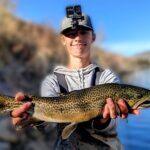
While rainbows get the attention, the resident brown trout are the true prize right now. As fall progresses, these predatory fish enter their pre-spawn phase. They move out of the deep channels and begin cruising the shorelines and river inlets, displaying stunning autumnal colors and striking with violent aggression.
Baitfish & Forage Report
The forage base consists heavily of aquatic invertebrates, including late-season midges, blue-winged olives (Baetis), and caddis pupae. Additionally, small fathead minnows and juvenile trout make up the primary protein source for the larger predatory browns.
3. TACTICAL STRATEGY
Success at Trujillo Meadows requires adapting to the cooling water and targeting specific holding zones.
Where to Fish
Focus your efforts on the northern inlet where the Los Pinos River enters the reservoir. The flowing water provides highly oxygenated currents and a natural conveyor belt of food. Work the drop-offs where the shallow inlet shelf plunges into the 10-to-15-foot depths. Alternatively, the riprap structure along the dam face on the southern end is holding heat and attracting cruising trout during the midday sun.
Lure & Fly Selection
For spin anglers, aggressive hardware is the name of the game. A 1/8-ounce Kastmaster or a size 3 Panther Martin spinner are top producers. Fly anglers should focus on subsurface presentations. A size 8 bead-head olive Woolly Bugger stripped erratically will trigger reactionary strikes from aggressive browns.
Pro Tip:When stripping streamers or retrieving hardware near the inlet, incorporate a distinct pause in your retrieve. The trailing brown trout will almost always strike on the pause as the lure flutters downward.
Color Patterns
Given the typical gin-clear water clarity of the high country, natural presentations excel. Gold, copper, and brown match the local forage perfectly. On overcast days, switch to a silver or white pattern to maximize flash.
Bait Recommendations
If you prefer fishing bait, a classic nightcrawler threaded onto a size 8 bait holder hook, fished just off the bottom using a sliding egg sinker rig (1/4 ounce), is highly effective along the deeper transition lines near the dam.
Pro Tip:Inject a small amount of air into your nightcrawler using a bait syringe. This floats the worm just above the bottom weed growth, placing it directly in the visual strike zone of cruising rainbows.
Timing the Bite
The traditional dawn patrol is less critical during the cold fall months. The most productive windows are occurring between 10:00 AM and 2:00 PM when the sun hits the water, slightly warming the shallows and triggering minor insect hatches.
4. REGULATIONS SNAPSHOT
Anglers must adhere to standard Colorado Parks and Wildlife regulations for this body of water. Please verify current guidelines before your trip, but generally expect the following:
Bag and Possession Limits: The daily bag limit is typically four trout in combination of species, with a total possession limit of eight.
Tackle Restrictions: Standard state regulations apply; however, always practice ethical catch-and-release techniques if you are targeting the wild brown trout during their spawning season.
Boating: Hand-launched, non-motorized boats and float tubes are permitted, but be acutely aware of the wind.
5. REGIONAL ALTERNATIVE
If Trujillo Meadows is blown out by high winds or sudden heavy snowpack makes the access road impassable, your best regional fallback is the Conejos River, located at a lower elevation just to the east.
Alternative Strategy: The Conejos River offers miles of public access through the Rio Grande National Forest. It is a premier freestone river boasting exceptional populations of wild brown and rainbow trout. If forced off the reservoir, head to the Pinnacles area of the Conejos. Switch your tactics to a classic hopper-dropper fly rig or drift small, natural-colored jigs through the deep pools and undercut banks. The lower elevation provides slightly warmer temperatures and excellent shelter from high-country gales.
Tight lines!
Editor's Choice: Must-Have Gear
FISHINGSIR Next-Gen Waterproof Chest Waders
★★★★★4.4 (7,370+ reviews)
2-Ply Tech: Upgraded nylon with 2.5x higher density than standard fabrics.
100% Waterproof: Lab-approved intrusion resistance with taped visible seams.
Ultra-Lightweight: Designed for all-day comfort while hunting or fishing.
As an Amazon Associate I earn from qualifying purchases. #ad
Loading forecast...
Live Fishing Conditions: Tides, Weather & Waves
Get real‑time tides, marine weather, swell and solunar activity for each spot so you know exactly when conditions line up for your best chance at a bite.
🎣
Trujillo Meadows Reservoir
Loading coordinates...
🌤️
WEATHER CONDITIONS
--°F
--°C
Loading...
🌡️
Feels Like--°F--°C
💧
Humidity--%
💨
Wind-- mph-- km/h
🧭
Direction--
📊
Pressure-- inHg-- hPa
☀️
UV Index--
🌊
MARINE CONDITIONS
🌊Wave Height
-- ft
-- m
Loading...
🧭Wave Direction
--°
Loading...
⏱️Wave Period
-- s
Loading...
📈Tide Status
-- ft
-- m
Loading...
🌙
LUNAR & SOLUNAR
🌕
Loading...
Illumination: --%
Major Period--:-- - --:----:-- - --:--
Minor Period--:-- - --:----:-- - --:--
🌅Sunrise--:--
🌇Sunset--:--
📅
24-HOUR FORECAST
Loading fishing conditions...
Fishing Spots Map
🎣
Book a Fishing Charter near Trujillo Meadows Reservoir Fishing Report Today 🎣
Local guides & charters. Verified captains, instant booking, best price guaranteed.
There was an error loading the map. Please try refreshing the page.
Info
Local Access & Facilities
Trujillo Meadows Reservoir Pre-Trip Checklist
Local Access & Facilities
Trujillo Meadows Reservoir offers a serene, high-altitude escape for anglers seeking solitude and quality trout fishing in the southern Colorado Rockies. Spanning 69 surface acres, this fishery is defined by its quiet atmosphere and strict management for low-impact recreation. Unlike the bustling reservoirs closer to the Front Range, Trujillo Meadows is a place where the silence is only broken by the sound of a drag screaming or the splash of a rising trout. The vibe here is distinctly alpine and rugged, requiring a degree of self-sufficiency from any captain planning a trip.
The primary draw for seasoned anglers is the population of Brown Trout and Rainbow Trout, with the occasional Brook Trout found near the inlets. The water is protected by a "No Wake" regulation, ensuring that the surface remains glass-smooth during the early morning hours, perfect for sight fishing or delicate dry fly presentations. While the reservoir is small enough to cover effectively in a single session, the complex shoreline and structure hold enough secrets to keep a technical angler engaged for a full weekend.
💡 Captain's Tip: Silent Approach
Because this is a strict No Wake lake, leave the high-performance prop at home or keep the big motor tilted up. Electric trolling motors or rowing are the most effective ways to maneuver without spooking the wary Browns cruising the shallows.
Access & Getting There
Reaching Trujillo Meadows Reservoir requires navigating Forest Service roads, and the journey is part of the experience. Located north of the New Mexico border near Antonito, Colorado, the final approach often involves gravel travel. Drivers should be prepared for washboard conditions on Forest Service Road 250 and connecting routes. While standard SUVs can typically handle the drive during dry summer months, early season or post-storm access may require 4WD due to mud and slick conditions.
The primary launch point is the Trujillo Meadows Boating Site. This facility features a dedicated boat ramp suitable for trailered vessels, though the size of the water dictates that smaller craft—aluminum fishing boats, drift boats, and skiffs—are the most practical choices. The ramp area can be tight, so efficiency in backing down and launching is appreciated by fellow anglers. Parking at the boating site is generally available, but it is not an expansive lot designed for massive tournament rigs. Arriving early during peak summer weekends is advisable to secure a spot for your trailer.
Weather in this high-elevation environment is the ultimate gatekeeper. Afternoon thunderstorms are a staple in the Colorado high country. Captains must keep a vigilant eye on the sky to the west; conditions can shift from bluebird skies to dangerous lightning and hail in under 30 minutes. If the wind kicks up, the leeward shores offer the only refuge, as the open water on a 69-acre lake can chop up surprisingly fast.
Facilities & Amenities
Infrastructure at Trujillo Meadows is focused on basic access rather than luxury. There are no marinas, fuel docks, or fully stocked tackle shops directly on the water. Anglers must adopt a "pack it in, pack it out" mentality. The nearest reliable civilization for fuel and heavy provisioning is in Antonito, roughly 24 miles away. It is critical to top off your gas tank and cooler before leaving the pavement, as running out of ice or fuel at the ramp will end your day early.
For those looking to stay close to the action, the area offers several accommodation options ranging from rustic camping to established lodges. Conejos Campground is located approximately 8.3 miles away, providing a solid base camp for multi-day excursions. For a more comfortable stay, the Rainbow Trout Ranch and Menkhaven offer lodging within a short drive of the water. Public restrooms are available near the reservoir (approximately 1,500 feet from the main access), but do not expect showers or flush toilets at the water's edge.
💡 Captain's Tip: Provisioning Strategy
There is zero "negative knowledge" more important here than the lack of on-site retail. There is no bait shop at the reservoir. Ensure you have all necessary tippet, lures, and bait before leaving Antonito.
Nearby Lodging & Services
Facility Name
Distance
Type
Notes
Rainbow Trout Ranch
6.9 miles
Accommodation
High-rated guest ranch; call ahead for availability.
Menkhaven
8.3 miles
Lodge/Cabins
Located on CO-17; historic river setting.
Conejos Campground
8.3 miles
Campground
Forest Service managed; good for trailers.
Truck Parking Club
24.5 miles
Parking
Located in Antonito; useful for long-term rig storage if needed.
Permits, Regulations & Fees
Fishing at Trujillo Meadows falls under the jurisdiction of the Colorado State Fishing Agency (CPW). A valid Colorado fishing license is mandatory for all anglers 16 and older. Because the reservoir is relatively close to the New Mexico border, anglers should be extremely careful not to confuse regulations or transport fish across state lines without proper documentation. Bag limits and possession limits are strictly enforced to maintain the health of the trout population.
The most significant operational regulation is the No Wake designation. This rule is strictly enforced to protect the shoreline from erosion and to maintain the safety of the many kayaks, canoes, and float tubes that share the water. Motorized boats are allowed, but they must operate at idle speed only. This creates a peaceful environment but requires patience when moving from the ramp to the far end of the reservoir.
Additionally, the nearby San Antonio Wilderness Study Area (approx. 23 miles away) represents a protected landscape with its own set of rules regarding vehicle use and resource extraction. While not directly on the lake, anglers exploring the surrounding Rio Grande National Forest should be aware of wilderness boundaries where mechanized travel is prohibited.
Events & Seasonal Information
The rhythm of Trujillo Meadows is dictated entirely by the seasons. The reservoir is a high-elevation fishery, meaning the open-water season is shorter than in the lowlands. Access is generally best from late spring through early autumn. Spring thaw can make the forest roads treacherous, while winter snows often render the area inaccessible to anything but snowmobiles. Always check road status with the Forest Service before planning a shoulder-season trip.
There are no major professional tournaments held on this specific body of water due to its size and motor restrictions. The "events" here are natural ones: the stonefly hatches in early summer and the terrestrial bite in late summer/early fall. The best fishing windows are typically dawn and dusk, particularly during the heat of July and August when the midday sun drives trout deeper into the cool water sanctuary.
Contact Information & Resources
For the most current information on road closures, fire bans, and campground status, anglers should contact the managing agencies directly. Self-reliance is key in this area; cell service can be spotty to non-existent, so carrying a satellite communicator or notifying a contact of your float plan is standard safety procedure.
Managing Agency: USDA Forest Service / Rio Grande National Forest
Nearby Wilderness Info: Bureau of Land Management (Taos Field Office) - 575-758-8851
Emergency: Dial 911 (Note: Signal may be unavailable; closest reliable signal is often near Antonito).
For precise locations of the boat ramp, nearby lodging, and real-time weather conditions, consult the live dashboard and interactive maps below.
Our spot reports combine data-driven forecasts with curated local information. The forecast is generated by our proprietary Fishing Score algorithm (0–100%), which analyzes real-time data from Open-Meteo API, validated against NOAA CO-OPS tide gauges and USGS water-monitoring stations. The model weights tide dynamics (35%), wave energy (25%), wind patterns (20%) and time of day (20%)—factors shown to influence fish feeding behavior through marine-biology research and decades of charter log data.
Access, facilities and services information for each fishing spot is sourced from official datasets such as Recreation.gov (RIDB), state park & wildlife agencies, and geospatial providers like Google Maps. These sections undergo scheduled re-validation every 3–6 months to ensure that boat ramps, park access, contact details and local services remain accurate.
Narrative sections (catches, seasonal behavior, local tips) are synthesized from these data sources and refined following the Fishing Reports Today editorial guidelines, combining bibliographic research from ichthyology and oceanography with expert angler experience. Our team reviews reports on a regular basis, while the forecast model itself updates every 6 hours for real-time accuracy.
⚠️ Important: Always verify current local regulations, access restrictions and weather conditions before fishing. These reports are intended as a planning aid, not a guarantee of catches or safety. When in doubt, contact local authorities or park managers listed on the page.
To provide the best experiences, we use technologies like cookies to store and/or access device information. Consenting to these technologies will allow us to process data such as browsing behavior or unique IDs on this site. Not consenting or withdrawing consent, may adversely affect certain features and functions.
Functional Always active
The technical storage or access is strictly necessary for the legitimate purpose of enabling the use of a specific service explicitly requested by the subscriber or user, or for the sole purpose of carrying out the transmission of a communication over an electronic communications network.
Preferences
The technical storage or access is necessary for the legitimate purpose of storing preferences that are not requested by the subscriber or user.
Statistics
The technical storage or access that is used exclusively for statistical purposes.The technical storage or access that is used exclusively for anonymous statistical purposes. Without a subpoena, voluntary compliance on the part of your Internet Service Provider, or additional records from a third party, information stored or retrieved for this purpose alone cannot usually be used to identify you.
Marketing & Affiliates
The technical storage or access is required to create user profiles to send advertising, or to track the user on a website or across several websites for similar marketing purposes, including affiliate tracking for products recommended in our reports.




Leave a Reply