Current seasonal conditions on the Conejos River are exceptional, marking the beginning of the prime autumn fishing window. The blistering heat of summer has officially broken, bringing crisp mornings and pleasant daytime highs that have successfully lowered water temperatures back into the optimal 50-to-55-degree range. The threat of thermal stress on the trout has passed, and fish are feeding aggressively to pack on calories before winter sets in.
Flows being released from Platoro Reservoir are stable, clear, and highly manageable for wading anglers. Freestone tributaries are running low and clear, meaning the main stem of the river is holding the vast majority of the aquatic biomass. Wading safety is generally excellent right now, though anglers should always exercise caution when navigating the slick, bowling-ball-sized river rocks in the canyon sections. Weather impacts are minimal, but anglers should come prepared with layers, as the canyon walls can block the sun and drop ambient temperatures rapidly in the late afternoon.
From the editor
Tired of fishing with strangers you can’t trust?
Nautrek is the first social network for serious anglers — verified partners, real trips, cost splitting and intel sharing without burning your spots. Private beta now open.
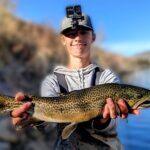
The undisputed kings of the Conejos River during the autumn months are the wild brown trout. As we push deeper into the fall season, these fish are entering their pre-spawn phase. This biological trigger transforms normally cautious, structure-hugging browns into aggressive, territorial predators. They are actively sliding out of their deep summer lies and taking up feeding stations in transition zones, looking to intercept high-calorie meals. Fish in the 14-to-18-inch class are abundant, with legitimate trophy potential pushing past the 20-inch mark in the lower river.
Sleeper Pick: Rio Grande Cutthroat Trout
While most anglers are hyper-focused on the main stem browns, the native Rio Grande Cutthroat is the crown jewel of this drainage. To find them, you need to bypass the heavily trafficked lower sections and hike into the higher gradient pocket water above Platoro Reservoir, or push into the Lake Fork tributary. These vibrant, copper-and-crimson trout are highly opportunistic and will eagerly rise to dry flies in the thinner oxygen of the high alpine environment.
Baitfish & Forage Report
The forage base is currently in a transitional state. Late-season terrestrials like grasshoppers, beetles, and flying ants are still present in the meadow sections and continue to blow into the river on windy afternoons. Below the surface, the biomass is dominated by large Golden Stonefly nymphs, smaller dark stoneflies, and an increasing presence of Blue-Winged Olive (BWO) nymphs. Sculpins and juvenile trout are also a major food source right now, heavily targeted by the larger predatory browns.
TACTICAL STRATEGY
Where to Target
Location is everything on the Conejos right now. In the meadow sections near the South Fork confluence, focus your efforts on the deep, undercut grassy banks and the slower walking-speed seams where foam lines gather. The trout will hold just inside the drop-off, waiting for terrestrials to fall from the overhanging grass.
For anglers targeting trophy fish, the rugged hike into Pinnacles Canyon is where you want to be. Work the deep, emerald-green plunge pools and the slow tailouts of major runs. Do not ignore the shallow riffles leading into these deep pools; during low-light conditions, large browns will push up into surprisingly skinny water to ambush baitfish and emerging nymphs.
Lure & Fly Selection
Because the Conejos is primarily governed by artificial fly and lure regulations (and strictly flies-only in certain stretches), your presentation must be dialed in.
Dry-Dropper Rigs: Utilize a Size 10 or 12 Chubby Chernobyl (Golden or Tan) as your indicator fly. Drop a Size 18 Tungsten Beadhead Pheasant Tail or a Size 20 RS2 off the bend of the hook, suspended 24 to 36 inches below depending on depth.
Dedicated Nymphing: A heavily weighted Pat's Rubber Legs (Size 8, Coffee/Black) trailed by a Size 18 Chocolate Foam Wing Emerger is a deadly combination in the deeper canyon runs.
Streamers: To trigger pre-spawn aggression strikes, strip an Articulated Autumn Splendor or a Size 6 Olive/Black Slumpbuster. Use a sinking tip line to ensure the fly gets down into the strike zone immediately upon hitting the water.
Timing & Conditions
The best dry fly action is occurring during the warmest part of the day, typically between 11:00 AM and 3:00 PM, when terrestrial activity is at its peak and BWOs begin to pop under cloud cover. If you are throwing streamers for large browns, the golden hours of dawn and dusk are mandatory. Overcast, drizzly days will extend the streamer bite and the BWO hatches throughout the entire afternoon.
Pro Tip: When stripping streamers in the canyon sections, do not recast the moment your fly swings out of the current. Large brown trout will often follow a streamer all the way to your rod tip. Let the fly hang in the current for three to five seconds at the end of your swing, giving a following fish a chance to commit before you pull it out of the water.
REGULATIONS SNAPSHOT
The Conejos River features specific special regulation waters designed to protect trophy trout populations. Always verify boundaries, but keep these critical rules in mind for the most popular stretches.
Location Boundary
Tackle Restriction
Bag & Size Limits
Lower Bridge at Platoro down to South Fork Confluence
Artificial Flies and Lures ONLY
2 Trout limit, Minimum size 16 inches
Menkhaven Resort down to Aspen Glade Campground
Artificial Flies ONLY
2 Trout limit, Minimum size 16 inches
Headwaters down to USFS Boundary
Artificial Flies and Lures ONLY
Catch and Release ONLY for Cutthroat Trout
Note: The unauthorized transplanting or stocking of fish, including the use of live baitfish, is strictly illegal in these waters.
Pro Tip: Ensure your landing net is rubberized. The abrasive nature of nylon nets removes the protective slime coat from trout, which is especially detrimental to pre-spawn fish that are already expending massive amounts of energy.
REGIONAL ALTERNATIVE
If the main stem of the Conejos experiences an unexpected blowout from a localized mountain thunderstorm, or if the canyon winds become too hostile for casting, pivot your operation to Platoro Reservoir. Located at the top of the drainage, this high-alpine stillwater is immune to river turbidity issues and offers spectacular autumn fishing.
At Platoro, you can target cruising rainbow trout and pre-spawn Kokanee salmon. Access is straightforward along the dam face and the rocky shorelines near the boat ramp. Swap your river rig for a stillwater setup: suspend a balanced leech (Size 10, Bruised or Black) and a blood-red Chironomid (Size 14) roughly six to eight feet under a slip indicator. A slow, methodical hand-twist retrieve will keep the flies hovering right in the cruising lanes of heavily feeding fish. Alternatively, hardware anglers can cover water effectively by fan-casting silver and blue Kastmasters or Thomas Buoyant spoons to locate active schools.
Tight lines!
Editor's Choice: Must-Have Gear
FISHINGSIR Next-Gen Waterproof Chest Waders
★★★★★4.4 (7,370+ reviews)
2-Ply Tech: Upgraded nylon with 2.5x higher density than standard fabrics.
100% Waterproof: Lab-approved intrusion resistance with taped visible seams.
Ultra-Lightweight: Designed for all-day comfort while hunting or fishing.
As an Amazon Associate I earn from qualifying purchases. #ad
Loading forecast...
Live Fishing Conditions: Tides, Weather & Waves
Get real‑time tides, marine weather, swell and solunar activity for each spot so you know exactly when conditions line up for your best chance at a bite.
🎣
Conejos River
Loading coordinates...
🌤️
WEATHER CONDITIONS
--°F
--°C
Loading...
🌡️
Feels Like--°F--°C
💧
Humidity--%
💨
Wind-- mph-- km/h
🧭
Direction--
📊
Pressure-- inHg-- hPa
☀️
UV Index--
🌊
MARINE CONDITIONS
🌊Wave Height
-- ft
-- m
Loading...
🧭Wave Direction
--°
Loading...
⏱️Wave Period
-- s
Loading...
📈Tide Status
-- ft
-- m
Loading...
🌙
LUNAR & SOLUNAR
🌕
Loading...
Illumination: --%
Major Period--:-- - --:----:-- - --:--
Minor Period--:-- - --:----:-- - --:--
🌅Sunrise--:--
🌇Sunset--:--
📅
24-HOUR FORECAST
Loading fishing conditions...
Fishing Spots Map
🎣
Book a Fishing Charter near Conejos River Fishing Report Today 🎣
Local guides & charters. Verified captains, instant booking, best price guaranteed.
There was an error loading the map. Please try refreshing the page.
Info
Local Access & Facilities
The Conejos River represents one of Colorado's premier high-elevation fisheries, carving a meandering path through the volcanic geology of the southern San Luis Valley. Situated at an elevation of approximately 8,400 feet, this waterway is not merely a scenic tributary; it is a designated Gold Medal River, a title reserved for only the highest quality trout streams in the state. For the expert angler, this designation signals a biological density of Rainbow Trout and Brown Trout that rivals any water in the Rockies, set against a backdrop of ponderosa pine, spruce, and towering canyon walls.The atmosphere here is distinctly rugged and quieter than the manicured waters of northern Colorado. The river flows through a mix of public lands and private ranches, offering a diversity of water from placid, glass-like flats suitable for dry fly purists to challenging pocket water in the canyons. While the upper stretches offer solitude among the conifers, the lower sections near the New Mexico border introduce a wilder character, where the river cuts deep gorges into the basalt landscape. This is a fishery for the self-reliant angler who appreciates technical wading and the thin, crisp air of the high country.
💡 Captain's Tip: Borderline Rapids
While the upper stretches are ideal for drift boats and wading, be extremely cautious near the Colorado-New Mexico border. The river enters a deep canyon with challenging whitewater rapids. Unless you are an expert oarsman, plan your takeout well upstream to avoid an unplanned canyon hike.
Access & Getting There
Accessing the prime waters of the Conejos River generally requires navigating Highway 17, which runs west from Antonito. This route is the primary artery for anglers, paralleling the river for miles and offering various pull-outs and forest service roads. Traffic is rarely a major issue in this remote corner of the state, but the winding nature of the canyon roads demands attention, particularly during early morning "dawn patrol" runs when wildlife is active on the asphalt. For those towing drift boats, the Rio Grande River SRMA offers a roadside boat launch, though the gradient is shallow and best suited for rafts or shallow-draft vessels.Weather plays a critical role in access logistics at this altitude. At over 8,000 feet, weather patterns can shift rapidly from sunny skies to violent thunderstorms. During the summer monsoon season, afternoon squalls can turn dirt access roads into slick mud, particularly around the San Antonio Wilderness Study Area. Anglers should prioritize 4x4 vehicles if venturing off the pavement. During the shoulder seasons, snow can linger on Forest Road 250, the scenic drive that provides access to the upper river sections.Parking requires a strategic approach, especially for those hauling trailers. While the developed campgrounds at Mogote and Aspen Glade offer gravel driveways and defined spots, roadside parking along the highway can be tight. For anglers needing to stash a rig or find secure overnight parking away from the water, the Truck Parking Club on E 4th Ave in Antonito provides 24-hour access, a valuable resource for captains managing logistical transitions between river sections.
💡 Captain's Tip: Trailer Management
Parking at river access points can be tight. If you are running a multi-day trip and need to stage a vehicle or trailer, utilize the 24-hour facilities in Antonito rather than risking a blocked fire lane at the campground trailheads.
Conejos River Pre-Trip Checklist
Facilities & Amenities
The infrastructure along the Conejos River is geared towards the self-sufficient sportsman rather than the resort tourist. The primary hubs for anglers are the Forest Service campgrounds, which serve as excellent base camps but lack luxury amenities. Mogote Campground and Aspen Glade Campground are the two main facilities directly on the water. Both provide immediate access to Gold Medal fishing waters, but seasoned campers should note the lack of electric hookups. You are trading convenience for proximity; waking up to the sound of rising trout is the primary amenity here.For lodging that offers a roof over your head, the options are rustic and character-rich. Rainbow Trout Ranch and Menkhaven are staples in the area, offering accommodations that understand the angler's schedule. Canon Bonito RV Park & Fisherman’s Club is another key location, specifically catering to the RV crowd with services that the primitive campgrounds lack.It is critical to note what is missing to avoid logistical headaches. There are no large-scale marinas or fuel docks on the river itself. Anglers must ensure their vessels are fully fueled in Antonito or La Jara before heading up the canyon. Additionally, potable water access can be seasonal at the campgrounds; bringing backup jerry cans is standard operating procedure for locals. The local "fleet" consists mostly of independent guides and drift boat captains who operate out of the nearby lodges or trailer in daily.
Facility Name
Type
Key Features
Distance from Hub
Mogote Campground
Camping
Riverfront sites, Vault Toilets, No Electric
11.4 miles
Aspen Glade Campground
Camping
Heavily wooded, Gold Medal water access
13.5 miles
Rainbow Trout Ranch
Lodging
24-hour access, High rating
19.5 miles
Truck Parking Club
Parking
24-hour secure parking, Trailer friendly
1.6 miles
Permits, Regulations & Fees
Fishing the Conejos River requires strict adherence to state and local regulations, primarily due to its status as a Gold Medal River. This designation is not just a marketing term; it carries legal weight regarding sustainable harvest and gear restrictions. The State Fishing Agency manages these waters to maintain the trophy-class population of trout. Anglers should anticipate fly-and-lure-only zones and catch-and-release regulations in specific stretches, particularly near the campgrounds and the Rio Grande National Forest boundaries.The area is also a patchwork of protected lands. The San Antonio Wilderness Study Area and San Luis Hills WSA are managed to preserve their primitive character. In these zones, mechanized travel is often restricted, and "Leave No Trace" principles are enforced to protect the fragile high-desert ecosystem. The San Antonio WSA notes that lower stretches of the river can go dry in the summer due to upstream diversions, a critical regulatory and biological detail for anyone planning a float trip in late season.Culturally, the valley has deep roots. The Cumbres & Toltec Scenic Railroad, a historic narrow-gauge steam train, runs nearby. Anglers should respect the rail corridor and private lands that border the river. "Kapu"—or respecting boundaries—is essential here; crossing private fences to access the river is a quick way to lose access for everyone. Always stick to designated public easements and Forest Service access points.
💡 Captain's Tip: Water Levels
Be aware that the Rio San Antonio and lower river stretches can dewater significantly in late summer due to agricultural diversions. Always check current flow rates with the San Luis Valley Field Office before launching a drift boat in August or September.
Events & Seasonal Information
The rhythm of the Conejos River is dictated by the seasons of the high Rockies. Spring runoff can make the river high and discolored, typically clearing by late June. The prime window for the "Gold Medal" experience is from July through September, when insect hatches are prolific and the trout are looking up. This is also when the river sees the most pressure, though the length of the river helps disperse the crowds.While there are no massive professional tournaments held directly on these stretches comparable to saltwater circuits, the area is a pilgrimage site for fly fishing enthusiasts. The arrival of the Stonefly hatch is an unofficial "event" that draws seasoned anglers from across the country.Daily timing is crucial. At this elevation, water temperatures drop significantly at night. The bite often turns on later in the morning once the sun has hit the water, warming the shallows and activating insect life. Conversely, during the heat of mid-summer, the "dawn patrol" and late evening "magic hour" are the most productive times to target large Brown Trout that become predatory in low-light conditions.
Contact Information & Resources
For the most current information on flows, fire bans, and access conditions, direct communication with managing agencies is recommended. The San Luis Valley Field Office manages the BLM lands and can be reached at 719-852-7074. For campground specifics and forest conditions, the Rio Grande National Forest contacts are essential.In terms of safety, cell service is spotty to non-existent in the deep canyons. Anglers should carry satellite communication devices or reliable topographic maps. The nearest substantial medical facilities and law enforcement are in Alamosa or La Jara, meaning response times for emergencies in the canyon can be lengthy. Self-reliance is the rule of the river here.For precise locations, real-time weather data, and detailed maps of the access points discussed, consult the live dashboard and interactive widgets below.
Our spot reports combine data-driven forecasts with curated local information. The forecast is generated by our proprietary Fishing Score algorithm (0–100%), which analyzes real-time data from Open-Meteo API, validated against NOAA CO-OPS tide gauges and USGS water-monitoring stations. The model weights tide dynamics (35%), wave energy (25%), wind patterns (20%) and time of day (20%)—factors shown to influence fish feeding behavior through marine-biology research and decades of charter log data.
Access, facilities and services information for each fishing spot is sourced from official datasets such as Recreation.gov (RIDB), state park & wildlife agencies, and geospatial providers like Google Maps. These sections undergo scheduled re-validation every 3–6 months to ensure that boat ramps, park access, contact details and local services remain accurate.
Narrative sections (catches, seasonal behavior, local tips) are synthesized from these data sources and refined following the Fishing Reports Today editorial guidelines, combining bibliographic research from ichthyology and oceanography with expert angler experience. Our team reviews reports on a regular basis, while the forecast model itself updates every 6 hours for real-time accuracy.
⚠️ Important: Always verify current local regulations, access restrictions and weather conditions before fishing. These reports are intended as a planning aid, not a guarantee of catches or safety. When in doubt, contact local authorities or park managers listed on the page.
To provide the best experiences, we use technologies like cookies to store and/or access device information. Consenting to these technologies will allow us to process data such as browsing behavior or unique IDs on this site. Not consenting or withdrawing consent, may adversely affect certain features and functions.
Functional Always active
The technical storage or access is strictly necessary for the legitimate purpose of enabling the use of a specific service explicitly requested by the subscriber or user, or for the sole purpose of carrying out the transmission of a communication over an electronic communications network.
Preferences
The technical storage or access is necessary for the legitimate purpose of storing preferences that are not requested by the subscriber or user.
Statistics
The technical storage or access that is used exclusively for statistical purposes.The technical storage or access that is used exclusively for anonymous statistical purposes. Without a subpoena, voluntary compliance on the part of your Internet Service Provider, or additional records from a third party, information stored or retrieved for this purpose alone cannot usually be used to identify you.
Marketing & Affiliates
The technical storage or access is required to create user profiles to send advertising, or to track the user on a website or across several websites for similar marketing purposes, including affiliate tracking for products recommended in our reports.




Leave a Reply