Boynton Beach Fall Fishing Report: The Mullet Run is On
1. GO/NO-GO STATUS
Verdict: GO - WITH AFTERNOON CAUTION
Conditions are prime for one of the most explosive fishing events of the year on the southeastern Florida coast. The annual fall mullet migration is currently pushing through the Palm Beach County area, turning the local waters into an absolute feeding frenzy. Weather patterns are typical for the early fall transition, featuring warm, humid mornings with highs pushing into the upper 80s, followed by scattered, pop-up afternoon thunderstorms. Anglers should take full advantage of the morning and evening bite windows while keeping a close eye on the marine radar for fast-moving squalls.
The Boynton Inlet (South Lake Worth Inlet) is notorious for its treacherous currents. During an outgoing tide paired with a stiff easterly breeze, standing waves can form at the mouth, making navigation hazardous for smaller vessels. Boaters must exercise extreme caution, ensure all safety gear is accessible, and time their inlet crossings carefully. If you can safely navigate the tides and dodge the afternoon rain, the nearshore and inshore bite is nothing short of spectacular right now.
🎣Nautrek
Private Beta
J
M
R
100+ anglers on the waitlist
The fishing network where your reputation matters.
Find trusted captains, join real trips with cost splitting, and build your Angler Rank. Your spots stay private — you decide who sees your intel.
Linesiders are stacked up, aggressive, and hungry. With the massive influx of bait pushing south along the coast, Snook are actively ambushing schools along seawalls, bridge pilings, and the inlet jetties. The bite is violent, and fish in the upper slot and over-slot ranges are being caught consistently by anglers who know how to play the tides. The fall feed is a critical time for these fish to pack on weight, making them highly susceptible to well-presented baits.
Sleeper Pick: Mutton Snapper & Wahoo
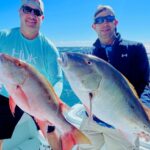
While the vast majority of anglers are fixated on the surface explosions of Tarpon and Snook inshore, the offshore and nearshore zones are quietly producing incredible results. On the nearshore reefs (60 to 90 feet), Mutton Snapper are congregating. These bottom brawlers often sit below the chaos of the pelagic species, picking off injured baitfish that sink to the reef. Further off the beach, the approaching moon phases are triggering an excellent early-fall Wahoo bite along the Gulf Stream edge.
Baitfish Report
The undeniable star of the show right now is the mullet. Both finger mullet and larger silver mullet are moving down the beaches and through the Intracoastal Waterway (ICW) in massive, nervous black clouds. You will also find scattered schools of pilchards and threadfin herring near the inlet mouth. Match your presentation to the specific size and species of the bait in your immediate area to maximize your strike rate.
3. TACTICAL STRATEGY
Where to Deploy
Inshore, focus your efforts heavily on the Boynton Inlet and the adjacent ICW. Specifically, target the shadow lines of the Ocean Avenue Bridge at night. During the day, work the seawalls just north of the inlet where the current sweeps bait tightly against the concrete structure. For offshore anglers chasing Wahoo, the 90 to 150-foot ledge straight out of the inlet is the prime zone. Look for color changes, weed lines, or floating debris pushed up by the Gulf Stream current.
Lure Selection
When fishing the inlet for Snook, heavy jigs are absolutely required to get down in the ripping current. Use a 1.5oz to 2oz First Light Flair Hawk jig. If you are working the ICW seawalls or the beach troughs, a Rapala X-Rap Size 12 or a Yo-Zuri Crystal Minnow is highly effective for drawing reaction strikes from cruising predators. For Wahoo, high-speed trolling with heavy cowbells and skirted trolling leads rigged with dark-colored skirts will get the job done.
Color Patterns
Keep your artificials natural to match the hatch. Silver bodies with black or blue backs are mandatory for hard baits to mimic the migrating mullet. For your Flair Hawks in the inlet, a white body with a red head provides a high-contrast profile that Snook can easily track in the turbulent, tannin-stained water of an outgoing tide. Offshore for Wahoo, black and purple or red and black skirts are producing the most knockdowns.
Bait and Rigging
Live finger mullet is the undisputed champion for inshore success right now. Free-line a live mullet on a 5/0 or 6/0 inline circle hook (depending on bait size) using 40lb to 60lb fluorocarbon leader. When fishing the inlet's deeper channels, add a 1oz to 2oz egg sinker above a sturdy barrel swivel to create a fish-finder rig. This keeps your bait in the lower third of the water column where the monster, lazy Snook hold to ambush prey passing overhead.
Pro Tip: When free-lining mullet along a seawall or dock line, hook the bait through the anal fin rather than the lips. This forces the mullet to swim downward and frantically struggle against the surface, sending out distress vibrations that predatory Snook and Jack Crevalle simply cannot resist.
Optimal Timing
The outgoing tide is the golden window, especially when it aligns with the low light conditions of dawn or dusk. The outgoing current flushes bait out of the Lake Worth Lagoon and funnels it directly through the inlet, creating a natural, high-velocity chum line that predators eagerly await. Offshore, the first two hours of daylight are critical for the Wahoo bite.
4. REGULATIONS SNAPSHOT
With Snook being the primary inshore target, it is critical to know the current Florida Fish and Wildlife Conservation Commission (FWC) rules for the Southeast management region (Atlantic coast). Ignorance of the law is no excuse, and FWC officers are heavily patrolling the inlets during the mullet run:
Season Status: Open (The season officially opened on September 1st).
Slot Limit: Fish must be not less than 28 inches and not more than 32 inches in total length.
Bag Limit: 1 fish per angler, per day.
Permit Requirements: A specific Snook Permit is strictly required in addition to your standard Florida saltwater fishing license to legally harvest a fish.
Conservation Note: Always handle out-of-slot fish with extreme care. Keep them in the water as much as possible during the release process, support their belly, and revive them fully in the current to ensure post-release survival.
5. REGIONAL ALTERNATIVE
If the coastal winds kick up, the afternoon thunderstorms stack up over the ocean, or the Boynton Inlet becomes too treacherous to fish safely, head inland to the Lake Ida Chain of Lakes. Located just a few miles west of the coast, this freshwater system is heavily sheltered from coastal winds and offers world-class urban fishing for exotic species like Peacock Bass and Clown Knifefish.
Target the canal intersections, culvert pipes, and shaded residential docks using live domestic shiners or fast-moving topwater prop baits (like a Heddon Torpedo) in the early morning. It is a fantastic, action-packed backup plan that requires minimal heavy gear and provides a completely different angling experience.
Pro Tip: When targeting Peacock Bass in the Lake Ida system with artificial lures, speed is your best friend. Retrieve your jerkbaits or topwater plugs much faster than you would for traditional Largemouth Bass. Peacocks are visual, aggressive hunters, and a burning retrieve will trigger violent reaction strikes that a slow presentation will miss.
Tight lines!
Editor's Choice: Must-Have Gear
FISHINGSIR Next-Gen Waterproof Chest Waders
★★★★★4.4 (7,370+ reviews)
2-Ply Tech: Upgraded nylon with 2.5x higher density than standard fabrics.
100% Waterproof: Lab-approved intrusion resistance with taped visible seams.
Ultra-Lightweight: Designed for all-day comfort while hunting or fishing.
As an Amazon Associate I earn from qualifying purchases. #ad
Loading forecast...
Live Fishing Conditions: Tides, Weather & Waves
Get real‑time tides, marine weather, swell and solunar activity for each spot so you know exactly when conditions line up for your best chance at a bite.
🎣
Boynton Beach
Loading coordinates...
🌤️
WEATHER CONDITIONS
--°F
--°C
Loading...
🌡️
Feels Like--°F--°C
💧
Humidity--%
💨
Wind-- mph-- km/h
🧭
Direction--
📊
Pressure-- inHg-- hPa
☀️
UV Index--
🌊
MARINE CONDITIONS
🌊Wave Height
-- ft
-- m
Loading...
🧭Wave Direction
--°
Loading...
⏱️Wave Period
-- s
Loading...
📈Tide Status
-- ft
-- m
Loading...
🌙
LUNAR & SOLUNAR
🌕
Loading...
Illumination: --%
Major Period--:-- - --:----:-- - --:--
Minor Period--:-- - --:----:-- - --:--
🌅Sunrise--:--
🌇Sunset--:--
📅
24-HOUR FORECAST
Loading fishing conditions...
Fishing Spots Map
🎣
Book a Fishing Charter near Boynton Beach Fishing Report Today 🎣
Local guides & charters. Verified captains, instant booking, best price guaranteed.
There was an error loading the map. Please try refreshing the page.
Info
Local Access & Facilities
Boynton Beach sits at a unique geographical crossroads that offers seasoned anglers a diverse portfolio of water. To the east, the Atlantic Ocean drops off quickly, providing access to pelagic corridors, while just ten miles to the west lies the Arthur R. Marshall Loxahatchee National Wildlife Refuge. This massive expanse of the northern Everglades offers a stark contrast to the manicured coast, presenting a rugged mosaic of wet prairies, sawgrass ridges, and cypress swamps. It is a fishery defined by its duality, requiring different mindsets and gear depending on whether you turn your bow toward the sunrise or the sunset.
The atmosphere here shifts rapidly from the urban bustle of Palm Beach County to the silent, prehistoric vibe of the "River of Grass." For the freshwater specialist, the Refuge offers 226 square miles of habitat where bass and panfish roam among alligators and snail kites. Ideally situated for those who want to fish a major metropolitan area without sacrificing access to true wilderness, Boynton Beach serves as a logistical hub for both heavy offshore tackle and technical poling skiffs.
Target species here run the gamut. In the canals and sloughs of the Refuge, largemouth bass are the primary draw, alongside oscars and Mayan cichlids. On the coastal side, the proximity of the Gulf Stream brings sailfish and mahi-mahi within a short run of the inlet. This guide focuses on the logistical realities of accessing these distinct fisheries, with a spotlight on the facilities available to support your campaign.
Access & Getting There
Navigating to Boynton Beach is generally straightforward via Interstate 95 or the Florida Turnpike, though local traffic can be heavy during peak commuter hours. To reach the primary freshwater access at the Loxahatchee Refuge, anglers should exit at Boynton Beach Boulevard or Atlantic Avenue in Delray Beach and head west to Highway 441/State Road 7. The main boat access for the Refuge is located at the end of Lee Road, approximately two miles south of Boynton Beach Boulevard on SR7.
For saltwater access, the Boynton Beach Boat Ramp is located just 1.7 miles from the city center. This facility is the primary launch point for offshore vessels. While the ramps are generally well-maintained, early arrival is critical, especially on weekends when trailer parking reaches capacity quickly. The tides here can be swift near the inlet, so solo launchers should be prepared for significant current when loading or unloading.
💡 Captain's Tip: Beat the Wind
The Everglades are flat and exposed. When fishing the Refuge, launch at first light before the mid-morning trade winds pick up. A 15-knot east wind can make poling the open sloughs exhausting and muddy the water quickly.
Weather plays a significant role in access strategies here. The Refuge is a rainfall-driven system; water levels fluctuate seasonally, which dictates where a bass boat can run versus where you might need a kayak or canoe. During the dry season, low water can make certain canals hazardous for lower units. Conversely, heavy summer rains open up the flats but bring the risk of rapid afternoon thunderstorms. Always check water level reports from the USFWS before hauling a larger vessel to the marsh.
Boynton Beach Pre-Trip Checklist
Facilities & Amenities
Boynton Beach is well-equipped for the serious angler, though specific needs require knowing exactly where to go. For immediate bait and tackle needs, Blue Marlin Bait & Tackle is the closest reliable shop, located roughly 4.6 miles from the center. They open at 9:00 AM on weekdays (7:00 AM Saturdays), which may be late for dawn patrol, so plan your bait acquisition the day before. For earlier hours, seasoned captains often head south to Big Dog Tackle in Pompano Beach, which opens at 6:00 AM daily.
The local charter fleet is robust, catering to both offshore big game and inshore excursions. Chips Ahoy Fishing Charters is located less than a mile from the core area, making it a convenient option for those looking to get offshore quickly. For those interested in the backwater or freshwater experience, Reefs to Rivers Fishing Charters operates out of the area and understands the nuances of the local estuarine systems.
💡 Captain's Tip: Fuel Logistics
There are no fuel docks within the Loxahatchee Refuge. If you are running a skiff or bass boat in the marsh, ensure your tanks are topped off at a roadside station on Highway 441 before entering the park gates.
Accommodation options vary, but proximity to the launch is key for maximizing sleep before an early start. The Four Seasons Resort Palm Beach offers high-end lodging about 6.7 miles away, but for a more functional stay, various options exist closer to the I-95 corridor. Note that trailer parking at hotels can be scarce; always verify that your chosen accommodation can handle a boat trailer before booking.
Key Service Providers
Service Name
Type
Distance
Notes
Blue Marlin Bait & Tackle
Bait & Tackle
4.6 mi
Opens 7am Sat / 9am Weekdays
Big Dog Tackle
Bait & Tackle
19.1 mi
Opens 6am Daily. High Rating.
Chips Ahoy Fishing Charters
Charter
0.8 mi
Closest offshore option.
Reefs to Rivers
Charter
3.5 mi
Local specialized guide.
Boynton Beach Boat Ramp
Access
1.7 mi
Primary saltwater launch.
Permits, Regulations & Fees
Fishing the Loxahatchee Refuge requires strict adherence to federal regulations. This is a National Wildlife Refuge, not just a recreational park. The area is managed by the U.S. Fish and Wildlife Service, and specific rules apply to protect the ecosystem. Speed limits are strictly enforced in canals to protect manatees and prevent bank erosion. Furthermore, certain areas of the marsh may be closed seasonally or designated as "pole and troll" zones only.
A valid Florida freshwater fishing license is required for the Refuge, while a saltwater license is necessary for coastal fishing. If you plan to fish both on the same trip, a combination license is recommended. Be aware of the boundaries; the transition from state waters to federal refuge waters can happen quickly, and ignorance of the boundary lines is not a valid defense. The Refuge is home to endangered species like the wood stork and snail kite; harassment of wildlife is a serious federal offense.
Entrance fees apply for the Refuge. Access is generally granted via a daily pass or an annual federal duck stamp. The Lee Road entrance has a gate that operates on specific hours, typically sunrise to sunset. Anglers looking to launch before sunrise or stay after dark should check for specific after-hours permits or seasonal extended hours, though night fishing is often restricted to specific areas.
Events & Seasonal Information
The fishing calendar in Boynton Beach is dictated by the wet and dry seasons. The dry season (winter/spring) concentrates freshwater fish into the deeper canals of the Refuge, making them easier to target but increasing pressure from other anglers. This is also when the "snowbird" traffic is heaviest on the roads. Summer brings the rains, dispersing fish across the flooded prairies. While the fishing can be excellent, the heat and mosquitoes in the marsh can be intense.
Offshore, the winter months bring sailfish tournaments that attract high-caliber teams to the area. If you are visiting during peak tournament season, expect the Boynton Beach Boat Ramp and local tackle shops to be significantly busier. The summer months are generally calmer on the ocean side, offering opportunities for smaller boats to venture out for mahi-mahi and wahoo.
💡 Captain's Tip: Summer Storms
South Florida afternoons in summer are famous for violent electrical storms. Plan to be off the water or within a 15-minute run of the ramp by 2:00 PM. In the Refuge, lightning protection is non-existent.
Contact Information & Resources
For the most current information regarding water levels, gate closures, and access rules for the freshwater areas, contact the Arthur R. Marshall Loxahatchee National Wildlife Refuge directly at 561-734-8303 or email armloxahatchee@fws.gov. The visitor center is located at 10216 Lee Road, Boynton Beach, FL 33437.
Safety is paramount here. In the freshwater areas, you are in alligator country; keep pets on a leash and away from the water's edge. Cell phone reception can be spotty deep in the refuge or offshore. Always file a float plan with a reliable contact on land. For precise locations, real-time weather data, and detailed charts, consult the live dashboard and interactive maps below.
🎣
Boynton Beach
Boynton Beach • Florida • 26.5250, -80.0660
🅿️
Parking
5
Esperante Corporate Center
⭐ 5.012.5 mi
📍222 Lakeview Ave # 800, West Palm Beach, FL 33401, USA
Our spot reports combine data-driven forecasts with curated local information. The forecast is generated by our proprietary Fishing Score algorithm (0–100%), which analyzes real-time data from Open-Meteo API, validated against NOAA CO-OPS tide gauges and USGS water-monitoring stations. The model weights tide dynamics (35%), wave energy (25%), wind patterns (20%) and time of day (20%)—factors shown to influence fish feeding behavior through marine-biology research and decades of charter log data.
Access, facilities and services information for each fishing spot is sourced from official datasets such as Recreation.gov (RIDB), state park & wildlife agencies, and geospatial providers like Google Maps. These sections undergo scheduled re-validation every 3–6 months to ensure that boat ramps, park access, contact details and local services remain accurate.
Narrative sections (catches, seasonal behavior, local tips) are synthesized from these data sources and refined following the Fishing Reports Today editorial guidelines, combining bibliographic research from ichthyology and oceanography with expert angler experience. Our team reviews reports on a regular basis, while the forecast model itself updates every 6 hours for real-time accuracy.
⚠️ Important: Always verify current local regulations, access restrictions and weather conditions before fishing. These reports are intended as a planning aid, not a guarantee of catches or safety. When in doubt, contact local authorities or park managers listed on the page.
To provide the best experiences, we use technologies like cookies to store and/or access device information. Consenting to these technologies will allow us to process data such as browsing behavior or unique IDs on this site. Not consenting or withdrawing consent, may adversely affect certain features and functions.
Functional Always active
The technical storage or access is strictly necessary for the legitimate purpose of enabling the use of a specific service explicitly requested by the subscriber or user, or for the sole purpose of carrying out the transmission of a communication over an electronic communications network.
Preferences
The technical storage or access is necessary for the legitimate purpose of storing preferences that are not requested by the subscriber or user.
Statistics
The technical storage or access that is used exclusively for statistical purposes.The technical storage or access that is used exclusively for anonymous statistical purposes. Without a subpoena, voluntary compliance on the part of your Internet Service Provider, or additional records from a third party, information stored or retrieved for this purpose alone cannot usually be used to identify you.
Marketing & Affiliates
The technical storage or access is required to create user profiles to send advertising, or to track the user on a website or across several websites for similar marketing purposes, including affiliate tracking for products recommended in our reports.



Leave a Reply