Verdict: GO β with a highly targeted approach based on specific river sections.
Current seasonal transitions are dictating the terms of engagement on the Weber River. We are looking at a classic Wasatch Front spring weather pattern: cold, crisp mornings with temperatures hovering near freezing, giving way to comfortable afternoons pushing into the upper sixties and low seventies. While there is a slight chance of early-week rain showers, the primary factor for anglers to consider right now is the varied flow rates across different stretches of the river.
The upper reaches near Wanship are running extremely low and gin-clear, demanding stealthy wading and long, fine leaders to avoid spooking wary fish. Conversely, the tailwater sections flowing out of Echo Reservoir into the Morgan reach are providing much more robust and fishable flows, offering excellent holding water in the deep runs. Wade with caution in the heavier tailwater currents, but overall, the conditions are prime for anglers willing to adapt their techniques to the specific water they choose to fish.
From the editor
Tired of fishing with strangers you can’t trust?
Nautrek is the first social network for serious anglers — verified partners, real trips, cost splitting and intel sharing without burning your spots. Private beta now open.
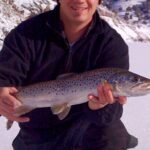
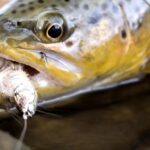
Wild Brown Trout are the undisputed kings of the middle and lower Weber River. Coming out of the lean winter months, these predatory fish are feeding aggressively to pack on weight. They are currently establishing dominance in the prime liesβdeep undercut banks, slow seams adjacent to heavy current, and the oxygen-rich foam lines of major riffles. The browns in this system average twelve to sixteen inches, but the tailwater stretches regularly produce holdover fish pushing into the high teens and beyond.
Sleeper Pick: Mountain Whitefish
Far too many trout purists bypass the native Mountain Whitefish, but savvy local guides know these fish are the ultimate day-savers. Whitefish stack up in the deepest, slowest pools and feed voraciously on subsurface nymphs. They fight with a bulldog-like head shake and offer continuous rod-bending action when the trout get lockjaw. Because they share the same forage base as the trout, you do not need to change your rig to target them, but you do need to make sure your flies are ticking the bottom where the whitefish pod up.
Baitfish & Forage Report
The menu on the Weber right now is a diverse mix of aquatic invertebrates. Increased spring flows in the tailwater sections are dislodging significant amounts of subsurface forage. Key food sources include:
Scuds and Sow Bugs: Kicked up heavily in the higher flow stretches, tumbling along the river bottom.
Mother's Day Caddis: The famous spring hatch is beginning its annual emergence, providing explosive topwater action.
Blue Winged Olives (BWOs): A staple on overcast days that triggers technical surface feeding.
Midges: A reliable, tiny food source during the low-light hours of dawn and dusk.
Match your presentations to these specific forage types for the highest success rates.
Tactical Strategy
Where to Deploy
Your location dictates your success on the Weber right now. The Morgan reach below Echo Reservoir is currently the most productive zone. Focus your efforts on the deep runs and transitional drop-offs near popular Walk-In Access (WIA) areas like Creamery Lane and Spring Chicken. Look for the seams where fast water meets slow water; trout will hold in the softer current, darting into the faster flow to intercept drifting nymphs. If you choose to fish the upper river near Wanship, you must target the deepest pools and undercut banks. In this low, clear water, stay low on the bank, avoid casting shadows over the holding water, and make your first cast count.
Lure & Fly Selection
Your rig needs to match the varying depths and current speeds. Below is the current hit list for the Weber:
Fly/Lure Pattern
Size
Ideal Application
Tungsten Rainbow Warrior
14 - 16
Lead nymph in deep, fast runs
Juju Baetis or Zebra Midge
18 - 22
Trailing nymph for technical water
Corn-fed CDC Caddis
16 - 18
Afternoon dry fly surface action
White Woolly Bugger
4 - 8
Stripped through deep pools at dawn/dusk
Nymphs: A two-fly indicator or tight-line rig is your best weapon. Lead with a heavy tungsten pattern to get down fast, trailing a smaller, more subtle pattern to fool line-shy fish.
Dry Flies: When the afternoon hatch kicks off, switch to the CDC Caddis to imitate the emerging and adult Mother's Day Caddis. If the weather turns cloudy, have a Parachute BWO ready for sipping trout.
Streamers: To trigger a reaction strike from a trophy brown trout, strip your Woolly Bugger or a Sparkle Minnow aggressively through the deepest tailouts.
Color Patterns
Water clarity dictates your color palette. In the gin-clear upper stretches, stick to natural, muted tonesβolive, brown, tan, and black. In the slightly off-color tailwater sections, or when fishing streamers, do not be afraid to use white, flashy gold, or patterns with a hot-orange bead to grab the fish's attention in the heavier current.
Bait & Rigging
Note: Always check specific section regulations, as much of the prime water is restricted to artificial flies and lures only. For spin anglers operating in unrestricted zones, small inline spinners like a silver Panther Martin or a gold Kastmaster cast upstream and retrieved just faster than the current will produce violent strikes. When fly fishing, utilize 5X or 6X fluorocarbon tippet for your nymph rigs to ensure a natural drift and remain invisible in the clear water.
Pro Tip: When fishing a caddis hatch, do not just dead-drift your dry fly. Give it a subtle twitch or let it swing at the end of your drift. Caddis are notoriously active on the surface, and a skittering motion often triggers explosive strikes from fish that are ignoring a static presentation.
Optimal Timing
The golden window for dry fly action is strictly tied to the afternoon warming trend. Plan to be on the water from noon to 5:00 PM. As the air temperature climbs, the water temperature follows suit, triggering the aquatic insect hatches and pushing fish to look upward. If you are throwing large streamers in search of a trophy brown, the first hour of light at dawn and the last hour of dusk are your most highly productive periods.
Regulations Snapshot
The Weber River is subject to strict management to protect its world-class fishery, and regulations vary drastically by section. Generally, the daily bag limit is two trout. However, the most critical regulation involves the native Cutthroat Trout: all Cutthroat Trout, or any trout displaying cutthroat markings (such as the distinct orange slashes under the jaw), must be immediately and safely released back into the water. Furthermore, the Blue Ribbon stretch from the first I-80 bridge upstream from Echo Reservoir to the I-80 bridge near Wanship is strictly limited to artificial flies and lures only. Always consult the current Utah Division of Wildlife Resources guidebook for the exact boundaries of bait-restricted and catch-and-release zones before wetting a line.
Pro Tip: Proper fish handling is essential, especially for the protected Cutthroat. Keep the fish in the water while unhooking them, use barbless hooks to minimize tissue damage, and wet your hands before handling any trout to protect their vital slime coat.
Regional Alternative
If the Weber River experiences a sudden blowout due to unexpected dam releases or heavy localized rainfall, immediately pivot your operation to the Middle Provo River, located just a short drive away near Park City and Heber. The Middle Provo is a legendary tailwater fishery known for its incredibly healthy population of wild Brown Trout. The river features deep bends, shallow riffles, and smooth glides.
Tactically, the Provo fishes very similarly to the Weber during the spring months. Utilize a bounce-nymphing rig with small sow bugs, Blue Winged Olive nymphs, and midge larva. The Provo also experiences excellent afternoon hatches, so keep your dry fly box handy. Access is plentiful along the highway, making it an ideal, reliable backup plan that rarely disappoints.
Tight lines!
Editor's Choice: Must-Have Gear
FISHINGSIR Next-Gen Waterproof Chest Waders
β β β β β 4.4 (7,370+ reviews)
2-Ply Tech: Upgraded nylon with 2.5x higher density than standard fabrics.
100% Waterproof: Lab-approved intrusion resistance with taped visible seams.
Ultra-Lightweight: Designed for all-day comfort while hunting or fishing.
As an Amazon Associate I earn from qualifying purchases. #ad
Loading forecast...
Live Fishing Conditions: Tides, Weather & Waves
Get realβtime tides, marine weather, swell and solunar activity for each spot so you know exactly when conditions line up for your best chance at a bite.
π£
Weber
Loading coordinates...
π€οΈ
WEATHER CONDITIONS
--Β°F
--Β°C
Loading...
π‘οΈ
Feels Like--Β°F--Β°C
π§
Humidity--%
π¨
Wind-- mph-- km/h
π§
Direction--
π
Pressure-- inHg-- hPa
βοΈ
UV Index--
π
MARINE CONDITIONS
πWave Height
-- ft
-- m
Loading...
π§Wave Direction
--Β°
Loading...
β±οΈWave Period
-- s
Loading...
πTide Status
-- ft
-- m
Loading...
π
LUNAR & SOLUNAR
π
Loading...
Illumination: --%
Major Period--:-- - --:----:-- - --:--
Minor Period--:-- - --:----:-- - --:--
π Sunrise--:--
πSunset--:--
π
24-HOUR FORECAST
Loading fishing conditions...
Fishing Spots Map
π£
Book a Fishing Charter near Weber Fishing Report Today π£
Local guides & charters. Verified captains, instant booking, best price guaranteed.
There was an error loading the map. Please try refreshing the page.
Info
Local Access & Facilities
The Weber fishery, anchored by the urban flows through Ogden and the high-desert reservoirs of Pineview and Willard Bay, represents a complex logistical challenge for the uninitiated. This is not a single point of entry but a triad of distinct environments: the technical urban river, the alpine-rimmed canyon reservoir, and the expansive warm-water flats of the bay. For the serious angler, success here is dictated as much by logistical foresight as it is by tackle selection. The area transitions abruptly from the industrial grid of Ogden to the rugged, red-rock and pine aesthetics of the Wasatch Front backside.
The atmosphere varies wildly depending on your specific target. The urban river sections near downtown Ogden offer a gritty, technical wading experience where brown trout hold in shadowed pockets beneath concrete overpasses. Conversely, a short ten-mile haul up the canyon places you at Pineview Reservoir, a scenic bowl surrounded by agricultural patchwork and peaks, known for its Tiger Muskie and smallmouth bass. Further north, Willard Bay Reservoir offers a starkly different vibeβa massive, dike-enclosed impoundment that feels more like a Midwestern walleye factory than a mountain lake.
Navigating this region requires a "run-and-gun" mentality. You are operating in a zone where high-pressure recreational boating collides with serious angling. The seasoned captain knows that the window for solitude is narrow, often confined to the pre-dawn hours or the shoulder seasons. Whether you are trailering a deep-V hull for the walleye chop on Willard or rigging a drift boat for the tailwaters, understanding the specific access nuances of these three distinct water bodies is the difference between a limit out and a washout.
Access & Getting There
The primary artery for the region is I-15, which runs north-south through the corridor. For anglers targeting the urban river stretches, access is surprisingly civilized but requires local knowledge to avoid trespassing. The river winds through the heart of the city, and parking structures like the NDA Garage on Kiesel Avenue or the Grant Avenue Garage place you within a few hundred feet of the water. These are excellent staging grounds for a walk-and-wade session, but they are ill-suited for trucks towing drift boats. If you are hauling a trailer, you need to look toward the reservoir ramps.
Accessing Pineview Reservoir requires navigating Ogden Canyon via Highway 39 (12th Street exit). This route is scenic but notoriously tight. During summer weekends, traffic can bottleneck severely by mid-morning. The road is narrow, winding along the river with rock overhangs that demand attention if you are towing a wide beam vessel. Pro tip: If you are headed to Port Ramp Marina, the heavy traffic flow usually starts by 9:00 AM. Be on the road by 5:30 AM to beat the recreational crowd and the heat.
π‘ Captain's Tip: Canyon Contingencies
When towing heavy loads to Pineview, avoid the narrow Ogden Canyon (Hwy 39) during peak egress hours (4 PM - 6 PM). Instead, consider the slightly longer but wider route through Trappers Loop (Hwy 167) to access I-84, which saves your brakes and patience.
Willard Bay Reservoir is the most trailer-friendly destination in the triad. Located roughly 14 miles north of the central hub, it is serviced directly by I-15. The North Marina (Exit 360) and South Marina (Exit 354) are designed for high volume. The ramps here are wide, paved, and capable of handling larger vessels, which is necessary given the bay's tendency to kick up dangerous chop when the winds shift. Unlike the canyon reservoirs, the approach here is flat and fast, making it the preferred destination for captains towing larger fiberglass boats.
Parking strategies differ by location. At Port Ramp Marina on Pineview, the facility includes a large paved lot, but it fills rapidly. There is a designated area for slip holders, so ensure you are in a public stall to avoid fines. The gravel overflow lot is your backup, but it can be dusty and rough on equipment. In the city, the Ogden Park & Ride on Wall Avenue offers a viable spot to drop a vehicle if you are shuttling cars for a river float, though security is always a consideration in urban lots; never leave gear visible in the cab.
Weber Pre-Trip Checklist
Facilities & Amenities
The region is well-supplied, but the amenities are segmented by fishing style. For the fly angler or river specialist, Upland Fly Shop in Uintah (approx. 6.5 miles away) is the cultural hub. They specialize in the local hatches and river flows. If you are chasing walleye or catfish at Willard, your needs are better served by the generalist bait shops. Bear River Outfitters in Willard is a critical resource for the nocturnal angler, as their data indicates 24-hour operations. This is invaluable when you need live bait for a midnight catfish run.
Attack em Baits in Hooper and Black Fly Creations in Layton round out the tackle options, offering specialized local lures that big box stores often miss. Note the geographic spread; EZ-Lure is over 20 miles south in Bountiful, so do not rely on it for a last-minute stop if you are launching north. Plan your bait acquisition based on your specific launch ramp to avoid backtracking through city traffic.
π‘ Captain's Tip: The Midnight Run
Bear River Outfitters is listed with 24-hour operations. This is the only reliable spot for fresh bait if you are planning a "night stalk" for Willard Bay walleye or catfish. Call ahead at (435) 764-1111 to confirm stock before driving out.
Port Ramp Marina at Pineview is the most developed facility in the immediate area. It features a concrete boat ramp, a public dock, and a dump stationβessential for those running campers or larger boats with heads. They offer seasonal dry storage, which is a testament to the high demand here. However, captains should be aware of what is not there. While there are vault toilets and paved parking, fuel docks can be unreliable or non-existent depending on the season and water levels. Always fuel up your vessel on the highway before entering the canyon.
For lodging, the area offers a spectrum from luxury to primitive. Snowbasin Resort offers high-end accommodation but is a 6-mile drive from the water. For the "dawn patrol" angler who wants to sleep by the hull, Anderson Cove Campground and Cemetery Point offer proximity. The Cemetery Point area is rated "Prime" for location, featuring paved driveways and lakefront proximity, but it is heavily regulated with check-in/out times. If you prefer a roof, the various church-affiliated recreation camps like Valley View and Lomondi in Eden provide group-style lodging, though availability is often restricted.
24-hour operations, live bait, close to Willard Bay.
Critical Negative Knowledge: Experienced locals know to avoid "ghost" facilities. Data indicates that Maples Campground, north of Snowbasin, has been effectively decommissioned. Picnic tables, fire rings, and restrooms have been removed. Do not plan on camping there; it is now a walk-in/bicycle-only area with no vehicle support. Similarly, while Port Ramp Marina is a full-service launch, do not expect extensive mechanical services or boat repair on-site; for serious repairs, you must tow back to Ogden or Layton.
Permits, Regulations & Fees
Fishing and boating in this region fall under the jurisdiction of the Utah Division of Parks and Recreation and, in the case of Pineview, the Forest Service (managed by the Utah Recreation Company). The regulatory environment is strict, primarily due to the threat of aquatic invasive species. Quagga mussel inspections are mandatory and rigorous. Before launching at Willard or Pineview, ensure your boat is "Clean, Drained, and Dry." Failure to comply with inspection checkpoints will result in denied access and significant delays.
Pineview Reservoir has specific regulations regarding boat speed and noise, particularly near the beaches like Cemetery Point and Anderson Cove. There are "wakeless" zones that are strictly enforced to protect the shoreline and swimmers. If you are fishing the shoreline structure, be mindful of these boundaries. The reservoir is also a source of drinking water, leading to stricter rules regarding waste discharge and swimming from boats in certain sectors.
Fees are standard for the area but can add up. Willard Bay State Park charges day-use fees for vehicle entry and boat launching. Port Ramp Marina and Cemetery Point also operate on a fee basis, often managed by concessionaires like the Utah Recreation Company. It is advisable to carry both cash and a card, as automated kiosks can be temperamental. If you are a frequent visitor, an annual State Parks pass is the most economical route and often streamlines the entry process at the gate.
π‘ Captain's Tip: Permit Strategy
Pineview Reservoir is the busiest in the state. If you plan to moor or rent a slip at Port Ramp Marina, bookings for the season (mid-May through September) must be made months in advance. Transient slips are virtually non-existent on summer weekends.
Events & Seasonal Information
The rhythm of the Weber fishery is dictated by the seasons and the water management schedules. Pineview Reservoir is a high-altitude impoundment, meaning it freezes hard in winter. Ice fishing is a major event here, targeting crappie and perch, but the transition periods (ice-on and ice-off) make the boat ramps unusable. The marina pulls slips and infrastructure from mid-May through September, marking the primary boating season. Outside of this window, access is at your own risk and often limited to primitive launching.
Summer brings the "recreational hatch." By mid-June, the water ski and wakeboard traffic on Pineview can make precision trolling or casting nearly impossible after 10:00 AM. The serious angler operates on a split shift: dawn to 9:00 AM, and then again from dusk into the night. Willard Bay, being larger, absorbs the crowds better, but it is prone to violent summer thunderstorms. The shallow nature of the bay means waves stack up quickly when the afternoon thermals kick in. Always watch the ridgeline for developing thunderheads.
Tournament pressure is a factor at Willard Bay, particularly for walleye circuits. During these events, the North Marina can be gridlocked. Check the local tournament calendars if you seek solitude. Conversely, the urban river sections fish well year-round, provided the flows from the dams are stable. Winter midge hatches on the river offer a solitary escape when the reservoirs are locked in ice or overrun with summer crowds.
Contact Information & Resources
For real-time conditions and facility status, direct communication with the managing agencies is your best bet. The Ogden Ranger District (801-625-5112) oversees the National Forest lands surrounding Pineview. For specific marina operations at Pineview, contact the Port Ramp Marina directly at 801-745-6390 or the concessionaire at 385-273-1100. For Willard Bay, the State Park office can be reached at 435-734-9494.
Safety in this region is largely a matter of weather awareness and equipment maintenance. Cell reception is generally good near the urban centers and Willard, but can be spotty in the upper reaches of Ogden Canyon. Always file a float plan if you are heading out solo, particularly in the shoulder seasons when the water temperatures can induce hypothermia rapidly. For precise launch locations, depth contours, and real-time wind conditions, consult the live dashboard and interactive maps below.
Our spot reports combine data-driven forecasts with curated local information. The forecast is generated by our proprietary Fishing Score algorithm (0β100%), which analyzes real-time data from Open-Meteo API, validated against NOAA CO-OPS tide gauges and USGS water-monitoring stations. The model weights tide dynamics (35%), wave energy (25%), wind patterns (20%) and time of day (20%)βfactors shown to influence fish feeding behavior through marine-biology research and decades of charter log data.
Access, facilities and services information for each fishing spot is sourced from official datasets such as Recreation.gov (RIDB), state park & wildlife agencies, and geospatial providers like Google Maps. These sections undergo scheduled re-validation every 3β6 months to ensure that boat ramps, park access, contact details and local services remain accurate.
Narrative sections (catches, seasonal behavior, local tips) are synthesized from these data sources and refined following the Fishing Reports Today editorial guidelines, combining bibliographic research from ichthyology and oceanography with expert angler experience. Our team reviews reports on a regular basis, while the forecast model itself updates every 6 hours for real-time accuracy.
β οΈ Important: Always verify current local regulations, access restrictions and weather conditions before fishing. These reports are intended as a planning aid, not a guarantee of catches or safety. When in doubt, contact local authorities or park managers listed on the page.
To provide the best experiences, we use technologies like cookies to store and/or access device information. Consenting to these technologies will allow us to process data such as browsing behavior or unique IDs on this site. Not consenting or withdrawing consent, may adversely affect certain features and functions.
Functional Always active
The technical storage or access is strictly necessary for the legitimate purpose of enabling the use of a specific service explicitly requested by the subscriber or user, or for the sole purpose of carrying out the transmission of a communication over an electronic communications network.
Preferences
The technical storage or access is necessary for the legitimate purpose of storing preferences that are not requested by the subscriber or user.
Statistics
The technical storage or access that is used exclusively for statistical purposes.The technical storage or access that is used exclusively for anonymous statistical purposes. Without a subpoena, voluntary compliance on the part of your Internet Service Provider, or additional records from a third party, information stored or retrieved for this purpose alone cannot usually be used to identify you.
Marketing & Affiliates
The technical storage or access is required to create user profiles to send advertising, or to track the user on a website or across several websites for similar marketing purposes, including affiliate tracking for products recommended in our reports.
Leave a Reply