Current conditions on the Yampa River dictate a definitive GO, though anglers must approach with the tactical precision required for early autumn fishing. As we transition deeper into the fall season, water levels are typically dropping and running crystal clear. The intense heat of late summer has dissipated, bringing water temperatures back into the prime feeding zone for salmonids, generally hovering in the crisp 48 to 54-degree range throughout the morning and midday. Weather impacts are minimal right now, but always keep an eye on afternoon localized squalls that can quickly muddy feeder creeks.
Safety is generally high right now with lower flows, making wading much more accessible than during the torrential spring runoff. However, the moss and slick river rocks in the Stagecoach Tailwater section demand studded boots and a wading staff. Exercise standard caution, but the green light is shining brightly for those willing to scale down their tippet and perfect their drag-free drifts.
SPECIES INTEL
Primary Target: Brown Trout
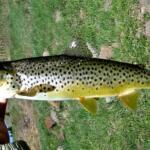
The undisputed kings of the autumn Yampa are the resident brown trout. As the days grow shorter, these fish become highly aggressive, packing on calories before their annual spawn. You will find them transitioning from their deep summer lies into shallower, gravel-bottomed tailouts and the edges of heavy seams.
🎣Nautrek
Private Beta
J
M
R
100+ anglers on the waitlist
The fishing network where your reputation matters.
Find trusted captains, join real trips with cost splitting, and build your Angler Rank. Your spots stay private — you decide who sees your intel.
While the upper stretches near Steamboat Springs are trout territory, the lower river—specifically west of Craig—holds some absolute water wolves. Most visiting anglers ignore the pike fishery, but the cooling water triggers a massive feeding response from these apex predators. Targeting the slower, frog-water sloughs and back-eddies can yield fish pushing the forty-inch mark.
Baitfish & Forage Report
The forage base is currently shifting. While the summer terrestrial bite is waning, the river is teeming with mottled sculpins and rusty crayfish, which are prime targets for big, predatory browns. On the macroinvertebrate front, Blue-Winged Olives (BWOs) are the dominant hatch, alongside midges. Matching these tiny naturals during overcast afternoons is critical for surface action.
TACTICAL STRATEGY
Where to Deploy
If you are hunting trophy trout, the Stagecoach Reservoir Tailwater is your primary theater of operations. Focus your efforts on the first mile below the dam. Do not waste time in the fastest riffles; instead, target the deep, slow pools and the transitional seams where fast water meets slow water. Specifically, look for the undercut banks along the Sarvis Creek confluence. For pike anglers, head to the state wildlife areas west of Hayden and Craig, focusing on the deep, slow outside bends where the current slows to a crawl.
Lure and Fly Selection
For the trout purists, a two-fly nymph rig is mandatory during the morning hours. Run a size #18 or #20 Tungsten Zebra Midge or a grey RS2 trailing behind a larger attractor like a size #16 Beadhead Pheasant Tail. When the cloud cover rolls in, switch to dry flies: a size #18 Parachute Adams or a specific BWO cripple pattern will fool rising fish.
If you are throwing hardware for pike in the lower stretches, a 4-inch to 6-inch articulated swimbait or a classic 3/4-ounce red-and-white spoon is highly effective. Fly anglers chasing big browns should strip size #4 or #6 Autumn Splendor streamers or black Slumpbusters right off the banks.
Color Palette
Water clarity is gin-clear in the upper reaches. Natural, muted tones are essential for nymphs—think olive, brown, and black. For streamers, olive and black provide excellent silhouettes against the riverbed. In the slightly more stained water of the lower river, flashy chartreuse or bright white can trigger reactionary strikes from pike.
Timing the Bite
The early bird does not necessarily get the worm in the fall. The prime feeding window for trout opens up around 10:00 AM as the sun warms the water, triggering the BWO hatches. The bite will remain steady until about 3:00 PM. If you are throwing large streamers for aggressive pre-spawn browns, the last hour of daylight is your golden window.
Pro Tip: When fishing the highly pressured Steamboat town stretch, drop your tippet size to 6X fluorocarbon for your trailing nymph. The fish here see hundreds of flies a week, and a flawless, invisible drift is the only way to trick them.
REGULATIONS SNAPSHOT
The Yampa River features complex, section-specific regulations designed to protect its diverse fishery. In the Stagecoach Tailwater (from the dam downstream for approximately 0.6 miles), it is strictly catch-and-release, and you may only use artificial flies and lures. No bait is permitted. Through the town of Steamboat Springs, similar artificial-only, catch-and-release rules apply to trout.
Conversely, in the lower stretches of the river, Colorado Parks and Wildlife encourages the harvest of non-native predators like Northern Pike and Smallmouth Bass to protect endangered native species. There are typically no bag or possession limits for these species in the designated lower river zones, but always consult the current local wildlife brochure for exact boundary markers before harvesting.
Pro Tip: Always wet your hands before handling trout, especially as the browns prepare for their spawn. Keep them in the water as much as possible to ensure these wild fish live to fight another season.
REGIONAL ALTERNATIVE
If a sudden localized storm blows out the Yampa, or if the pressure in the tailwater is simply too high, pack your gear and make the short drive north to the Elk River. This major tributary of the Yampa offers fantastic freestone fishing without the crowds.
Access the Elk River via the Christina State Wildlife Area just outside of Steamboat Springs. The target species here are energetic Rainbow and Brook trout. The water moves faster and is less technical than the Yampa tailwater. A dry-dropper setup featuring a buoyant size #12 Foam Chubby Chernobyl towing a size #16 Copper John is a highly effective search strategy for the Elk's pocket water and runs. The fish here are less selective but require accurate casting into tight seams behind boulders.
Tight lines!
Editor's Choice: Must-Have Gear
FISHINGSIR Next-Gen Waterproof Chest Waders
★★★★★4.4 (7,370+ reviews)
2-Ply Tech: Upgraded nylon with 2.5x higher density than standard fabrics.
100% Waterproof: Lab-approved intrusion resistance with taped visible seams.
Ultra-Lightweight: Designed for all-day comfort while hunting or fishing.
As an Amazon Associate I earn from qualifying purchases. #ad
🐟Yampa River
Species data is being updated for this location.
Check back soon for fishing forecasts.
Live Fishing Conditions: Tides, Weather & Waves
Get real‑time tides, marine weather, swell and solunar activity for each spot so you know exactly when conditions line up for your best chance at a bite.
🎣
Yampa River
Loading coordinates...
🌤️
WEATHER CONDITIONS
--°F
--°C
Loading...
🌡️
Feels Like--°F--°C
💧
Humidity--%
💨
Wind-- mph-- km/h
🧭
Direction--
📊
Pressure-- inHg-- hPa
☀️
UV Index--
🌊
MARINE CONDITIONS
🌊Wave Height
-- ft
-- m
Loading...
🧭Wave Direction
--°
Loading...
⏱️Wave Period
-- s
Loading...
📈Tide Status
-- ft
-- m
Loading...
🌙
LUNAR & SOLUNAR
🌕
Loading...
Illumination: --%
Major Period--:-- - --:----:-- - --:--
Minor Period--:-- - --:----:-- - --:--
🌅Sunrise--:--
🌇Sunset--:--
📅
24-HOUR FORECAST
Loading fishing conditions...
Fishing Spots Map
🎣
Book a Fishing Charter near Yampa River Fishing Report Today 🎣
Local guides & charters. Verified captains, instant booking, best price guaranteed.
There was an error loading the map. Please try refreshing the page.
Info
Local Access & Facilities
The Yampa River near Phippsburg and Steamboat Springs represents one of the quintessential high-country fisheries in the American West. This is not merely a river; it is a dynamic hydrologic system that transitions from the rugged, sage-covered isolation of the King Mountain area to the manicured, amenity-rich valleys surrounding "Ski Town USA." For the expert angler, this location offers a distinct duality: the raw, unpressured challenge of remote backcountry waters and the logistical ease of a world-class resort destination. The atmosphere here changes drastically with elevation, shifting from the red dirt and pinyon-juniper of the lower basins to the aspen-lined alpine meadows that feed the system.
While the summer months draw fly fishermen seeking native trout in the cool flows, the local infrastructure reveals a year-round dedication to the sport, with a surprising emphasis on hard-water angling. The presence of specialized outfitters like Steamboat Ice Fishing Charters indicates that this fishery remains productive long after the snow flies. Whether you are targeting trout on the fly in the riffles or setting up for a technical ice fishing session near the reservoirs, the Yampa demands respect for its altitude and its rapidly changing weather patterns.
The topography here is defined by the Flat Tops Wilderness and the imposing elk herds that roam the Emerald Mountain corridor. This is a fishery where biological rhythms dictate access as much as the water levels do. Seasoned captains know that success on the Yampa requires navigating a complex patchwork of public lands, seasonal wildlife closures, and variable road conditions. It is a place where the scenery—dominated by Mt. Werner and Sleeping Giant Mountain—is as much a draw as the catch itself.
Access & Getting There
Reaching the prime fishing grounds along the Yampa River and its surrounding tributaries requires a strategic approach to navigation, particularly regarding vehicle capabilities. The primary artery for the area is Highway 131, which connects the interstate corridor to the more remote access points near Phippsburg and Oak Creek. While the main highways are well-maintained, the final miles to specific trailheads often involve traversing Routt County roads that can degrade quickly. For those heading toward the remote King Mountain area, expect rough travel conditions. The roads here are often unmaintained and rugged; a high-clearance vehicle is not just a recommendation, it is a necessity for reaching trailheads like King Creek or Stifel Creek.
💡 Captain's Tip: Winter Road Realities
Ripple Creek Pass on the Flat Tops Trail Scenic Byway is a critical artery in summer but is not plowed in winter. Once the snow sets in, this route transforms into a groomed trail strictly for snowmobiles. Anglers planning late-season trips must verify their route to avoid a dead-end at the snow line.
For boaters, the primary launch facility is the Morrison Cove Boat Ramp. This facility offers trailer parking and is generally reliable, but users should be mindful of water levels which can fluctuate significantly in this managed system. The ramp is situated approximately 3.5 miles from the central river spots, making it a convenient hub. However, during peak summer weekends, the parking areas can reach capacity early. There are additional, unnamed launch points scattered along the water, but these are often unimproved and best suited for small craft like drift boats, rafts, or kayaks carried in truck beds.
Parking logistics vary wildly depending on your specific target zone. In the developed areas near Steamboat Springs, you have access to structured parking like the Steamboat Gondola Square Parking Garage, which is excellent for those basing operations out of town. Conversely, at backcountry access points like the Tepee Creek Trailhead, parking is essentially an unimproved patch of dirt. Security is generally high in this region, but standard precautions apply. When accessing the King Mountain Special Recreation Management Area (SRMA), be aware that legal public access is strictly limited to highlighted roads; deviating onto private ranch spurs is a quick way to encounter access disputes.
Yampa River Pre-Trip Checklist
Facilities & Amenities
The infrastructure surrounding the Yampa River is a study in contrasts, offering both high-end resort amenities and bare-bones backcountry utility. For anglers needing gear, the local shops are highly specialized. Freestone Anglers, located about 16 miles away in Steamboat Springs, is the premier destination for fly selection, leader material, and current hatch reports. Their location on Lincoln Avenue makes them an easy stop for those driving in from the north. For those targeting the hard-water season, Steamboat Ice Fishing Charters in Oak Creek (less than 3 miles from the water) serves as a critical hub for local ice conditions and specific bait requirements.
The charter fleet here is robust and reputable. Operators like Steamboat Fishing Adventures are known for their flexibility, with listed hours suggesting 24-hour availability—a boon for anglers looking to maximize the dawn or dusk bite. The presence of multiple guide services within a 5-mile radius, including those in Oak Creek, ensures that expert local knowledge is accessible. These captains specialize in navigating the specific challenges of the Yampa drainage, from reading the spring runoff to locating safe ice in January.
💡 Captain's Tip: Fuel & Supplies
While Steamboat Springs offers full services, the immediate access points near King Mountain and the river south of town have zero amenities. There are no fuel docks or convenience stores at the primitive ramps. top off your gas tank and cooler in Oak Creek or Phippsburg before committing to the dirt roads.
Lodging options cater to the "dawn patrol" angler. For those prioritizing proximity to the water, the Yamcolo Reservoir Campground and Cold Springs Campground offer the shortest commute to the fishing grounds, allowing you to be on the water before the sun hits the canyon floor. These sites are rustic, aligning with the wilderness vibe. On the other end of the spectrum, Chalet Val d'Isere and the Milner Park Community Cooperative provide more comfortable, albeit more distant, bases of operation. It is worth noting that the King Mountain area is designated for dispersed camping, offering a true wilderness experience for self-reliant anglers who prefer to camp right next to their vehicle.
Permits, Regulations & Fees
Fishing the Yampa River requires strict adherence to state and federal regulations, which are enforced to protect the delicate high-alpine ecosystem and the massive game herds that call this area home. The primary regulatory body is the State Fishing Agency, and all anglers must possess a valid Colorado fishing license. Beyond standard licensing, the most critical regulatory knowledge for this area involves seasonal closures designed to protect wildlife.
Emerald Mountain is a prime example of managed use. The area is divided into zones: Zone 1 allows for strenuous activities, while Zone 2 is managed strictly for nature experiences and prohibits mountain bikes. Crucially for the angler hiking in, a seasonal closure is in effect from December 1 to June 30 for the area south of Ridge Trail. This is to protect wintering and calving elk. Ignoring these closures not only risks heavy fines but threatens the biological integrity of the area that makes the fishery so special.
In the King Mountain SRMA, the regulations emphasize a "pristine and untouched" philosophy. Most routes here are designated for foot and horse travel only. This ban on motorized vehicles maintains the backcountry character of the fishery but requires anglers to be physically prepared for hike-in access. Respect for private property is paramount here; the patchwork of public BLM land and private ranchland is complex. "Kapu"—or the local equivalent of sacred respect for the land—means staying strictly on designated routes like Routt County Road 5 and Road 5A to avoid trespassing disputes.
Events & Seasonal Information
The Yampa River fishery is defined by extreme seasonal distinctiveness. The "rhythm" of the river is dictated by the snowpack. Spring runoff can turn the river into a torrent, making fishing challenging until flows stabilize in early summer. The prime window for wade fishing and floating typically opens as the water clears, usually in late June or July. This coincides with the reopening of the elk closure zones on Emerald Mountain, effectively unlocking vast stretches of terrain for the hiking angler.
💡 Captain's Tip: Wind Patterns
At elevations between 7,000 and 10,000 feet, weather is the primary dictator of success. The mornings are typically calm, but seasoned locals know that winds often pick up aggressively by 10:00 AM. Plan your technical dry fly fishing for the early morning glass and switch to sub-surface nymphs or streamers once the chop builds.
Winter does not shut down the fishery; it merely changes the mode. As the temperatures drop, the focus shifts to the nearby reservoirs and slower river sections for ice fishing. This is a culturally significant season here, with local communities in Oak Creek and Yampa embracing the hard water. While there are no major professional tournaments explicitly listed for this specific stretch in the data, the high density of guides suggests a competitive and active local scene throughout the frozen months.
Contact Information & Resources
For the most current information on road conditions and closures, direct contact with the managing agencies is essential. The Bureau of Land Management (BLM) Little Snake Field Office in Craig manages the Emerald Mountain area and can be reached at (970) 826-5000. For inquiries regarding the King Mountain area, contact the Colorado River Valley Field Office in Silt at (970) 876-9000. These offices are your best resource for real-time updates on fire bans, road grading schedules, and wildlife closures.
Safety in this region is a matter of self-reliance. Cell service can be spotty to non-existent in the canyons and behind ridges like King Mountain. Always carry a physical map and sufficient water, as local sources may be scarce during dry years. Emergency response times in the backcountry are measured in hours, not minutes.
For precise locations, boat ramp coordinates, and real-time weather conditions, consult the live dashboard and interactive maps below.
Our spot reports combine data-driven forecasts with curated local information. The forecast is generated by our proprietary Fishing Score algorithm (0–100%), which analyzes real-time data from Open-Meteo API, validated against NOAA CO-OPS tide gauges and USGS water-monitoring stations. The model weights tide dynamics (35%), wave energy (25%), wind patterns (20%) and time of day (20%)—factors shown to influence fish feeding behavior through marine-biology research and decades of charter log data.
Access, facilities and services information for each fishing spot is sourced from official datasets such as Recreation.gov (RIDB), state park & wildlife agencies, and geospatial providers like Google Maps. These sections undergo scheduled re-validation every 3–6 months to ensure that boat ramps, park access, contact details and local services remain accurate.
Narrative sections (catches, seasonal behavior, local tips) are synthesized from these data sources and refined following the Fishing Reports Today editorial guidelines, combining bibliographic research from ichthyology and oceanography with expert angler experience. Our team reviews reports on a regular basis, while the forecast model itself updates every 6 hours for real-time accuracy.
⚠️ Important: Always verify current local regulations, access restrictions and weather conditions before fishing. These reports are intended as a planning aid, not a guarantee of catches or safety. When in doubt, contact local authorities or park managers listed on the page.
To provide the best experiences, we use technologies like cookies to store and/or access device information. Consenting to these technologies will allow us to process data such as browsing behavior or unique IDs on this site. Not consenting or withdrawing consent, may adversely affect certain features and functions.
Functional Always active
The technical storage or access is strictly necessary for the legitimate purpose of enabling the use of a specific service explicitly requested by the subscriber or user, or for the sole purpose of carrying out the transmission of a communication over an electronic communications network.
Preferences
The technical storage or access is necessary for the legitimate purpose of storing preferences that are not requested by the subscriber or user.
Statistics
The technical storage or access that is used exclusively for statistical purposes.The technical storage or access that is used exclusively for anonymous statistical purposes. Without a subpoena, voluntary compliance on the part of your Internet Service Provider, or additional records from a third party, information stored or retrieved for this purpose alone cannot usually be used to identify you.
Marketing & Affiliates
The technical storage or access is required to create user profiles to send advertising, or to track the user on a website or across several websites for similar marketing purposes, including affiliate tracking for products recommended in our reports.




Leave a Reply