Port Glasgow Fishing Report: Fall Transition on Sodus Bay
1. GO/NO-GO STATUS
Verdict: CAUTION - WEATHER DEPENDENT
As we push deep into the autumn transition, the fishing conditions across the southern end of Sodus Bay near Port Glasgow are highly dynamic. The current status is a heavily weather-dependent CAUTION. While the protected, shallower waters near the Port Glasgow launch remain highly fishable and productive, the broader expanse of Sodus Bay and its connection to Lake Ontario are currently subject to fierce, unpredictable autumn gales. Water temperatures are rapidly dropping into the mid-to-low 50s, a critical threshold that triggers aggressive feeding windows for resident predators but also severely increases the risk of cold-water shock for boaters.
Wind direction is your most critical variable right now. Strong northerly or northwesterly winds will push heavy chop and rolling swells deep into the bay, turning small vessel navigation into a treacherous endeavor. If the forecast calls for winds exceeding 15 knots, limit your excursions to the heavily protected southern coves. Always wear a properly fitted, Coast Guard-approved PFD, verify the marine forecast before leaving the dock, and ensure your vessel's bilge and communication systems are in top working order.
🎣Nautrek
Private Beta
J
M
R
100+ anglers on the waitlist
The fishing network where your reputation matters.
Find trusted captains, join real trips with cost splitting, and build your Angler Rank. Your spots stay private — you decide who sees your intel.
The rapidly cooling water column has officially sparked the annual fall feedbag. Yellow Perch are the main event right now, abandoning their scattered summer patterns to school up tightly in the deeper basins and along the remaining green weed edges. These schools are massive and highly competitive. Simultaneously, Northern Pike are aggressively ambushing prey near the dying vegetation, bulking up their fat reserves before the ice arrives. The weedline die-off is concentrating the pike into predictable ambush lanes.
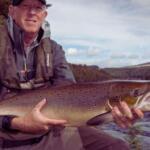
While the vast majority of local anglers are entirely focused on the bay's panfish and resident toothy predators, mature Brown Trout are beginning to stage near tributary mouths. These fish are pushing into the bay from the main lake, seeking out the cooler inflows of the local creeks. These brutes are highly aggressive, incredibly strong, and often entirely overlooked by the standard bay angler throwing small jigs. Targeting them requires upsized gear, but the reward is a trophy-class fish.
Baitfish Report:
The primary forage base driving the current bite consists of migrating emerald shiners and juvenile gizzard shad. The bait is actively moving from the shallow, cooling flats toward the more stable 10-15 foot drop-offs and channel edges. You will mark massive bait balls on your electronics suspended just off the bottom. Match your presentations to silver, pearl white, and subtle blue profiles to perfectly mimic this abundant, silvery forage.
3. TACTICAL STRATEGY
Where to Find the Fish
Launch your vessel at the Port Glasgow access point and immediately focus your attention on the steep 8-12 foot drop-offs along the eastern shore of the bay. The remaining healthy, green cabbage weedlines near Third Creek and the deeper navigational channels are holding the highest concentrations of active fish. The dying weeds deplete oxygen, so finding the remaining green stalks is absolutely paramount. For the staging Brown Trout, position your boat near the deeper cuts where the local creek mouths spill into the bay, focusing specifically on the 12-18 foot transition zones where the current creates a natural feeding seam.
Gear and Presentation
Lure: For the schooling perch, vertical presentations are dominating. Tie on a #5 Rapala Jigging Rap or a 1/8oz tungsten teardrop jig. For the aggressive pike and staging browns, you need to move water. Upsize to a 4.5-inch Keitech Swing Impact FAT swimbait rigged on a 3/8oz to 1/2oz swimbait head, or throw a deep-diving jerkbait.
Color: The water clarity in the southern bay is currently moderate to clear. Natural presentations are outperforming gaudy colors. Use "Glow Tiger" or metallic silver/blue for the Jigging Raps to mimic the emerald shiners. For swimbaits, "Silver Flash Minnow" or "Pro Blue Red Pearl" are generating violent strikes.
Bait: If you prefer to soak live bait, rig lively emerald shiners on a slip bobber setup for perch, setting your bait exactly 18 to 24 inches off the bottom. For trophy pike, suspend a large golden shiner or a legal-sized sucker under a heavy float right on the outer edge of the weedline.
Timing: The golden hours of dawn and dusk are producing the most aggressive and consistent strikes. However, pay close attention to the barometer; if a sharp low-pressure system is moving in, the midday bite can become explosive as fish sense the changing weather.
Pro Tip:When vertical jigging for perch in the deeper mud basins, intentionally pound your heavy tungsten jig into the bottom 3 to 4 times before lifting it a foot into the water column. The resulting silt cloud perfectly mimics a feeding or fleeing baitfish, drawing curious schools of jumbo perch in from a significant distance.
Pro Tip:For fall pike, do not be afraid to speed up your retrieve. As the water cools, many anglers slow down too much. A fast, erratic retrieve with a jerkbait triggers violent reaction strikes from pike that are looking to maximize their caloric intake with a single, large meal.
4. REGULATIONS SNAPSHOT
Species
Size Limit
Bag Limit
Season Status
Yellow Perch
No minimum size
50 per day
Open year-round
Northern Pike
22 inches minimum
5 per day
Open (Closes March 15)
Brown Trout
15 inches minimum
3 per day (in combination with other trout/salmon)
Open year-round in the bay
Walleye
15 inches minimum
5 per day
Open (Closes March 15)
Always verify current local guidelines with the Department of Environmental Conservation before harvesting fish, as emergency regulations can alter standard limits.
5. REGIONAL ALTERNATIVE
If the main body of Sodus Bay is blown out by heavy north or northwest winds, making the water unfishable or unsafe, do not cancel your trip. Pack up your gear and make the short drive west to Irondequoit Bay. The steep, high-sided banks of Irondequoit offer significantly better wind protection during brutal autumn gales.
Launch at the southern end near the Empire Boulevard access and target the deep 25-30 foot holes for schooling perch and the occasional walleye. Because you are out of the wind, boat control is much easier. A simple drop-shot rig tipped with a live minnow, or a 1/4oz metallic blade bait snapped aggressively off the bottom, will keep your rods bent and your livewell full while safely keeping you out of the dangerous open-water chop.
Tight lines!
Editor's Choice: Must-Have Gear
FISHINGSIR Next-Gen Waterproof Chest Waders
★★★★★4.4 (7,370+ reviews)
2-Ply Tech: Upgraded nylon with 2.5x higher density than standard fabrics.
100% Waterproof: Lab-approved intrusion resistance with taped visible seams.
Ultra-Lightweight: Designed for all-day comfort while hunting or fishing.
As an Amazon Associate I earn from qualifying purchases. #ad
Loading forecast...
Live Fishing Conditions: Tides, Weather & Waves
Get real‑time tides, marine weather, swell and solunar activity for each spot so you know exactly when conditions line up for your best chance at a bite.
🎣
Port Glasgow
Loading coordinates...
🌤️
WEATHER CONDITIONS
--°F
--°C
Loading...
🌡️
Feels Like--°F--°C
💧
Humidity--%
💨
Wind-- mph-- km/h
🧭
Direction--
📊
Pressure-- inHg-- hPa
☀️
UV Index--
🌊
MARINE CONDITIONS
🌊Wave Height
-- ft
-- m
Loading...
🧭Wave Direction
--°
Loading...
⏱️Wave Period
-- s
Loading...
📈Tide Status
-- ft
-- m
Loading...
🌙
LUNAR & SOLUNAR
🌕
Loading...
Illumination: --%
Major Period--:-- - --:----:-- - --:--
Minor Period--:-- - --:----:-- - --:--
🌅Sunrise--:--
🌇Sunset--:--
📅
24-HOUR FORECAST
Loading fishing conditions...
Fishing Spots Map
My location
Loading map...
Unable to load map
There was an error loading the map. Please try refreshing the page.
Info
Local Access & Facilities
Port Glasgow offers a distinct angling experience defined by its industrial heritage and its strategic position on the southern bank of the River Clyde estuary. Unlike the pristine, manicured marinas found elsewhere, this fishery is characterized by deep channels, working water, and a rugged, historic atmosphere. Seasoned skippers appreciate this area for its direct access to the upper Firth of Clyde, where the water transitions from the brackish river flow to the salinity of the open sea. The bottom topography here is a mix of dredged shipping channels and natural mudflats, creating diverse holding grounds for both resident and migratory species.
The atmosphere is strictly utilitarian; this is a place for serious boat handling and technical fishing rather than leisure cruising. The backdrop is dominated by the remnants of the shipbuilding industry, providing structure that often holds fish but requires careful navigation. For the expert angler, the appeal lies in the challenge of the currents and the ability to intercept fish moving between the deep Atlantic and the inner river systems. While the shoreline offers access, the true potential of this fishery is unlocked by boat, allowing captains to work the edges of the navigation channels where the currents condense bait.
Primary targets in this region typically include robust groundfish and seasonal migratory runs that utilize the Clyde's nutrient-rich waters. The presence of nearby deep-water marinas and commercial traffic suggests a fishery that remains active year-round, though conditions can turn harsh quickly. Anglers arriving here should be prepared for a fishery that demands respect for the tides and an understanding of heavy maritime traffic regulations.
Access & Getting There
Reaching Port Glasgow requires navigating the busy arterial routes of the Greater Glasgow area. The primary approach is typically via the M8 and A8 highways, which parallel the southern coast of the Clyde. Traffic congestion is a significant factor here; the morning rush hour can severely impact travel times, so seasoned locals plan their "dawn patrol" launches to beat the commuter traffic that builds up around the airport and the Kingston Bridge. The final approach to the water takes you through urban and industrial zones where roads can be narrow, requiring heightened awareness when towing larger vessels.
For boat owners, the launch situation requires strategic planning. The data indicates a boat launch approximately 3,025 feet from the central spot, with additional ramps located 3.5 and 3.8 miles away. These facilities are often unmanned and may lack the polished infrastructure of a dedicated marina. It is critical to inspect the ramp conditions before backing down, particularly during low tide when algae buildup on the lower sections can create hazardous traction issues for tow vehicles. The proximity of the shipping channel means that wake from passing commercial vessels can surge up the ramps, so securing the boat immediately upon launching is mandatory.
💡 Captain's Tip: Trailer Management
When seeking parking or services, avoid "Car Blitz Car Valeting Service" if you are towing. Local intelligence specifically notes to avoid with trailers, likely due to tight turning radiuses or height restrictions that could trap a rig.
Parking logistics in this area are fragmented. While some launch sites may offer trailer parking, capacity is often limited. For anglers requiring long-term parking or overflow options, Kilpatrick Braes Car Park is located roughly 9.2 miles away and operates 24 hours a day. Similarly, Direct Parking offers 24-hour access about 10.6 miles from the fishing grounds. These locations are viable contingencies if the immediate waterside parking is at capacity. However, the distance necessitates having a support driver or a shuttle plan if you intend to leave a vehicle and trailer there while fishing out of Port Glasgow.
Weather contingencies are paramount in the Clyde estuary. The geography funnels wind, and a strong westerly breeze can oppose the outgoing tide to create steep, confused chop in the main channel. When the wind forecast exceeds 15 knots from the west or southwest, launching and retrieving can become difficult at exposed ramps. In such conditions, experienced captains often look for launch sites further down the coast that offer protection from the prevailing fetch, or they time their retrieval for slack water to minimize the surge at the ramp.
Port Glasgow Pre-Trip Checklist
Facilities & Amenities
The infrastructure surrounding Port Glasgow is functional rather than luxurious, catering to a mix of local residents and dedicated anglers. The area is well-served by specialized independent shops rather than big-box marine stores. For tackle and bait, Tickers Tackle in Helensburgh (4.9 miles away) is a primary resource. It opens at 9:00 AM, which may be late for the earliest launchers, but it serves as a reliable hub for local intelligence and terminal tackle. Another excellent option is JB's Nets in Alexandria (5.9 miles away), known for a 5-star rating and specific inventory for the region's fisheries.
One of the most valuable resources for the nocturnal angler or the late-returning boat is Skelmorlie Fishery. Located 8.6 miles from the spot, this facility operates from 8:00 AM until 11:00 PM, seven days a week. This extended operating window is rare and provides a crucial safety net for picking up fresh bait the night before a trip or replenishing supplies after a long day on the water. Conversely, anglers should be aware that fuel docks are not explicitly listed in the immediate ramp vicinity; it is standard practice to fuel vessels on the trailer at highway gas stations before entering the launch zones.
💡 Captain's Tip: Charter Strategy
For those looking to learn the local waters before taking their own helm, Clyde Charters operates out of Kip Marina, just 7.3 miles away. Their 5-star rating suggests they are the premier operation for heavy-tackle guidance in this sector of the Clyde.
The charter fleet in the wider region is robust, with operators stationed at key marinas to access the best grounds. Sea Clyde and Saltire Sailing are based out of Largs Yacht Haven, approximately 12.8 miles away. While this is a further drive, Largs offers full marina facilities, including heavy travel lifts and extensive chandleries, making it a critical logistical hub for major repairs or parts that cannot be sourced in Port Glasgow proper.
Key Facility Data
Facility Name
Type
Distance
Key Features
Tickers Tackle
Tackle Shop
4.9 miles
Opens 9 AM, High Rating (4.9)
Skelmorlie Fishery
Bait/Fishery
8.6 miles
Open until 11:00 PM
Clyde Charters
Charter
7.3 miles
Based in Kip Marina
Kilpatrick Braes
Parking
9.2 miles
Open 24 Hours
South Whittlieburn Farm
Lodging
9.5 miles
Open 24 Hours, High Rating
For visiting anglers requiring accommodation, the options lean towards self-catering parks and farm stays that accommodate the erratic schedule of fishing trips. South Whittlieburn Farm (9.5 miles) and Auchengower Park (8.8 miles) are highly rated. Crucially, South Whittlieburn Farm is listed as open 24 hours, facilitating late check-ins for anglers arriving after an evening tide. Firth View Caravan Park in Millport is further out (16.3 miles) but offers a distinct island atmosphere for those willing to travel further.
Permits, Regulations & Fees
Fishing in the Clyde estuary and its tributaries is governed by a complex overlay of national marine regulations and local bylaws. Conservation is the driving force behind these rules, particularly regarding migratory species that pass through the Port Glasgow area to reach spawning grounds upriver. While the provided data indicates that fishing regulations are managed by the "State Fishing Agency," in this specific UK context, this refers to the local Scottish marine authorities and fishery boards. It is imperative to carry the correct permits, as enforcement patrols are common in these visible waterways.
There are no specific "fees required" flags for the boat ramps in the immediate dataset, but seasoned travelers know that "free" access often comes with time limits or residency restrictions not always posted online. Always carry local currency (pounds) for potential parking meters or honor boxes at smaller, less formalized access points. Furthermore, access to the shoreline for fishing is generally permissive in Scotland, but this does not extend to driving vehicles across private land or obstructing commercial harbor operations. Respect for "Kapu" (in the Hawaiian sense of sacred boundaries, or locally "Private" and "Keep Out" operational zones) is critical here; the industrial nature of Port Glasgow means many waterfront areas are active work sites where unauthorized entry is a safety violation.
💡 Captain's Tip: Safety & Zones
The shipping channel is active 24/7. Never anchor in the main channel. Keep a listening watch on the local VTS (Vessel Traffic Service) channel to stay aware of large commercial movements, as big ships cannot maneuver to avoid small fishing craft.
Events & Seasonal Information
The rhythm of the fishery at Port Glasgow is dictated by the seasonal movements of fish into the Clyde and the prevailing Atlantic weather systems. Winter brings shorter days and often challenging conditions, with strong winds funneled up the firth. However, these colder months can be productive for specific bottom-dwelling species. Summer offers long daylight hours—essential for the "after work" angler—allowing for trips that extend well past 9:00 PM while still having natural light.
The 24-hour access at parking locations like Kilpatrick Braes and Direct Parking supports night fishing operations, which are popular during the summer months when certain species move into the shallows under the cover of darkness. While no specific major tournaments are listed for this immediate spot, the presence of high-caliber charter fleets in nearby Largs and Kip Marina suggests a competitive scene further down the coast. Anglers should monitor local forums for club competitions that often launch from these larger marinas but fish the waters adjacent to Port Glasgow.
Contact Information & Resources
For safe and legal operations in these waters, self-reliance is key. There is no dedicated visitor center listed for the immediate spot, meaning anglers must rely on their own preparation. Ardentinny Forest (11.8 miles away) lists a contact number (0300 067 6600), which may serve as a resource for land-based access inquiries on the opposite bank. For maritime emergencies, the Coastguard is the primary point of contact.
Always file a float plan with a shore contact, as cell reception can be spotty in the shadow of the steep hills lining the firth. For precise locations of the boat ramps, real-time wind conditions, and detailed bathymetry of the shipping channels, consult the live dashboard and interactive maps below.
Our spot reports combine data-driven forecasts with curated local information. The forecast is generated by our proprietary Fishing Score algorithm (0–100%), which analyzes real-time data from Open-Meteo API, validated against NOAA CO-OPS tide gauges and USGS water-monitoring stations. The model weights tide dynamics (35%), wave energy (25%), wind patterns (20%) and time of day (20%)—factors shown to influence fish feeding behavior through marine-biology research and decades of charter log data.
Access, facilities and services information for each fishing spot is sourced from official datasets such as Recreation.gov (RIDB), state park & wildlife agencies, and geospatial providers like Google Maps. These sections undergo scheduled re-validation every 3–6 months to ensure that boat ramps, park access, contact details and local services remain accurate.
Narrative sections (catches, seasonal behavior, local tips) are synthesized from these data sources and refined following the Fishing Reports Today editorial guidelines, combining bibliographic research from ichthyology and oceanography with expert angler experience. Our team reviews reports on a regular basis, while the forecast model itself updates every 6 hours for real-time accuracy.
⚠️ Important: Always verify current local regulations, access restrictions and weather conditions before fishing. These reports are intended as a planning aid, not a guarantee of catches or safety. When in doubt, contact local authorities or park managers listed on the page.
To provide the best experiences, we use technologies like cookies to store and/or access device information. Consenting to these technologies will allow us to process data such as browsing behavior or unique IDs on this site. Not consenting or withdrawing consent, may adversely affect certain features and functions.
Functional Always active
The technical storage or access is strictly necessary for the legitimate purpose of enabling the use of a specific service explicitly requested by the subscriber or user, or for the sole purpose of carrying out the transmission of a communication over an electronic communications network.
Preferences
The technical storage or access is necessary for the legitimate purpose of storing preferences that are not requested by the subscriber or user.
Statistics
The technical storage or access that is used exclusively for statistical purposes.The technical storage or access that is used exclusively for anonymous statistical purposes. Without a subpoena, voluntary compliance on the part of your Internet Service Provider, or additional records from a third party, information stored or retrieved for this purpose alone cannot usually be used to identify you.
Marketing & Affiliates
The technical storage or access is required to create user profiles to send advertising, or to track the user on a website or across several websites for similar marketing purposes, including affiliate tracking for products recommended in our reports.


Leave a Reply