


Dowling Park Indiana Pre-Trip Checklist
Local Access & Facilities
Situated in Hammond, Indiana, Dowling Park serves as a strategic terrestrial anchor for anglers targeting the southern basin of Lake Michigan. This area represents a unique convergence where the industrial might of the Rust Belt meets the ancient, wind-shaped topography of the Indiana Dunes National Park. For the experienced angler, this location offers a gateway to a fishery defined by its "rich mosaic of habitats," ranging from shifting sand shoals to the deep, cold waters of the lake.
The atmosphere here is distinctly functional and rugged. While the park itself provides a suburban green space, the surrounding fishery is influenced by the massive freshwater currents and the heavy maritime traffic of the nearby industrial harbors. Seasoned captains know that the southern shore can produce exceptional opportunities, but it requires navigating a landscape that is as much concrete and steel as it is dune grass and water. The primary draw here involves the seasonal movements of game fish patrolling the Indiana coastline, accessible via nearby ramps and shore points.
Unlike the manicured resort marinas found further north, the Hammond and Gary waterfronts demand a level of logistical self-reliance. The proximity to Pullman National Historical Park and the vast 15-mile stretch of the Indiana Dunes means that while the water is the main attraction, the surrounding land is steeped in a history of labor, industry, and conservation. Anglers launching here are fishing in the shadow of American industrial history.
💡 Captain's Tip: Wind Awareness
The southern shore of Lake Michigan is notoriously susceptible to north winds. Because the "fetch" runs the entire length of the lake, even moderate northerly breezes can stack up dangerous waves quickly against the Indiana shoals. Always check the marine forecast before towing to the ramp.
Access & Getting There
Reaching the fishing grounds near Dowling Park requires navigating the dense transportation web of the Chicago-Indiana border. The primary arterial routes include Interstate 94, the Indiana Toll Road (I-80/90), and U.S. Highway 12. For those towing heavy rigs, U.S. Highway 20 and Indiana State Road 49 provide critical surface street connections. Traffic in this corridor is notoriously heavy; seasoned locals know to time their transit to avoid the commuter bottlenecks that plague the Borman Expressway (I-80/94) during peak hours.
Official boat access is available through the Indiana Dunes National Park infrastructure, roughly 19 miles east, though closer municipal ramps exist within a 5 to 6-mile radius of Dowling Park. The launch facilities in this region vary from small municipal ramps to larger harbor accesses. When utilizing the National Park access points, be aware that these areas are multi-use, often shared with kayakers and beachgoers during the summer months. The ramps can be slick, and water levels fluctuate with the lake's cycles, so visual inspection of the end of the ramp is prudent before backing down.
Parking logistics require a strategic approach. While data indicates extensive parking facilities like 311 South Wacker Parking and Airways Parking, these are located over 20 miles away in Chicago and are not practical for local Hammond access. Anglers should prioritize parking at the designated boat launch areas or the nearby Indiana Dunes Visitor Center for orientation. Security at remote lots can be variable; ensure no valuables are left visible in the cab while you are out on the water.
💡 Captain's Tip: Trailer Traffic
The I-94 and I-80/90 corridors are major trucking routes. When towing a boat, stay in the right lanes and be prepared for sudden slowdowns near the Hammond/Gary exits. The "Dawn Patrol" launch time isn't just for fishing success; it's essential for avoiding the morning gridlock.
Facilities & Amenities
The infrastructure surrounding Dowling Park caters to a mix of serious outdoor enthusiasts and local residents. For bait and tackle, the standout option for early risers is Slez's Bait and Tackle in Lake Station, approximately 11 miles away. Crucially for the morning bite, they open at 5:00 AM daily, allowing captains to stock up on live bait and terminal tackle before the sun breaks the horizon. Other options like The Anglers Outlet and Bridgeport Bait And Tackle are reliable but located further afield (16-20 miles).
If you are looking to book a guided trip, the local fleet is anchored by operators who understand the nuances of the southern basin. Brother Nature Charter Fishing operates out of the Public Marina in Portage, roughly 14.9 miles from the park. They maintain a 5-star rating and offer 24-hour availability, catering to both early morning salmon runs and night fishing excursions. For those situated closer to the city, Storm Warning Chicago Fishing Charters provides access to the Illinois side of the fishery.
It is important to note a gap in immediate amenities: while there are extensive accommodations in the wider region, immediate "fisherman-friendly" lodging next to the ramps in Hammond is limited. Camping is available at the Dunbar Group Campsite or Nasaki Youth Camp Area, but these are located significantly to the east within the dunes area. Plan your fuel stops along the major highways (US-12 or US-20) before reaching the water, as dockside fuel availability can be inconsistent depending on the specific harbor you choose.
| Facility Name | Type | Distance | Key Feature |
|---|---|---|---|
| Slez's Bait and Tackle | Bait Shop | 11.3 mi | Opens 5:00 AM Daily |
| Brother Nature Charter Fishing | Charter | 14.9 mi | Located in Portage, IN |
| West Beach Picnic Shelter | Accommodation | 13.1 mi | Close to Dunes Access |
| Paul H. Douglas Center | Education/Facility | 10.1 mi | Environmental Education |
Permits, Regulations & Fees
Fishing waters around Dowling Park and the Indiana Dunes falls under the jurisdiction of the State Fishing Agency. Anglers must possess a valid Indiana fishing license and appropriate stamps for trout and salmon if targeting those species. Enforcement is active, particularly near the National Park boundaries and harbor mouths, to ensure conservation of the fishery.
Special attention must be paid when fishing near or accessing via Indiana Dunes National Park. While fishing is an allowed activity, specific zones may have restrictions to protect swimming beaches or sensitive dune habitats. The park spans 15 miles of coast and 16,000 acres; respecting the "Kapu" (restrictions) regarding dune preservation is critical. Walking on protected dune vegetation is strictly prohibited to prevent erosion of the landscape that has taken millennia to form.
Additionally, the Pullman National Historical Park nearby represents a protected cultural site. While primarily a historic district, visitors transit through these areas. Be mindful that regulations here focus on preserving the urban design and architecture of the planned industrial community. Always check local signage at the specific boat ramp you utilize, as municipal launch fees are common and often require cash or a specific local permit.
💡 Captain's Tip: Border Waters
You are fishing very close to the Indiana/Illinois state line. Ensure you know exactly where the boundary lies on your GPS, or carry licenses for both states if you plan to drift across the border, as marine patrols strictly enforce jurisdictional lines.
Events & Seasonal Information
The biological clock of this fishery is driven by the seasonal temperature shifts of Lake Michigan. In the summer, the action often moves offshore to deeper, cooler water, while shoulder seasons bring fish closer to the harbors and shorelines. The Paul H. Douglas Center for Environmental Education runs summer hours from 9:00 AM to 4:00 PM, signaling the peak visitor season. During winter, facilities often reduce hours or close on Mondays and Tuesdays.
While specific fishing tournaments vary by year, the region hosts various events centered around the natural heritage of the dunes, such as the "Art in the Park" series. For the angler, the most critical "events" are the seasonal migrations of baitfish which draw predators into the southern basin. The transition from the harsh winter winds to the calmer summer patterns dictates the accessibility of the lake from these southern ramps.
Contact Information & Resources
For the most current information regarding launch status, weather closures, and park access, direct contact with the managing agencies is recommended. Self-reliance is key, but knowing who to call in an emergency is vital.
- Indiana Dunes National Park: (219) 395-1882
- Pullman National Historical Park: (773) 928-7257
- Paul H. Douglas Center: (219) 395-1824
- Slez's Bait and Tackle: (219) 588-5929
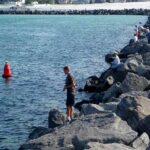
Always wear appropriate footwear for slippery ramps and rocky shorelines, and use sun protection even on overcast days. For precise locations, real-time wind conditions, and detailed bathymetry, consult the live dashboard and interactive maps below.



Leave a Reply