Burns Harbor Fall Fishing Report: Transition Tactics & Staging Kings
1. GO/NO-GO STATUS
Verdict: CAUTION
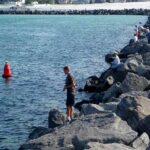
As we push deeper into the fall transition, Burns Harbor is producing solid bites, but shore and pier anglers need to exercise extreme caution. High water levels and persistent wave action have resulted in significant algae growth on the concrete piers and breakwalls, making them incredibly slick. Waves are occasionally breaking over the lower sections of the piers, so spiked cleats and a wearable PFD are mandatory if you are venturing out on the concrete. For boaters, monitor the Lake Michigan marine forecast closely, as brisk autumn winds can whip up dangerous swells in a matter of hours. If the wind is blowing hard out of the north or northwest, keep your vessel inside the breakwalls or stay home.
2. SPECIES INTEL
Primary Target: Lake Trout and Staging Salmon
Fall means migration time on Lake Michigan. Lake trout are currently showing up in excellent numbers around the Burns Harbor area, utilizing the cooler water and structural advantages of the port. Meanwhile, staging Chinook and Coho salmon are beginning to patrol the harbor mouths and industrial discharges, fattening up on baitfish before pushing toward their spawning tributaries.
🎣Nautrek
Private Beta
J
M
R
100+ anglers on the waitlist
The fishing network where your reputation matters.
Find trusted captains, join real trips with cost splitting, and build your Angler Rank. Your spots stay private — you decide who sees your intel.
While the salmonid run gets all the glory this time of year, the smallmouth bass fishing around the industrial riprap is phenomenal and largely ignored. These bronze bruisers are strapping on the feedbag before water temps plummet, holding tight to the structural gaps between the old crumbling seawalls and the newer reinforced shoreline.
Baitfish Report
Alewives remain the primary forage for the pelagic predators, while gobies are the main course for the smallmouth bass and bottom-dwelling lake trout. Match your presentations to these two distinct profiles depending on where in the water column you are targeting.
3. TACTICAL STRATEGY
Where to Find Them
For the salmon and lake trout, focus your efforts around the Port of Indiana's submerged reef and the main harbor entrances. Boaters should target the temperature breaks and current seams created by the industrial warm-water discharges. If you are chasing smallmouth, target the crumbling pilings and riprap along the port entrances. Look for the specific gaps between the old wooden pilings and the newer stone reinforcements—bass use these as ambush points.
Lure Selection & Color
Salmon/Lake Trout: Casting heavy spoons and crankbaits is highly effective right now. Opt for glow spoons in green or blue patterns, especially anything with contrasting dots. If you are trolling, a white slick flasher paired with a "Pickled Sunshine" fly has been absolutely on fire. Green-patterned plugs are also taking their fair share of staging kings.
Smallmouth Bass: Keep it simple and mimic the gobies. Dragging a 3/8oz tube jig is deadly. The best color pattern currently is classic watermelon with copper or gold flake.
Pro Tip:When casting spoons for lake trout from the walls, let the spoon flutter all the way to the bottom before beginning a rhythmic, sweeping retrieve. Many strikes occur on that initial erratic fall.
Bait & Rigging
If you prefer soaking bait, target the harbor floor for lake trout and late-season whitefish. Use a bottom slip-sinker rig loaded with single cured salmon eggs, small chunks of shrimp, fresh skein, or live perch minnows. Keep your leaders relatively short (18-24 inches) to prevent snagging in the rocks.
Timing the Bite
The bite is highly dependent on light penetration. The most consistent action is happening in the dark. Boaters are finding the best success leaving the dock by 5:00 AM to capitalize on the pre-dawn window, or waiting until the sun dips below the horizon in the evening. Mid-day fishing has been tough unless we get heavy cloud cover.
4. REGULATIONS SNAPSHOT
Before you hit the water, ensure you are fully compliant with Indiana Department of Natural Resources (DNR) regulations:
Licenses: All anglers 18 and older must possess a valid Indiana fishing license PLUS a Trout/Salmon stamp to target or possess those species.
Trout and Salmon: The aggregate daily bag limit for trout and salmon (Lake Trout, Coho, Chinook, Steelhead, Brown Trout) is 5 fish per angler.
Size Limits: The minimum size limit for trout and salmon on the Indiana waters of Lake Michigan is 14 inches.
Smallmouth Bass: Catch and release is highly encouraged this time of year to protect the localized harbor populations, but standard state limits apply if you choose to harvest.
5. REGIONAL ALTERNATIVE
If the wind is howling out of the north and the Burns Harbor main lake access is unfishable or too dangerous, pack up your gear and head east to Trail Creek in Michigan City. As the fall weather progresses, staging salmon will push into this tributary system, offering excellent river fishing opportunities that are completely protected from the big lake's wave action. Access the creek via the public parks or the DNR access sites. Downsize your gear and drift fresh spawn sacs or cast size 3 in-line spinners (silver blade/chartreuse body) into the deeper pools and current seams.
Pro Tip:When fishing Trail Creek after a heavy rain, focus strictly on the current seams near the bank where migrating fish slide up to avoid the heavy main-channel flow.
Tight lines!
Editor's Choice: Must-Have Gear
FISHINGSIR Next-Gen Waterproof Chest Waders
★★★★★4.4 (7,370+ reviews)
2-Ply Tech: Upgraded nylon with 2.5x higher density than standard fabrics.
100% Waterproof: Lab-approved intrusion resistance with taped visible seams.
Ultra-Lightweight: Designed for all-day comfort while hunting or fishing.
As an Amazon Associate I earn from qualifying purchases. #ad
Loading forecast...
Live Fishing Conditions: Tides, Weather & Waves
Get real‑time tides, marine weather, swell and solunar activity for each spot so you know exactly when conditions line up for your best chance at a bite.
🎣
Burns Harbor
Loading coordinates...
🌤️
WEATHER CONDITIONS
--°F
--°C
Loading...
🌡️
Feels Like--°F--°C
💧
Humidity--%
💨
Wind-- mph-- km/h
🧭
Direction--
📊
Pressure-- inHg-- hPa
☀️
UV Index--
🌊
MARINE CONDITIONS
🌊Wave Height
-- ft
-- m
Loading...
🧭Wave Direction
--°
Loading...
⏱️Wave Period
-- s
Loading...
📈Tide Status
-- ft
-- m
Loading...
🌙
LUNAR & SOLUNAR
🌕
Loading...
Illumination: --%
Major Period--:-- - --:----:-- - --:--
Minor Period--:-- - --:----:-- - --:--
🌅Sunrise--:--
🌇Sunset--:--
📅
24-HOUR FORECAST
Loading fishing conditions...
Fishing Spots Map
🎣
Book a Fishing Charter near Burns Harbor Fishing Report Today 🎣
Local guides & charters. Verified captains, instant booking, best price guaranteed.
There was an error loading the map. Please try refreshing the page.
Info
Local Access & Facilities
Burns Harbor sits at a fascinating intersection where heavy industry meets the raw, natural power of Lake Michigan. For the serious angler, this location offers a unique juxtaposition: the rugged, man-made structures of the port providing structure for baitfish, flanked by the pristine, rolling topography of the Indiana Dunes National Park. This isn't just a steel town; it is a gateway to the southern basin’s productive waters, where the lake’s might has influenced the coastline for millennia. The bottom topography here is a mix of shifting sandbars and dredged channels, requiring a skipper who pays close attention to their depth sounder.
The atmosphere here is distinctly "working coast." While you will find the serenity of the dunes and the quiet woodlands nearby, the harbor itself is a hub of activity. It lacks the manicured polish of a resort town, offering instead a gritty, authentic maritime vibe that appeals to seasoned captains. The water here can turn treacherous quickly when the north winds howl down the length of the lake, shaping the very land and leaving a rich mosaic of habitats along the 15 miles of Indiana coast.
Anglers launching here are typically targeting the migratory heavyweights of the Great Lakes. The proximity to the Portage Public Marina and the nutrient-rich waters circulating around the industrial breakwalls creates a dynamic fishery. Whether you are trolling deep for salmon or working the shoreline structure, Burns Harbor serves as a strategic launchpad for those looking to avoid the heavier recreational traffic found further west toward Chicago.
Access & Getting There
Reaching Burns Harbor is a logistical exercise in navigating one of the Midwest's busiest transportation corridors. The primary arteries are Interstate 94 and the Indiana Toll Road (Interstate 80/90). For those hauling heavy fiberglass, U.S. Highway 12 and U.S. Highway 20 offer alternative routes that run parallel to the lakeshore. Traffic congestion here is a reality, particularly during the morning rush when steel haulers are active. Seasoned locals know to time their arrival well before the commuter wave hits, aiming to be at the ramp while the highways are still moving freely.
The boat launch situation requires a tactical approach. While Burns Harbor is the anchor point, the primary recreational access is often found at the nearby Public Marina in Portage, just over 2 miles away. For those with kayaks or lighter skiffs, the Deep River Water Trail at Riverview Park (approximately 6.7 miles out) offers a quieter entry point. If you are towing a large vessel, be mindful that the industrial nature of the area means roads are built for trucks, but turning radiuses in smaller lots can be tight.
💡 Captain's Tip: Trailer Logistics
If you are hauling a large rig, utilize the dedicated truck and RV parking facilities on Melton Road. Unlike standard lots, these areas are designed for heavy turning and offer 24-hour access, allowing you to stage your rig safely if you arrive the night before a dawn patrol.
Parking is generally robust but varies drastically by season. The West Beach parking lot is a massive facility with 596 spots, including 20 dedicated spaces for buses or RVs. However, do not let the capacity fool you; on holiday weekends and during peak summer runs, this lot can fill to capacity by mid-morning. The Northeast Parking Ramp and Parking Lot #0 are available but are located over 12 miles away, making them impractical for boaters. Stick to the lots closer to the water and arrive early.
Burns Harbor Pre-Trip Checklist
Facilities & Amenities
The infrastructure around Burns Harbor caters heavily to the functional needs of boaters and tradesmen. You won't find boutique tackle shops on every corner, but the ones that exist are dialed in for serious fishing. Slez's Bait and Tackle, located about 6.5 miles away in Lake Station, is the primary hub for live bait and local intelligence. Crucially, they open at 5:00 AM, accommodating the early-rising fleet. For those needing specialized gear or cannabis products, PUFF Cannabis New Buffalo Dispensary is in the region but is a significant drive (23+ miles) and likely not part of your immediate fishing logistics.
Fuel and provisions are readily available for big rigs. The Pilot Flying J locations on Melton Road offer truck and RV parking with 24-hour service, which is essential for captains needing to refuel tow vehicles or grab ice at odd hours. Note that while there are restrooms at West Beach and the Chellberg Farm picnic areas, these are often seasonal. From mid-May through mid-October, facilities are fully operational, but off-season anglers should plan accordingly as potable water may be shut off to prevent freezing.
💡 Captain's Tip: Amenities Check
Before hitching up, verify the operational status of the fish cleaning stations. While some local ramps have them, the industrial nature of Burns Harbor means you should be prepared to bring coolers and ice to transport your catch home for processing.
For those looking to charter a vessel rather than trailer their own, Brother Nature Charter Fishing operates directly out of the Public Marina in Portage, practically in the backyard of Burns Harbor. They are a top-tier option for getting on the fish without the hassle of navigation. Further east, Fire Drill Charters runs out of Michigan City, offering another reputable option for Great Lakes adventures.
Facility Name
Type
Distance
Notes
Slez's Bait and Tackle
Bait & Tackle
6.5 miles
Opens 5:00 AM; Rated 4.8/5
Brother Nature Charter Fishing
Charter
2.2 miles
Located at Public Marina, Portage
Pilot Flying J (Melton Rd)
Parking/Fuel
1.7 miles
24-hour Truck/RV Parking available
West Beach Picnic Shelter
Accommodation
4.0 miles
Picnic tables, seasonal restrooms
Indiana Dunes State Park Campground
Camping
4.6 miles
Electric hookups, showers, 24-hour access
Permits, Regulations & Fees
Navigating the regulatory waters here is just as important as navigating the lake. Fishing within the jurisdiction of the Indiana Dunes National Park and the surrounding state waters is managed by the State Fishing Agency. A valid Indiana fishing license is non-negotiable. Because this area borders state lines and includes federal waters, ensure you are cognizant of the specific boundaries to avoid inadvertent violations.
Access to the National Park areas, including West Beach and the boat access points, generally requires an entrance pass. The Indiana Dunes Visitor Center on Indiana State Road 49 is your checkpoint for permits, brochures, and current regulation updates. Be aware of cancellation policies for reserved facilities; the park enforces a $10.00 service fee for modifications or cancellations, and late cancellations can result in forfeiting the entire use fee.
Cultural and environmental respect is paramount here. The dunes are a fragile ecosystem containing sensitive areas like Pinhook Bog and Cowles Bog. These are National Natural Landmarks. "Kapu" or sacred laws might be a Hawaiian concept, but the principle applies to the local conservation ethos: tread lightly. Do not trample the dune grass, and strictly adhere to designated trails and water access points to preserve this landscape for future generations.
Events & Seasonal Information
The rhythm of Burns Harbor is dictated by the seasons of Lake Michigan. Spring is a time of awakening, splashing the river banks of the Heron Rookery with colorful wildflowers. This is often when nearshore anglers target coho salmon and trout cruising the shallows. As summer sets in, the lake calms, and the "picture-perfect picnic settings" at West Beach become popular. This is prime boating season, but it brings heavy recreational traffic.
Fall transforms the landscape as maple trees at Chellberg Farm burst into red and gold. For the angler, this signals the return of mature salmon to the tributaries and harbors. The weather can turn quickly during this transition, with the lake becoming violent with little warning. Winter brings a stark beauty; the "scenic canvas of virgin white snow" invites cross-country skiing in the Glenwood Dunes, but for the boater, it means icing conditions and limited access. Always check the Indiana Dunes Visitor Center calendar for specific ranger-led programs or festivals that might impact traffic flow.
💡 Captain's Tip: Wind Awareness
Lake Michigan's might has influenced this land for millennia. When the forecast calls for strong northerly winds, the swell at the harbor mouth can become dangerous. Always verify the wave period and height before leaving the dock, regardless of how calm it looks inside the breakwall.
Contact Information & Resources
For immediate logistical support and emergency information, the Indiana Dunes National Park communications office is your primary contact at (219) 395-1882. They can provide real-time updates on ramp closures and park conditions. For historical context or visits to the nearby Pullman National Historical Park, contact 773-928-7257.
Safety is your responsibility. The lake is unforgiving, and conditions change rapidly. Always file a float plan and ensure your safety gear is rated for offshore conditions. For precise locations, real-time wind data, and detailed charts of the nearby spots, consult the live dashboard and interactive maps below.
Our spot reports combine data-driven forecasts with curated local information. The forecast is generated by our proprietary Fishing Score algorithm (0–100%), which analyzes real-time data from Open-Meteo API, validated against NOAA CO-OPS tide gauges and USGS water-monitoring stations. The model weights tide dynamics (35%), wave energy (25%), wind patterns (20%) and time of day (20%)—factors shown to influence fish feeding behavior through marine-biology research and decades of charter log data.
Access, facilities and services information for each fishing spot is sourced from official datasets such as Recreation.gov (RIDB), state park & wildlife agencies, and geospatial providers like Google Maps. These sections undergo scheduled re-validation every 3–6 months to ensure that boat ramps, park access, contact details and local services remain accurate.
Narrative sections (catches, seasonal behavior, local tips) are synthesized from these data sources and refined following the Fishing Reports Today editorial guidelines, combining bibliographic research from ichthyology and oceanography with expert angler experience. Our team reviews reports on a regular basis, while the forecast model itself updates every 6 hours for real-time accuracy.
⚠️ Important: Always verify current local regulations, access restrictions and weather conditions before fishing. These reports are intended as a planning aid, not a guarantee of catches or safety. When in doubt, contact local authorities or park managers listed on the page.
To provide the best experiences, we use technologies like cookies to store and/or access device information. Consenting to these technologies will allow us to process data such as browsing behavior or unique IDs on this site. Not consenting or withdrawing consent, may adversely affect certain features and functions.
Functional Always active
The technical storage or access is strictly necessary for the legitimate purpose of enabling the use of a specific service explicitly requested by the subscriber or user, or for the sole purpose of carrying out the transmission of a communication over an electronic communications network.
Preferences
The technical storage or access is necessary for the legitimate purpose of storing preferences that are not requested by the subscriber or user.
Statistics
The technical storage or access that is used exclusively for statistical purposes.The technical storage or access that is used exclusively for anonymous statistical purposes. Without a subpoena, voluntary compliance on the part of your Internet Service Provider, or additional records from a third party, information stored or retrieved for this purpose alone cannot usually be used to identify you.
Marketing & Affiliates
The technical storage or access is required to create user profiles to send advertising, or to track the user on a website or across several websites for similar marketing purposes, including affiliate tracking for products recommended in our reports.




Leave a Reply