As we push deeper into the autumn transition, Brooks Lake is offering prime conditions for anglers willing to adapt to dropping water temperatures. The current weather patterns are stabilizing, triggering an aggressive pre-winter feeding response across multiple species. Water clarity remains high, typical of this mesotrophic body of water, meaning stealthy approaches will yield the best results. Winds have been manageable, making boat control along the critical weed edges highly effective. Safety-wise, conditions are excellent for all vessel types, though morning fog can occasionally reduce visibility near the public launch. Ensure your running lights are operational if you are hitting the water before dawn.
2. SPECIES INTEL
Primary Target: Largemouth Bass
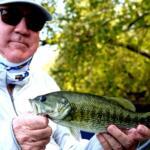
Largemouth bass are the undisputed kings of Brooks Lake right now. As the shallows cool, the bulk of the population is shifting from their summer haunts toward the 10-to-14-foot weedlines. They are actively schooling and pushing baitfish toward contour breaks, making them highly susceptible to reaction strikes during low-light windows and finesse presentations when the sun is high.
From the editor
Tired of fishing with strangers you can’t trust?
Nautrek is the first social network for serious anglers — verified partners, real trips, cost splitting and intel sharing without burning your spots. Private beta now open.
While most anglers overlook them in favor of bass or pike, Brooks Lake holds a surprisingly robust population of channel catfish. Fall is an excellent time to target them as they gorge before the freeze. They are currently staging near the deepest basins and inlet flows, vacuuming up dying forage and bottom-dwelling invertebrates.
Baitfish Report
The primary forage base driving the current bite consists of juvenile bluegills and yellow perch. With the weed beds slowly beginning their seasonal die-off, these baitfish are losing their hiding cover and are being forced into open water along the drop-offs. Matching the hatch means utilizing lures with chartreuse, orange, and natural sunfish profiles.
3. TACTICAL STRATEGY
Where to Target
Forget the ultra-shallow flats right now. You need to focus your efforts on the prominent weedlines surrounding the lake's deepest hole, which drops down to 26 feet. The eastern drop-offs and the southeast corner of the lake are currently holding the highest concentration of active fish. Position your boat over 15 to 20 feet of water and cast parallel to the 10-to-14-foot weed edge. The transition zones where green weeds meet dying vegetation are the absolute sweet spots.
Lure Selection and Color
For largemouth bass, tie on a 3/8-ounce football jig paired with a craw trailer. Because Brooks Lake has relatively clear water, stick to natural, muted tones like green pumpkin, watermelon red flake, or brown. If the wind picks up and creates a chop on the surface, switch to a medium-diving crankbait in a bluegill pattern to trigger aggressive reaction bites along the contour lines.
Pro Tip: When fishing the deep weed edges, coat your soft plastics in a garlic or crawfish scent. In clear water, bass will often inspect a bait before striking, and a natural scent profile can turn a follower into a committed biter.
Bait and Rigging
If you prefer live bait, slip-bobber rigging is the way to go. Suspend a lively golden shiner or a jumbo nightcrawler just above the weed tops in 12 feet of water. For the sleeper channel catfish, fish cut bait or large nightcrawlers on a simple Carolina rig right on the bottom near the inlet flows or at the base of the deepest drop-offs.
Pro Tip: When targeting the deeper holes for catfish or staging walleye, keep your leader length to at least 24 inches on your Carolina rig. This allows the bait to flutter naturally in the subtle underwater currents rather than sinking directly into the soft bottom sediment.
Timing the Bite
The major solunar windows are dictating the most aggressive feeding frenzies. The first two hours of daylight are critical for the shallow-to-deep transition bite. Once the sun penetrates the water column, the fish will tuck tight to the remaining green weeds or slide deeper. The evening twilight window is also producing violent strikes on topwater walking baits before the surface temperatures cool overnight.
4. REGULATIONS SNAPSHOT
Before launching, ensure you are fully compliant with current local regulations. For largemouth and smallmouth bass, the minimum size limit is 14 inches, with a daily possession limit of five fish in combination. If you tie into a northern pike, the minimum size is 24 inches, and you may keep up to two per day. Walleye must be 15 inches to harvest. Always practice catch-and-release with trophy-sized bass to preserve the premium genetics of the fishery.
5. REGIONAL ALTERNATIVE
If the parking lot at Brooks Lake is overflowing or the wind direction makes holding on the eastern drop-offs impossible, pack up and head just down the road to Hess Lake. Hess spans over 700 acres and offers fantastic alternative action for largemouth bass and yellow perch. It features a slightly deeper basin maxing out around 29 feet. Focus your efforts on the deeper holes and windblown shorelines using similar jigging techniques and live bait presentations. The public access is excellent, and the slightly murkier water can sometimes make the fish less leader-shy than those in Brooks Lake.
Tight lines!
Editor's Choice: Must-Have Gear
FISHINGSIR Next-Gen Waterproof Chest Waders
★★★★★4.4 (7,370+ reviews)
2-Ply Tech: Upgraded nylon with 2.5x higher density than standard fabrics.
100% Waterproof: Lab-approved intrusion resistance with taped visible seams.
Ultra-Lightweight: Designed for all-day comfort while hunting or fishing.
As an Amazon Associate I earn from qualifying purchases. #ad
Loading forecast...
Live Fishing Conditions: Tides, Weather & Waves
Get real‑time tides, marine weather, swell and solunar activity for each spot so you know exactly when conditions line up for your best chance at a bite.
🎣
Brooks Lake
Loading coordinates...
🌤️
WEATHER CONDITIONS
--°F
--°C
Loading...
🌡️
Feels Like--°F--°C
💧
Humidity--%
💨
Wind-- mph-- km/h
🧭
Direction--
📊
Pressure-- inHg-- hPa
☀️
UV Index--
🌊
MARINE CONDITIONS
🌊Wave Height
-- ft
-- m
Loading...
🧭Wave Direction
--°
Loading...
⏱️Wave Period
-- s
Loading...
📈Tide Status
-- ft
-- m
Loading...
🌙
LUNAR & SOLUNAR
🌕
Loading...
Illumination: --%
Major Period--:-- - --:----:-- - --:--
Minor Period--:-- - --:----:-- - --:--
🌅Sunrise--:--
🌇Sunset--:--
📅
24-HOUR FORECAST
Loading fishing conditions...
Fishing Spots Map
🎣
Book a Fishing Charter near Brooks Lake Fishing Report Today 🎣
Local guides & charters. Verified captains, instant booking, best price guaranteed.
There was an error loading the map. Please try refreshing the page.
Info
Local Access & Facilities
Hidden Gem Logistics in Northeast Texas
Brooks Lake offers a distinctively quiet, rural fishing experience tucked away in the red dirt landscape of Bagwell, Texas. Unlike the highly manicured reservoirs closer to the Metroplex, this fishery is defined by its solitude and raw, undeveloped shoreline. For the expert angler, the appeal here lies in the lack of pressure; you are far more likely to share the water with waterfowl than a fleet of fiberglass bass boats. The atmosphere is strictly low-key, requiring a mindset shift from high-speed run-and-gun tactics to a more methodical, stealthy approach suited for smaller waters.
The topography surrounding the water is typical of Northeast Texas—rolling terrain with vegetation that can grow thick right up to the water's edge. This creates excellent structure for largemouth bass and panfish but demands precise casting and careful navigation. The bottom composition is generally soft, necessitating attention to detail when anchoring or wading. This is a location for the self-reliant angler who appreciates a fishery that hasn't been overly commercialized.
While the lack of major infrastructure might deter the weekend warrior, seasoned captains view it as an asset. The primary targets here are bass and crappie, which thrive in the undisturbed cover. Access requires a bit more planning than pulling up to a mega-marina, but the reward is a day of fishing where the only competition is the weather. Preparation is paramount, as services are located in neighboring towns rather than at the water's edge.
Access & Getting There
Reaching Brooks Lake generally involves navigating rural county roads off the main arteries of US-271 or TX-37. Traffic in this region is rarely an issue in terms of congestion, but experienced drivers know to be vigilant for agricultural machinery and wildlife, particularly during the pre-dawn hours. The final approach to the water can be deceptively tricky; local roads may transition from paved to gravel or dirt, which requires caution after heavy rains.
Launch facilities here are minimal to non-existent in the commercial sense. The data indicates no developed concrete boat ramps or marinas directly on the water. This classifies the fishery primarily as a destination for shore anglers, kayakers, or small car-topper boats. Access points are unimproved, meaning you should be prepared for a "mud-in, mud-out" scenario. Four-wheel drive is highly recommended if you intend to drive close to the shoreline to unload gear, especially during the wetter spring months.
💡 Captain's Tip: Vehicle Staging
Since designated parking lots are miles away, do not block farm gates or narrow access roads when parking on the shoulder. Local towing enforcement is strict regarding blocked agricultural access. Leave your vehicle on high, dry ground to avoid getting bogged down in the clay soil.
Weather plays a critical role in access. The clay-heavy soil in this part of Texas turns slick instantly during a downpour. If the forecast calls for significant rain, the banks can become difficult to traverse on foot, and vehicle recovery becomes a real concern. Conversely, during the dry summer heat, access is straightforward, though the dust can be significant. Plan your entry point based on the wind direction; with limited tree cover in some areas, a stiff breeze can make kayak handling challenging.
Brooks Lake Pre-Trip Checklist
Facilities & Amenities
Infrastructure directly at Brooks Lake is non-existent. There are no fuel docks, restrooms, or fish cleaning stations on-site. The nearest public restroom is nearly 18 miles away on the Northeast Texas Trail. Serious anglers must pack in everything they need, including water, food, and sanitation supplies. This "pack it in, pack it out" mentality is essential for maintaining access to these rural waters.
For tackle and bait, you have excellent options within a reasonable driving distance. Mcw Baits is the closest provider, located roughly 12 miles away in Bagwell. It is a highly-rated local spot perfect for grabbing live bait or last-minute terminal tackle. For a more comprehensive selection, Brannan's Bass Shop in Powderly (24 miles away) is the regional heavyweight. They open at 6:00 AM, making them the strategic stop for dawn patrol runs. Their inventory is geared toward serious bass anglers, and the staff usually has a pulse on regional water colors and bite patterns.
💡 Captain's Tip: Fuel Management
There is no fuel available at the water. Top off your truck and gas cans in Clarksville or Paris before heading into the rural roads around Bagwell. Running out of gas here often means a long walk to a farmhouse.
Lodging options favor the RV and camping crowd, which aligns well with the rustic nature of the fishery. White Oak RV Resort and Raulston Self Storage & RV Park are both within a 7-mile radius, offering high-rated bases of operation. For those preferring a roof, the Cottage at the Whistle Stop in Detroit, TX provides a comfortable, highly-rated stay just over 6 miles away. These locations place you close enough to the water to maximize your fishing time during the prime early morning window.
Facility Name
Type
Distance / Location
Key Notes
Mcw Baits
Bait Shop
11.9 mi (Bagwell)
Opens 9 AM. Local bait specialist.
Brannan's Bass Shop
Pro Shop
24.3 mi (Powderly)
Opens 6:00 AM. Best for lures/gear.
White Oak RV Resort
Lodging
6.5 mi (Clarksville)
Highly rated, close proximity.
Cottage at the Whistle Stop
Lodging
6.3 mi (Detroit)
Comfortable fixed accommodation.
Permits, Regulations & Fees
Fishing at Brooks Lake falls under the jurisdiction of the Texas Parks & Wildlife Department. A valid Texas freshwater fishing license is mandatory for all anglers. While there are no specific permit fees listed for the lake itself, anglers should always carry their license physically or digitally. Conservation officers patrol these rural districts, and compliance is expected. Standard statewide bag and size limits generally apply unless posted otherwise at access points.
A critical aspect of fishing in this region is respecting private property rights. Much of the land surrounding smaller Texas water bodies is privately owned. The shoreline access points identified in local data are suitable for entry, but wandering beyond these areas can lead to trespassing issues. "Kapu" generally refers to Hawaiian restrictions, but the Texan equivalent is the purple paint law—purple paint on fence posts signifies "No Trespassing" just as legally as a printed sign. Always respect these boundaries to ensure future access for the angling community.
💡 Captain's Tip: Shoreline Etiquette
Assume all land is private unless clearly marked as public. Stick to the identified shore access points and the immediate water line. If you encounter a landowner, a polite wave and a respectful attitude go a long way in this part of the state.
Events & Seasonal Information
The rhythm of Brooks Lake is dictated by the distinct Texas seasons. Spring is the premier time for trophy potential as bass move shallow to spawn. During this window, the shallow banks accessible from shore can be incredibly productive. As summer sets in, the heat becomes a major factor. The bite shifts almost exclusively to early morning and late evening. By mid-day, the fish—and sensible anglers—seek deep shade or deeper water, which may be difficult to reach without a boat.
There are no major professional tournaments hosted on this specific body of water, which helps maintain its quiet character. However, the seasonal patterns mirror the larger nearby reservoirs like Pat Mayse or Crook. Fall brings a secondary feeding frenzy as shad move into the creeks and coves, offering excellent action for those throwing spinnerbaits or square-bill crankbaits. Winter fishing is slow and requires a slow presentation, but the solitude is unmatched.
Contact Information & Resources
Because this is an unmanned location, there is no harbor master or on-site office. Management is handled at the state level. For questions regarding stocking or specific enforcement issues, contact the local Texas Parks & Wildlife district office. In terms of safety, cellular service can be spotty in the low-lying areas around the water. It is advisable to let someone know your float plan or fishing location before you leave the pavement.
Emergency medical services would dispatch from nearby towns like Clarksville or Paris, so response times will not be immediate. Carry a basic first aid kit and be mindful of snakes and insects common in rural Texas vegetation. Self-reliance is the name of the game here.
For precise locations of the shore access points, closest supplies, and real-time weather conditions, consult the live dashboard and interactive maps below.
Our spot reports combine data-driven forecasts with curated local information. The forecast is generated by our proprietary Fishing Score algorithm (0–100%), which analyzes real-time data from Open-Meteo API, validated against NOAA CO-OPS tide gauges and USGS water-monitoring stations. The model weights tide dynamics (35%), wave energy (25%), wind patterns (20%) and time of day (20%)—factors shown to influence fish feeding behavior through marine-biology research and decades of charter log data.
Access, facilities and services information for each fishing spot is sourced from official datasets such as Recreation.gov (RIDB), state park & wildlife agencies, and geospatial providers like Google Maps. These sections undergo scheduled re-validation every 3–6 months to ensure that boat ramps, park access, contact details and local services remain accurate.
Narrative sections (catches, seasonal behavior, local tips) are synthesized from these data sources and refined following the Fishing Reports Today editorial guidelines, combining bibliographic research from ichthyology and oceanography with expert angler experience. Our team reviews reports on a regular basis, while the forecast model itself updates every 6 hours for real-time accuracy.
⚠️ Important: Always verify current local regulations, access restrictions and weather conditions before fishing. These reports are intended as a planning aid, not a guarantee of catches or safety. When in doubt, contact local authorities or park managers listed on the page.
To provide the best experiences, we use technologies like cookies to store and/or access device information. Consenting to these technologies will allow us to process data such as browsing behavior or unique IDs on this site. Not consenting or withdrawing consent, may adversely affect certain features and functions.
Functional Always active
The technical storage or access is strictly necessary for the legitimate purpose of enabling the use of a specific service explicitly requested by the subscriber or user, or for the sole purpose of carrying out the transmission of a communication over an electronic communications network.
Preferences
The technical storage or access is necessary for the legitimate purpose of storing preferences that are not requested by the subscriber or user.
Statistics
The technical storage or access that is used exclusively for statistical purposes.The technical storage or access that is used exclusively for anonymous statistical purposes. Without a subpoena, voluntary compliance on the part of your Internet Service Provider, or additional records from a third party, information stored or retrieved for this purpose alone cannot usually be used to identify you.
Marketing & Affiliates
The technical storage or access is required to create user profiles to send advertising, or to track the user on a website or across several websites for similar marketing purposes, including affiliate tracking for products recommended in our reports.




Leave a Reply