Lake of the Ozarks Fishing Report Today 🎣
1 year ago · Updated 5 days ago

Lake of the Ozarks Angling Forecast and Tactical Guide
GO/NO-GO STATUS
Verdict: GO
Current seasonal transitions make this an exceptional time to be on the water at Lake of the Ozarks. As we move deep into the fall season, the oppressive summer heat has broken, and water temperatures are steadily dropping into the optimum feeding zones for predatory fish. More importantly, the heavy recreational boat traffic that churns up the main channel during the summer months has significantly decreased, leaving the water calmer and more accessible for serious anglers.
Safety-wise, conditions are highly favorable. The lake is fully navigable with no ice threats, and water levels are being managed following standard fall drawdowns by Ameren. However, anglers should remain vigilant regarding early morning fog, which frequently develops in the river arms as cool autumn air meets the relatively warmer surface water. Ensure your navigation lights are fully operational and rely on your electronics when traversing the main channel before sunrise.

SPECIES INTEL
Primary Target: Largemouth Bass
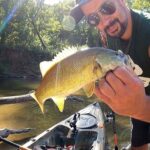
The largemouth bass bite is currently the main event. Fish are actively transitioning from their deep summer haunts into the major creek arms, driven by the biological imperative to feed heavily before winter. They are highly aggressive right now, intercepting massive schools of baitfish along secondary points and channel swings.
Sleeper Pick: White Bass
While everyone is chasing largemouth or brush-pile crappie, the white bass action is explosive and largely ignored. These aggressive schooling fish are pinning bait against wind-blown main lake points and flats. When they surface to feed, the action is frantic and provides incredible light-tackle entertainment.
Baitfish Report: Threadfin and Gizzard Shad
Shad are the absolute key to the fall puzzle on Lake of the Ozarks. Massive balls of threadfin and smaller gizzard shad are migrating into the backs of creeks. If you find the shad, you will find the predatory fish. Pay close attention to your forward-facing sonar or traditional 2D sonar to locate these dense bait balls suspended in the water column.
TACTICAL STRATEGY
To maximize your success during this transitional period, precision in location and presentation is mandatory. Here is the exact breakdown of how to attack the lake right now.
Where to Target
Focus your efforts on the Gravois Arm and the Grand Glaize Arm. The fish are setting up on secondary points just inside the mouths of major creeks, waiting to ambush shad. Look for transitional banks where chunk rock turns into pea gravel. For crappie, you need to target man-made brush piles situated in 12 to 18 feet of water. The docks located near the channel swings in the Niangua River arm are currently holding excellent numbers of slab crappie.
Pro Tip: Do not waste time casting to barren banks. If you do not see baitfish flickering on the surface or marking on your electronics within the first ten minutes of entering a creek cove, pull up the trolling motor and move to the next one.
Lure Selection and Presentation
For largemouth bass, a two-pronged approach is working best. Start with a 1/2-ounce double willow leaf spinnerbait to cover water quickly along the wind-blown points. Once you locate fish, slow down and pick apart the cover with a squarebill crankbait, specifically a size 1.5, bouncing it erratically off the submerged chunk rock to trigger reaction strikes.
For the sleeper white bass, a 1/2-ounce silver jigging spoon or a classic inline spinner will produce immediate results when cast directly into surface feeding frenzies.
Color Patterns
Water clarity dictates your color choices. In the clearer waters of the lower lake (closer to Bagnell Dam), stick to translucent shad patterns and natural silvers. In the mid-lake and upper river arms where the water carries a slight stain, switch to opaque colors like Sexy Shad, Chartreuse/White, or anything with a bright orange belly to mimic dying baitfish.
Pro Tip: Take a red permanent marker and draw a small slash near the gills of your crankbaits. In the fall, predatory fish often key in on the red flash that simulates a wounded, bleeding shad.
Live Bait Applications
If you prefer live bait, specifically for targeting crappie, lively medium-sized Missouri minnows are outperforming artificial jigs. Rig them on a #2 light wire Aberdeen hook under a slip bobber. Set your bobber stop so the minnow suspends exactly one foot above the top branches of the submerged brush piles. Crappie will feed upward, but they will rarely dive down into the brush to chase a bait.
Timing the Bite
The golden hours remain supreme. The first two hours of daylight offer the most aggressive topwater and shallow reaction bite. As the sun penetrates the water column mid-day, the fish will pull back slightly to deeper docks or the darker shade of boat slips. The bite reignites during the last hour of daylight as shad push back toward the surface.
REGULATIONS SNAPSHOT
Compliance with Missouri Department of Conservation (MDC) regulations is crucial for maintaining this world-class fishery. Please verify these limits before keeping any fish:
- Black Bass (Largemouth, Smallmouth, Spotted): There is a strict 15-inch minimum length limit. The daily bag limit is 6 fish in the aggregate.
- Crappie (White and Black): Anglers must adhere to a 9-inch minimum length limit. The daily bag limit is 15 fish.
- White Bass: There is no minimum length limit, and anglers may harvest up to 15 per day.
- Catfish (Channel and Blue): The daily limit is 10 fish combined, with no minimum length limit on Lake of the Ozarks.
REGIONAL ALTERNATIVE
If heavy localized rains muddy up the main tributaries of Lake of the Ozarks, or if a major regional bass tournament crowds your favorite coves, Harry S. Truman Reservoir (Truman Lake) is your premier backup destination, located just a short drive to the west.
Truman Lake offers a completely different, rugged environment characterized by vast expanses of flooded standing timber and far less shoreline development. It is an absolute haven for crappie and blue catfish. Access the lake via the Warsaw area ramps. If you make the jump to Truman, leave the treble hooks behind. Rig up weedless jigs and target the vertical standing timber in 10 to 20 feet of water along the old Osage River channel for guaranteed crappie action. The fish here are less pressured and often more willing to commit to a well-placed jig pitched right against the tree trunks.
Tight lines!

FISHINGSIR Next-Gen Waterproof Chest Waders
- 2-Ply Tech: Upgraded nylon with 2.5x higher density than standard fabrics.
- 100% Waterproof: Lab-approved intrusion resistance with taped visible seams.
- Ultra-Lightweight: Designed for all-day comfort while hunting or fishing.
✓ Amazon's Choice | 100+ bought last month
Bandit Walleye Deep
Mandatory for reaching deep schools in 35-50ft mud flats.
Check Price on Amazon #adAs an Amazon Associate I earn from qualifying purchases. #ad
Live Fishing Conditions: Tides, Weather & Waves
Get real‑time tides, marine weather, swell and solunar activity for each spot so you know exactly when conditions line up for your best chance at a bite.
Lake of the Ozarks
Loading coordinates...
WEATHER CONDITIONS

Loading...
MARINE CONDITIONS
LUNAR & SOLUNAR
Loading...
Illumination: --%
24-HOUR FORECAST
Fishing Spots Map
Local guides & charters. Verified captains, instant booking, best price guaranteed.
Local Access & Facilities
Lake of the Ozarks
Parking
Fishing Charters
Lodging
Boat Ramps
Restrooms
Family Friendly
Accessibility
Wheelchair Access
Available
Pets Allowed
Not Confirmed
⚠️ Some accessibility info not officially confirmed. Please verify with location directly.
Local guides & charters. Verified captains, instant booking, best price guaranteed.
Nearby Spots


About Our Fishing Reports & Forecasts
Our spot reports combine data-driven forecasts with curated local information. The forecast is generated by our proprietary Fishing Score algorithm (0–100%), which analyzes real-time data from Open-Meteo API, validated against NOAA CO-OPS tide gauges and USGS water-monitoring stations. The model weights tide dynamics (35%), wave energy (25%), wind patterns (20%) and time of day (20%)—factors shown to influence fish feeding behavior through marine-biology research and decades of charter log data.
Access, facilities and services information for each fishing spot is sourced from official datasets such as Recreation.gov (RIDB), state park & wildlife agencies, and geospatial providers like Google Maps. These sections undergo scheduled re-validation every 3–6 months to ensure that boat ramps, park access, contact details and local services remain accurate.
Narrative sections (catches, seasonal behavior, local tips) are synthesized from these data sources and refined following the Fishing Reports Today editorial guidelines, combining bibliographic research from ichthyology and oceanography with expert angler experience. Our team reviews reports on a regular basis, while the forecast model itself updates every 6 hours for real-time accuracy.
⚠️ Important: Always verify current local regulations, access restrictions and weather conditions before fishing. These reports are intended as a planning aid, not a guarantee of catches or safety. When in doubt, contact local authorities or park managers listed on the page.

Leave a Reply